
Industry News
-

HarperCollins to Launch the Explore the World of Margaret Wise Brown Program
First up is a fresh edition of The Dead Bird, featuring art by Christian Robinson, who won Coretta Scott King Illustrator Honors for Josephine: The Dazzling Life of Josephine Baker, …
-

Vermont Youth Book Awards Announced
The 2015 Dorothy Canfield Fisher Award goes to Escape from Mr. Lemoncello’s Library by Chris Grabenstein (Random House, 2013). Named in honor of the late Vermont author, the Fisher Award …
-

All You Really Need to Know is What Jacqueline Woodson Said at BookCon
I always feel a little nostalgic and reflective at this time of year, because I started my publishing career in June of 1993. Looking back at the market then, I mostly giggle. Then I think about what I was complicit in perpetuating, and I want to barf.
This is the first book I ever helped to edit.
This is the first novel I ever published.
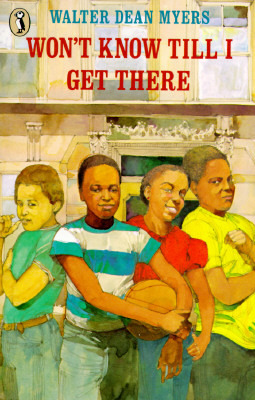
Two thousand years from now an archaeologist might reasonably assume that in the early nineties there was a law banning books for teens that didn’t feature straight white blond girls. I remember I brought up Won’t Know Till I Get There by Walter Dean Myers at an editorial meeting that fall—I’d read it in 8th Grade—and people stared at me, slack-jawed, not comprehending why I thought it would be cool to talk to him and maybe even try to work with him. “On a basketball book?” was one response. (From a very smart and well-meaning colleague whom I still love and respect, no less; I’m sure that person would also want to barf now, remembering this.)
On that note, not to make this post all about me, I have to add: June 2015 does mark an especially proud professional and personal moment. Soho Teen just published Adam Silvera’s debut, More Happy Than Not. I only mention this because I can imagine the response I would have gotten if I’d pitched the premise at the conference room table twenty-two years ago, to a room full of smart editors:
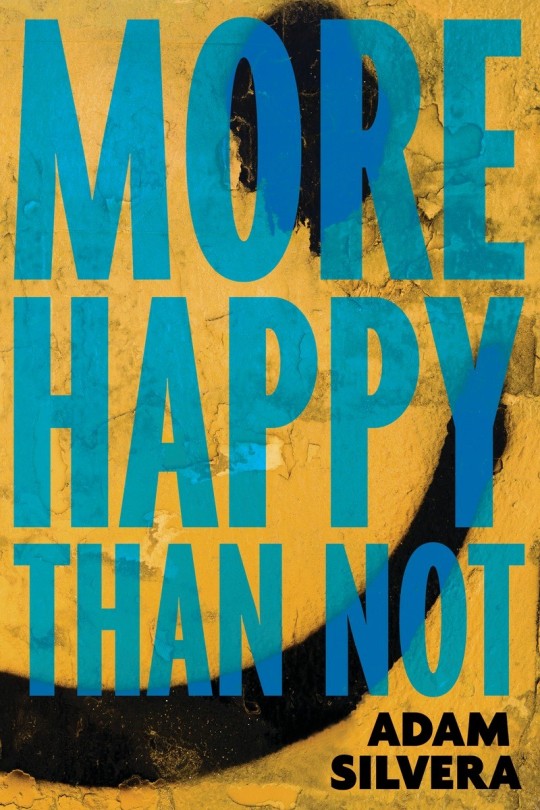
“A gay Puerto Rican boy from the Bronx wrestles with his sexual identity…”
I wouldn’t have made it that far. I wouldn’t have made it past “gay.”
It would be nice to pat myself on the back—I just did—but this post (I swear!) was intended to be a diversity takeaway from BEA and BookCon. In short, from my perspective, there has been real progress (in spite of the fact that the Children’s Breakfast Panel was still white-authors-only, almost comical given the 2014 BookCon backlash). And I am proud that the progress has come from inside the industry through the CBC, which was just awarded the BEA Industry Ambassador Award for its Diversity Initiative (of which I am a part) and outside the industry through the grassroots organization We Need Diverse Books, which has raised awareness and called out the industry’s collective intransigence.
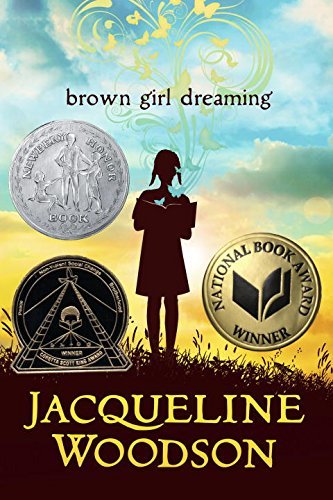
So I’ll leave you with a beautiful nugget of wisdom from one of my favorite authors, Jacqueline Woodson, who sat on the BookCon We Need Diverse Books panel on Sunday May 31st. When asked why she thought Brown Girl Dreaming resonated with so many, she said it was her most deeply personal book to date. “The most personal is the most universal,” she concluded.
That is diversity, right there.
It is also all we really need to know or keep in mind when we make business decisions. We should all have that carved into our office doors. I hadn’t even realized it until she articulated it, but it speaks exactly to why I acquired Adam Silvera’s novel. And it speaks to why we in publishing are all finally, maybe, (I hope?) starting to lumber in the right direction.
-

Jacqueline Woodson Named Young People's Poet Laureate
As laureate, Woodson will collaborate with the Poetry Foundation on issues relating to young people’s literature, as well as promote poetry among children and their families, teachers, and librarians. Woodson, …
-

DreamWorks Animation to Adapt The Adventures of Beekle
Jason Reitman will serve as both the director and screenwriter. This project marks the first time Reitman will take the helm on an animated movie. The Adventures of Beekle: The …
-

2015 Lambda Literary Award Winners Announced
The 2015 Lambda Literary Award winner in the LGBT Children’s/Young Adult category is: Five, Six, Seven, Nate!, by Tim Federle (Simon & Schuster Books for Young Readers) Finalists: Beyond Magenta: …
-

Oscar Winner Eddie Redmayne Enters the Wizarding World as Newt Scamander in Fantastic Beasts and Where to Find Them
BURBANK, CA — Academy Award-winning actor Eddie Redmayne has been cast as Newt Scamander in Warner Bros. Pictures’ much-anticipated wizarding world adventure “Fantastic Beasts and Where to Find Them.” The announcement …
-

We Need Diverse Books,™ School Library Journal, and American Booksellers Association Create Booktalking Kits
The kits—including annotated WNDB™ book lists with shelftalkers and suggestions of comparative titles—will be available online through the Spring 2015 ABA Children’s White Boxes, and at diversebooks.org and www.slj.com. The …
-

The Rewards of Re-Reading
According to Seltzer, each subsequent read provides the opportunity to take in more of the story and appreciate the author’s craft in a new way. It also gives us a …
-

Submissions Open for the 2015 WNDB™ Walter Dean Myers Grant
Eligibility Applicants must identify as diverse Applicants must be unpublished as illustrators and/or authors. This includes both trade publishing and self-publishing. Essays, short stories, and articles do not render an …
-

Neil Gaiman On His Love of Children's Books
I never forget how much I loved being a reader of children’s books as a kid, and how much they changed me — how much the inside of my head …
-

2015 Boston Globe–Horn Book Awards Announced
This year’s winners are: PICTURE BOOK AWARD WINNER: The Farmer and the Clown by Marla Frazee (Beach Lane Books, an imprint of Simon & Schuster Children’s Publishing Division) PICTURE BOOK …
-

Industry Q&A with Alyssa Mito Pusey
Senior Editor at Charlesbridge
Interview by Yolanda Scott
Thanks for agreeing to do this, Alyssa. The first diversity question today is how do you self identify?
Growing up in Hawaii, I thought of myself as Japanese American, when I thought of race at all. Because Hawaii is something like 50% Asian, I didn’t think of myself as “Asian”—until I moved to the Mainland for college. Suddenly I was aware of myself as a “minority” and a “person of color.” I started thinking of myself as Asian American, which I still do today.How did your background influence your early reading habits, if at all?
I didn’t really pay much attention to my Japanese heritage, sad to say. I read whatever I liked—whatever the library had. The same childhood classics as everyone else. After Narnia and Middle Earth, lots and lots of fantasy.Did you envision the characters in the fantasy books you read as white or as other races and ethnicities?
White mostly. When you’re reading about someone with red hair and violet eyes, well, she’s white. And when everyone you see in movies, TV, and books is white, you make assumptions. It was actually difficult for me to wrap my head around Ged (from Ursula K. LeGuin’s Earthsea books) being brown-skinned—even though he’s clearly pseudo-Polynesian in the text. It took me a while to figure it out; the cover of my beloved paperback whitewashed him. The only other non-white characters I ran into were in Laurence Yep’s books. He seemed to be the only author at the time writing fantasy about Asian characters.How did you get into children’s publishing?
I wanted to be a writer when I was a kid. I even wrote a report in fifth grade about the publishing industry. By the time I got to college, I knew I loved children’s books but I didn’t know what I wanted to do with them. I interned for The Horn Book and a small publishing company but still wasn’t sure. During grad school, I got my first internship where I actually got to edit something. I immediately realized that this was what I wanted to do. I was enrolled in a PhD program at the time, but I took the Master’s and ran.What appeals most to you about the job of editing?
I love the craftsmanship of editing. When you’re actually editing—getting your hands dirty—it’s messy and open-ended and exciting. I love figuring out the weaknesses in a manuscript and brainstorming ways to fix them. Helping the author clarify his or her vision takes creativity, problem solving, and thinking outside the box.Could you tell me about the most recent diverse book you published?
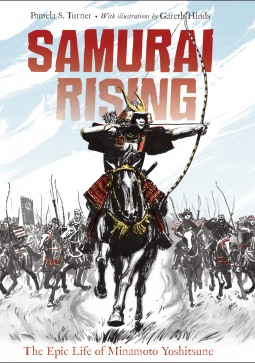
Samurai Rising by Pamela S. Turner, illustrated by Gareth Hinds, to be published in February 2016, is a middle-grade biography of Minamoto Yoshitsune, one of the most famous samurai in Japanese history. It’s one of the most thrilling books I’ve ever edited—full of drama, intrigue, violence, and romance. It still gives me goosebumps every time I read it. Yoshitsune is one of the main characters in The Tale of the Heike, a great Japanese work. I had learned a little about the Heike in college, but when I read the manuscript for Samurai Rising, it came to life. Working on the book pulled together a lot of threads for me: my Japanese heritage, my interest in martial arts (I’m a long-time aikido practitioner), and my love of the Japanese aesthetic. The book has deepened my understanding of, and appreciation for, my own culture. And editing the book made me go to aikido practice with renewed seriousness!
What is one factor holding you back from publishing more diverse books?
Availability. I just don’t see a lot of diverse submissions, and not a lot from diverse authors. Many of the submissions I receive are also serious or sad, with little kid appeal.Can you give an example of a successful diversity title on the Charlesbridge list?
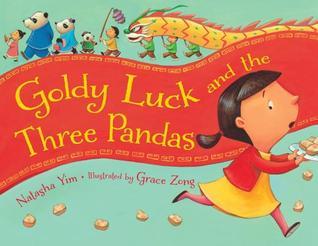
Goldy Luck and the Three Pandas by Nastasha Yim, illustrated by Grace Zong, is a Chinese American retelling of Goldilocks and the Three Bears. This book was a surprise success to me. I thought it would do well, but I didn’t expect it to be so widely embraced. It’s an accessible way for Chinese Americans and people from other backgrounds to learn about the basics of Chinese New Year. More universally, it’s a clever story with absolutely adorable art.
Who would you consider to be a diversity pioneer in children’s literature?
Lenore Look’s Alvin Ho books are just brilliant. They’re everything we editors ask for in terms of diverse characters who just happen to be diverse. Alvin’s Chinese American culture is integral to the story, but it doesn’t drive the plot or hit you over the head with a message. The books are about Alvin and who he is as an individual. And they’re funny.If you have an author who wants to write about characters outside of his/her own background, how do you generally handle that?
We see a lot of submissions of diversity books from people writing outside of their cultures and backgrounds. Alarms go off, and you have to be really careful as an editor. First, I try to be sure that the writing is respectful. I also consult with experts from the culture and try to find an illustrator from that culture. These people bring things to the table that you and the author may never have considered.
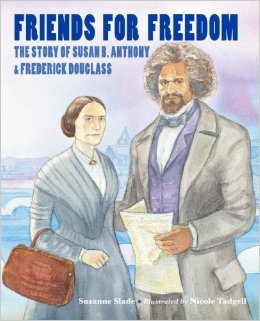
For example, in Friends for Freedom, Suzanne Slade wrote about the friendship of Susan B. Anthony and Frederick Douglass. In Suzanne’s head, she had handled Susan’s and Frederick’s stories evenly. In my head, Susan was the main character—but I didn’t question that direction. When the illustrator, Nicole Tadgell, who is African American, saw the text, she pointed out that the stories were presented as equal but in fact weren’t. She asked if we could do something about that. Suzanne, realizing Nicole was right, worked hard to shift the focus. The two friends are now treated equally, which is one of the main points of the book.
Does being a person of color affect your acquisition or editorial process?
Whenever I receive a manuscript featuring characters of color, I get excited—hopeful. That may be because I’m a “person of color,” but I think it’s true for all of us editors at Charlesbridge. If I’m being honest with myself, books with Asian—especially Chinese or Japanese—characters or settings immediately spark an interest, since I’m more familiar with these cultures.The funny thing is that, as an editor who specializes in nonfiction, I haven’t actually edited a ton of “diversity” titles. When you’re working on books about animals, urban gardening, and black holes, you can may be include scientists of color and a diverse cast in the illustrations—but that’s not usually the main point of the book.
The exception to this, of course, is biographies. Lately there’s been a real surge in biographies of little known people, partly due to Common Core. But even in this burgeoning genre, people of color are still getting shafted. When I was recently looking up Asian and Asian American biographies, I was shocked all over again at how little there is out there—Lee & Low seems to be the only publisher consistently putting out these books.
This is one area where I feel like I could help make a difference. With the publication of books like Mario and the Hole in the Sky (a 2016 biography of chemist and Nobel laureate Mario Molina) and Mountain Chef (a 2017 biography of National Park trail cook Tie Sing)—as well as Samurai Rising—I’m hoping to help young readers find themselves in nonfiction.

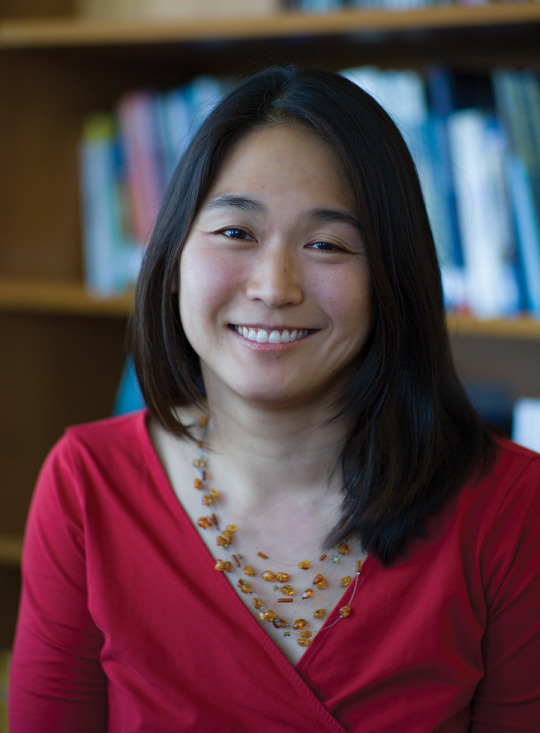
Alyssa Mito Pusey is a senior editor at Charlesbridge, editing picture books and middle-grade chapter books and specializing in nonfiction.
-

Actress Julianna Margulies to Write Picture Book Story
Editorial Director Maria Modugno handled the acquisitions process. Random House Children’s Books will release Three Magic Balloons in May 2016. Three Magic Balloons centers on a trio of sisters whose …
-

Happy Birthday, Margaret Wise Brown!
Brown was a shy and thoughtful child with a love of animals that would later shine through her work. She attended Hollins University in Virginia before returning to New York …
-

Diverse Characterization Matters
(or Why I’m Grateful for Being Forced to Watch a Kid’s Show About Mermaids)
I was visiting my sister in Boston a month ago, and found myself amused (and strangely inspired) by watching, of all things, the kid’s show Bubble Guppies. If you haven’t heard of it, it’s basically a cartoon about a group of merperson preschoolers who go on adventures and learn life lessons in the sea (is merperson correct? Mermaid boys and girls who go to school in the ocean…I’m not sure why I’m looking for any of it to make logical sense. It’s cute and draws my two nephews in like flies).
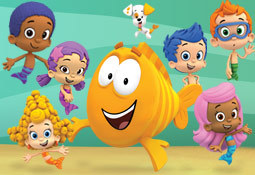
The point is that this show follows your typical preschool cartoon formula. Present children with a group of very enthusiastic (one might say too enthusiastic) preschool characters who sing, smile a whole lot, and are oh so happy to make learning fun! What caught my attention in watching this show with my two-year-old nephew Cole one morning was that there was one kid in the group (named Nonny) who was clearly different than the rest. I’m not talking about the color of his skin or his cultural makeup (which this show represents nicely with a diverse cartoon cast), but his personality. Unlike the others in the show, Nonny rarely smiles (even when singing, which is amusing to watch. He has a permanent skeptical face). He’s shy, always looks wary of the goings-on around him, and is thoughtful and reserved. Basically he’s the kid I was as a child, the kid I see some of my friends have now, the kid who stays on the outside of the group until it’s safe to come in and play.
It occurred to me in watching this character that I would have loved Nonny growing up because he reflected me and didn’t fit in naturally with the rest of the more extroverted and boisterous group taking the focus and attention. And in the show, that was presented as a-OK.
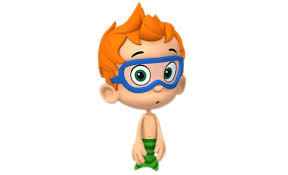
I mention this story because I think this sort of thoughtful characterization on the part of the show creators (yes, on a preschool cartoon) is applicable to the way we look at the literature that is shaping our children today. When you take a look at the ongoing diversity conversation in this industry, you have to experience it through an impressionable child’s eyes, and how all characters in every story are portrayed within the diversity spectrum from top to bottom. Children are so malleable and so hungry to explore and understand the world around them and, most importantly, how they fit inside it, that they are hyper-attuned to how any character they see that reflects their own image fits into his or her surroundings (in television, literature, and other mediums). Nonny works well because, while he’s different, he’s not called-out for being so, nor ostracized from the group as the stereotypical quiet kid. He just joins into the group when he wants, and kids who watch the program have the benefit of watching a character who is a little quieter and yet still has a place inside that world (of merpeople).
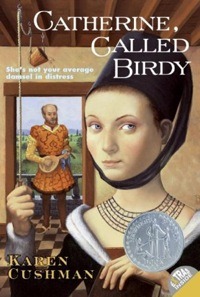
Now I’ll confess here that I’m a white female working inside the publishing industry, so my inspirational characters growing up were Eloise (as a small child), Catherine (from Catherine, Called Birdy), and Jane Eyre (minus the crazy wife in the attic). But those characters were so vital to my own childhood development in identifying with strong female figures with heart and intelligence and endurance I could aspire to in my own life, that they’ve stuck with me still now that I’m into my thirties. And for my nephews, my friends’ children, and my own (theoretical) children down the line, I want to gift them with a world where they have access to a variety of characters who fit their identities that they can safely attach to and learn from, both in personality and in their cultural makeup.
While I think we are making strides toward more diverse children’s literature, so, so many children of differing cultural backgrounds remain so sorely underrepresented in the books created for them today. And just like my connection with little Nonny on Bubble Guppies, there are so many children throughout the world looking for a bit of themselves in everything they’re soaking in with the literature they devour. It breaks my heart that some of them likely aren’t finding it.
So it’s worth reiterating that producing, marketing, publicizing, and selling children’s books featuring diverse characters isn’t just an item to check off our list to then move on to the next thing. It’s a necessary, fundamental shift that is vital to how we do business to gift future generations with a more colorful and safe world to develop in, to become the best people they can be. With so many kids of all different backgrounds looking for a little bit of themselves in the literature that’s shaping them, day by day, it is our duty to make sure that literature is up to the task.
-

Hollywood Director Todd Haynes May Adapt Wonderstruck
Selznick drew inspiration from a great number of sources for this project including an E. L. Konigsburg novel, a documentary called Through Deaf Eyes, and two exhibits at the American Museum of Natural …
-

Chelsea Clinton Aims to Inform and Inspire Young Readers to Change the World in Book this Fall
New York, NY — In a new book for young readers ages 10-14 scheduled for publication on September 15, 2015, Chelsea Clinton breaks down some of the world’s biggest challenges …
-

Coloring Books for Adults
Penguin Random House recently acquired the next two books by Johanna Basford the “queen of coloring,” to be released in the fall of 2016. The book will be edited by …
-

Rick Riordan Has Written a New Percy Jackson Companion Book
Artist John Rocco created both the interior illustrations and the cover art. Disney Hyperion will release the book on August 18, 2015. That date coincides with Percy Jackson’s birthday. (Rick Riordan’s …
