
Industry News
-

‘It’s Possible’ Series: Pushing the Envelope and Making a Difference
An “It’s Possible” post contributed to CBC Diversity by Phoebe Yeh
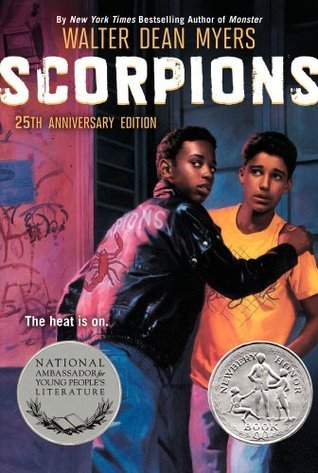
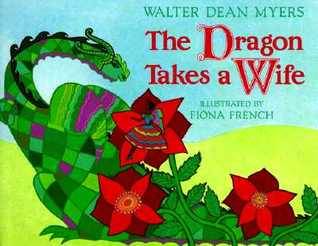
The very first project I worked on with Walter illuminates a lot about our collaborations together. It was 1994. Walter had already received acclaim for his realistic fiction (the Newbery Honor books, Scorpions and Somewhere in the Darkness) and Now is Your Time, a work of ground-breaking non-fiction (to name a very, very few). Somehow, I had come across The Dragon Takes a Wife, a picture book Walter had written in 1972 starring Harry, a hapless dragon and Mabel Mae, a jive-talking African American fairy who tries to help Harry defeat the African American knight in shining armor. Here was another way to think about the classic medieval tale. I loved the way Walter had re-invented the traditional story and thought, we need to bring this book back. It’s a perennial storyline. It’s funny. It’s fantasy and it offers a perspective readers seemed to have forgotten, at least in the nineties. (Of course Walter had already figured this out in 1972. We obviously had some catching up to do.)
Fast forward to 1997. Now we’re collaborating on a teen novel. (I don’t tell Walter that actually, I’ve never edited a teen novel – only picture books and middle grade novels.) He shows me a copy of the screenplay Harold and Maude, a street purchase. I have reservations about a screenplay but Harold and Maude is one of my all-time favorite movies. Maybe it’s going to be all right. Of course no one has ever attempted anything like this before for teens. But it’s so intriguing and innovative. And Walter is so convincing about why the screenplay format is the right way to go for his new book. There will also be journal entries and interior art, using multiple formats and perspectives to tell the story about Steve Harmon, who is in jail for felony murder. I could write many, many blogs about what it was like to work with Walter on shaping and refining Monster, truly revolutionary for its time. This is when I learned that Walter was one of the best writers of dialogue in the business. That problem-solving was a challenge he welcomed. That he would leave no stone unturned to get it right because he wanted his readers to read the best book he could write for them. That he didn’t shy away from “controversy” by showing an African American boy on the cover of a book called Monster. That was the point. Some people thought about Steve this way. Steve knows he’s not a monster. But he’s gotten himself into a situation. Life isn’t over; there will be a way out for him but he has to grow up and figure things out.
Walter was always excited about an opportunity to push the proverbial envelope with his storytelling. I sent him a childhood favorite, All of a Kind Family. I got back Bad Boy, the memoir about how he dropped out of Stuyvesant High School and hung out in Central Park, reading Balzac in French, following the reading list an English teacher had made for him. She knew that he wasn’t going to stay in school but she told him to keep reading and writing, no matter what. Years later, he remembered her advice about writing. Of course he wasn’t advocating for kids to drop out of school. But Walter wanted high school dropouts to know that it was possible to be successful even if you were coping with challenging circumstances. Walter told me, “I want kids to know that I went through tough times, too. But it worked out. And in my book, I’m going to tell them why. And how I did it.”
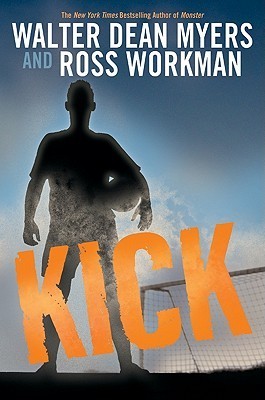
When he received a fan letter from 13 year old Ross Workman, Walter wanted to try a new collaboration, co-writing with a teen author. I said to him, “You know, you can fix it yourself.” He told me, I’m only interested if Ross wants to keep working on it.” Two years later, Kick was published. It’s about a soccer player (Ross’s chapters) and his mentor (Walter’s chapters). It was fascinating to read the correspondence between Walter and Ross and watch how Walter taught Ross how to put a book together. Ross wasn’t the only author Walter mentored. Over the years I learned about writers of all ages, some incarcerated, who benefited from Walter’s counsel and expertise. He had so many of his own writing projects that engaged his interest and he was busy ‘round the clock. And yet he still made time to help aspiring writers.
When he received an honorary degree from Amherst College, he heard a lecture about studies in computer modeling. Years later, in 2014, it would appear in the new novel, On a Clear Day, this time featuring an ensemble cast, starring a girl math whiz and set against a futuristic global context. He was trying something different. Even though his hero wasn’t a male urban teen, he didn’t deviate from his message: What do you believe in? And, it’s not too late to make a difference.

Always, Walter was committed to a writing life. He knew that there were things readers needed to know. And they didn’t always have someone who could walk them through it. Walter knew that books could make a difference in their lives, just as they had for him.
My job was to help Walter write the best books he could; to encourage him to push himself as a writer; to help him reach the widest readership. But this is what I learned from Walter. That it was about work and discipline (talent, obviously). That it was possible to be a force for change. To stand by your convictions, and be successful at it, too. His intent was to connect with the young people who didn’t always see themselves in the literature. But the truth is that the truth in his books reached everyone.

 Phoebe Yeh is the publisher of Crown Books for Young Readers/Random House. Previously she was an editorial director at Harper Collins Children’s Books; senior editor at Scholastic Press and an editor of the SeeSaw Book Club.
 -

Fans Can Vote on the Title & Jacket for the Next ‘Timmy Failure’ Book
“The irreverent illustrated middle-grade series has sold 500,000 copies to date. Rights to the series have been sold in 33 countries, and it has been translated into 30 languages. In …
-

‘It’s Possible’ Series: Resonating with Walter Dean Myers
An “It’s Possible” post contributed to CBC Diversity by Miriam Altshuler
Walter Dean Myers and I began working together over twenty-five years ago.
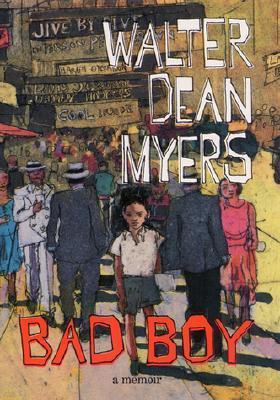
At the time, diversity in publishing was not discussed nearly as much as it is today. Even back then, Walter understood the need for all children to have their stories told in books that mirrored their diverse lives. Walter’s own story of growing up is well known and comes to life particularly in his memoir, Bad Boy. He and I spoke often about his desire for young readers to have books in which they could see and understand themselves. He knew early on how important this was for every child, and he wrote about the children he understood so well: African Americans who grew up in urban areas, and children who needed to read and learn from books just like he did while growing up in Harlem. He also wrote for all reluctant readers and children who did not have parents or other people in their lives to read to them. He wanted everyone to have books to read (no matter their color or background), but most of all, he wrote for young African American boys.
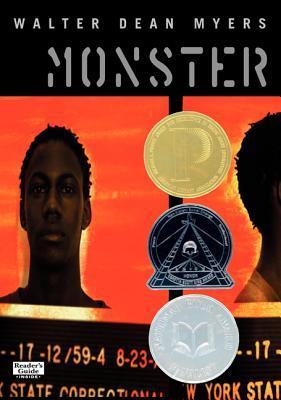
I remember going to ALA for the first time with Walter after his wonderful novel, Monster, won the inaugural Michael Printz Award. A teacher from Detroit came up to him and told us a story about her classroom. She taught ninth grade English and all her students were African American. She could barely get them to show up for class. After reading Monster herself, she decided to read a chapter to the few students who did come. They were riveted. The next day a few more kids showed up, and she read more of the novel. And the day after that more kids came, until the day all the kids were present in the class and she read Monster from start to finish. Her students were hooked and they began coming to class on a regular basis. She told this story with tears in her eyes (and I can never tell it without tears in mine). She told Walter his book reached these inner city African American children in a way that nothing else had. Monster helped them to see themselves, their lives, and the choices they made.
Walter, of course, had always understood the power of words and stories.
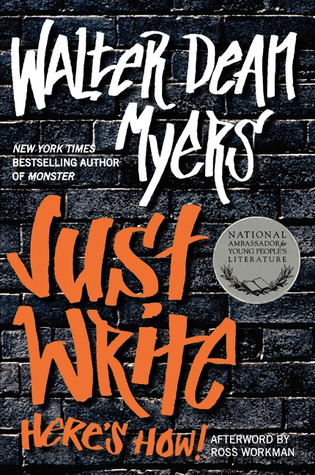
I learned more from that one day than I have in much of my career. Walter knew how to reach children through all kinds of books: contemporary novels, historical novels, poetry, and nonfiction. We spent a lot of time talking about all of his book ideas and how to make them the best they could be. Walter’s ideas were endless, but above all they had to resonate. He knew what made a great story. And I knew when he knew he had a great story because he would keep coming back to it until the right idea took shape. He could love a character or love a subject, but until he saw the arc, heard their voices, and could see how the characters came to life, he knew he was not ready to write it. I was often a sounding board for Walter: He would talk, I would listen, and then I would ask questions about a character or how he saw the shape of the story, and Walter would listen to my questions. But until he had it fully planned out—both in his head and on the story board he would create for each book (as he describes so well in his wonderful writing guide, Just Write!)—he knew it was just an idea. Walter had to feel an emotional connection to each character and story.
Walter always wanted to try new things. One of the great joys of working with him was his incredible ability to listen and learn. He always wanted to hear what others had to say about a subject, an idea, or what he had written, and he was captivated by so many things. “That is so interesting,” he would always say. I can still hear that excitement in his voice.
Ultimately, he was true to his belief in a new book in the same way he was true to his readers—when something stuck with him, when he remained interested in it and he kept going back to it, he knew it was a book he wanted to write. I believe, and I know Walter did too, that when a book touched him, it would touch everyone who read it, especially the children who needed it the most—the reluctant African American readers who so badly wanted and needed to hear their own story told by someone who understood them.
Someone like Walter.

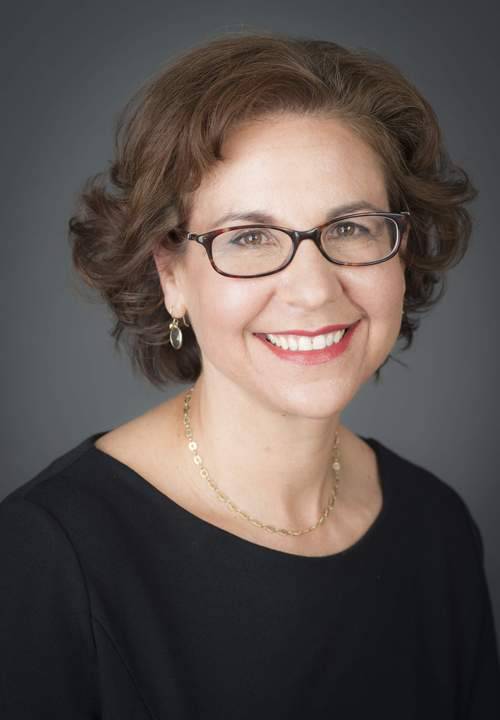 Miriam Altshuler began her own agency in 1994 after starting her career and working for many years at Russell & Volkening Literary Agency. She represents both children’s and adult books in fiction and non-fiction.
 -

Encouraging Kids to Read in 2015
The trend for inspiring literacy is seen both in parents of preteens and teenagers: “35 percent of parents of 6- to 11-year-olds along with 28 percent of parents of 12- to …
-

A Letter of Gratitude to Walter Dean Myers
In a letter addressed to the late Walter Dean Myers, Andrea Davis Pinkney — VP and Executive Editor of Trade at Scholastic — introduces next week’s “It’s Possible” series, where five inspiring publishing professionals will share a little bit of their experience with Walter and how working with him helped push his goal of more diverse literature forward. Check back every day next week for new posts.

Dear Walter:
You always had a story to tell. One of my favorites was about the time you spent as a child with your foster mother reading True Romance magazine. This was the beginning of your beginning. Hearing stories being read aloud made an impression that lasted a lifetime. You called this childhood introduction to reading a gift.
I remember thinking, Walter, you are a gift.
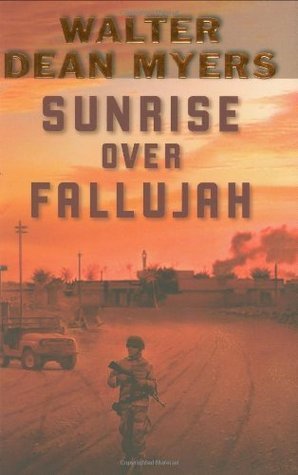
Around that time, you were writing Sunrise Over Fallujah, a novel that centers on the war in Iraq, and is the second novel in what has come to be called your “war trilogy.” It is the stunning companion to your seminal Vietnam War novel, Fallen Angels. With each stage of the editing and revision, you delivered your gift ― you poured keen insight into those pages, and made us think about war’s devastating effects. Your gifts continued to come forth while we worked together on your middle grade Cruisers series, and then on one of your final novels, Invasion, a book set during World War II, which completes your war trilogy.
Yes, yes, Walter, you are a gift who shared your deepest self.
You were a Renaissance man from Harlem. And, like a fascinating rhythm on the A train to 125th Street, you brought us along on your Renaissance ride, as beautiful as the jazz played in the uptown neighborhood you so often celebrated in your books.
As an author who is still learning my craft, I sought your advice on the stories I’d written and how best to render them. Walter, you are a gift who told me that the books we write shape a child’s self-image, and have a lasting impact on the souls and psyches of young readers.
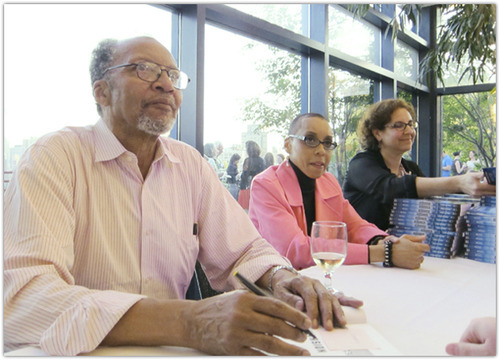
I had the great privilege of accompanying you to the May Hill Arbuthnot Honor Lecture you had delivered at the Children’s Defense Fund Alex Haley Farm in 2009. Your remarks had been introduced by Children’s Defense Fund president and founder, Marian Wright Edelman. You rose to the occasion brilliantly.
When I was invited to deliver my own May Hill Arbuthnot Honor Lecture, I cried out to you with great anxiety and trepidation about its crafting and delivery. How would I ever follow in your awesome footsteps? In your wisdom, you reminded me that we each have our own footsteps, and that positivity can walk us through any experience. Yes, yes, Walter, you are a gift that encourages all of us to step into our own stories, and to use these to move forward while helping others along the way.
I’ll always remember the day you came to Scholastic to spend time with a group of African American boys who were visiting from the University of Illinois at Chicago’s reading clinic. These young men called themselves “brother authors,” and they wanted to be just like Walter Dean Myers.
You treated them as if they were your own brothers, and let them know they were already like you, because they’d found themselves through reading and writing.
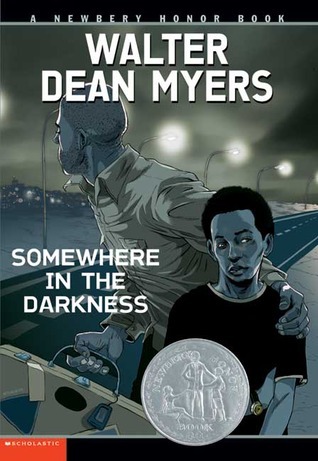
The boys were especially intrigued by your Newbery Honor and Coretta Scott King Honor Award-winning Somewhere in the Darkness, and they wanted to know what it’s like to win so many medals. You were quick to point out that even with your glittering list of prizes, you weren’t in it for the fame. You were in it for the love of the game.
That’s why those kids loved you and why we love what your message continues to do. You’ve changed the game forever. Through Somewhere in the Darkness, and every book you wrote, you gave a gift that lets us see past darkness. You generously lit a path for the next writer and reader on the road.
In 2012, you were named The National Ambassador for Young People’s Literature. Through your platform, you reminded us that “reading is not optional.” During your tenure, you worked with Every Child a Reader and the Children’s Book Council on the planning and direction of your term.
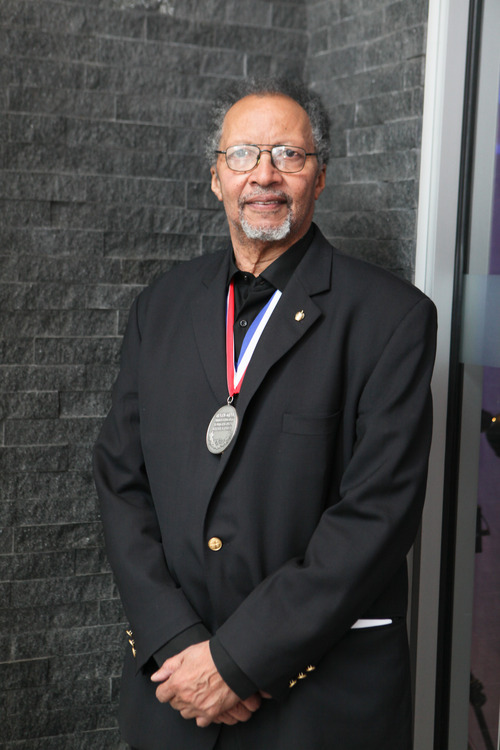
As a member of the Children’s Book Council’s Diversity Committee, I watched with awe as you fielded endless invitations, reviewing each with your eyes on the prize that mattered most ― literacy. You were also an active participant in the CBC Diversity initiative. Your blog post on Authentic Voices was one of the most visited posts in the history of the CBC Diversity “It’s Complicated” forum. That’s because you brought to it your gift of authenticity.
Yes, yes, Walter, you are a gift who constantly showed us that all children matter, and that hope can be found in an open book. At the same time, you dared to ask, “Where are People of Color in Children’s Books?" in your New York Times Opinion piece. That simple question rocked a very heavy boat, and forced all of us to batten down our hatches so that we could ride together on the high seas thrusting forward among the winds of change.
And now, Walter, as we embark upon the three-year anniversary of your appointment as National Ambassador for Young People’s Literature, we celebrate you with a series of guest posts by five members of the publishing community who worked alongside you. Each shares a bit of their experience with the gifts you brought to them, and how these helped advance the goal of more diverse books. Over the course of the next week, your literary agent, Miriam Altshuler; two of your esteemed editors, Phoebe Yeh and Regina Griffin; Virginia Anagnos, your long-time publicist and Executive VP at Goodman Media; and Jennifer Brown, Director of the Center for Children’s Literature at the Bank Street College of Education, will share their memories.
One of the last projects that you and I had the pleasure of working on together was Scholastic’s Open a World of Possible campaign. As part of the initiative, you wrote a story entitled “I Am What I Read” that was published in an anthology of real-life stories.
In your piece, you say: “Once I began to read, I began to exist.” Yes, yes, Walter, you are a gift who reminded us that our very existence ― our living and breathing and giving to others ― happens when we experience the joy and power of reading.
Walter Dean Myers, if joy is a teacher, you are the master instructor. You are a gift ― our ode to joy. And now, in this CBC series so aptly entitled “It’s Possible,” the time has come to pay tribute to your enduring legacy.
Please let us return your gifts to you.
With gratitude,
Andrea Davis Pinkney

 Andrea Davis Pinkney is the New York Times bestselling and award winning author of many books for children and young adults. She is also Vice President, Executive Editor at Scholastic, where she served as Walter’s editor. Andrea has been named among the “25 Most Influential Black Women in Business” by The Network Journal, and is the mom of two incredible teens who love to read.
 -

ALSC to Host Día Get Together Facebook Chats
The first Día Get Together is slated for January 15th, at 2 pm EST, on the Día Facebook page. The ALSC Public Awareness Committee and Colorin Colorado will participate in the discussion of Día and …
-

ALSC Announces ‘Building Steam with Día’ Book Lists
PDFs of the four book lists are available online and are free to download and distribute. Each list also features a child-appropriate STEAM activity to accompany select titles. About ALSCALSC, a division …
-

2014 Cybil Award Finalists Unveiled
“Out of 80 Cybils finalists this year, 30 of them feature characters or are by authors from diverse backgrounds. In the graphic novel category alone, diversity accounts for nearly half …
-

Philip Pullman Returns to the ‘His Dark Materials’ Universe with Exclusive Story for Audible.com
Fans of the ‘His Dark Materials’ trilogy can return to Lyra’s Oxford this January, as Audible.com offers members an exclusive new short story written by Philip Pullman and performed by award-winning British …
-

CBC Diversity: Embracing the Modern Female Heroine – In All Her Forms
As a children’s publishing professional, I will openly confess that the YA genre can sometimes exhaust me. Of course there are many great, original, and incredible voices in the world of YA fiction, but as I’m entrenched in so many YA manuscripts day in and day out in the world of marketing, it’s rare that a book will stand out among the masses and connect to me on a real, personal level. After all, you have to admit there are so very many YA books out there about the imperfectly perfect heroine encountering a series of struggles in her journey toward true love (occasionally amongst the threat of a dystopian apocalypse…naturally), that it can be overkill after a while.
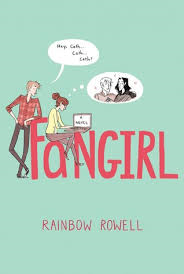
And then this week I read Rainbow Rowell’s Fangirl (I’m very late on the Rowell bandwagon, but I’m so there now). And I fell in literary love. The main character Cather was one of the most real, affecting characters I’ve encountered as of recent – an introverted, slightly awkward, nervous, but still strong-willed girl from Omaha, Nebraska, finding her way through college on her own terms. As an introverted, slightly awkward, nervous, but still strong-willed girl from Omaha, Nebraska myself, let’s just say Cather naturally felt very personal to me, and I wish I had this book as a manual my freshman year of college. Cather constantly pushes against what she’s told she’s supposed to be in college, and faces a series of very real struggles to maintain her personal identity in a world where who you become as a woman is supposed to be a defined path of frat parties, cramming for finals, and the inevitable freshman 15.
Cather is one of many female characters that I wish I had access to as a young reader in my own path toward self-identity, and more so that I wish so many boys who found females confounding in my college years could understand. And Cather is just one of many females who have impacted me this year. No others forged a personal connection quite like Cather, but a variety of females from all ends of the spectrum impressed me this year – and reading this delightful YA book reminded me just how important the development and evolution of the female heroine is to a diverse literary landscape as all other facets of the diversity conversation.

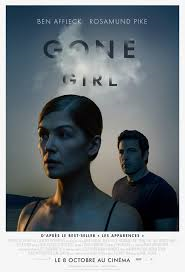
This was the year I obsessively read Gillian Flynn’s Gone Girl for the third time and found myself rooting for Amy Elliot all the way through (twists, psychotic tendencies and all). On TV, I cheered on The Walking Dead’s Carol as she officially completed her transition from quiet wife to morally ambiguous bad-ass; I celebrated How to Get Away With Murder’s Annalise Keating as she directed her life above the challengers who defied her; and I enjoyed watching Lisa Kudrow’s vain, barely likeable actress struggle to achieve success in a world that mocked her in HBO’s The Comeback. This was a year I delighted in discovering females who appealed to different sides of my personality, and represented well-rounded characters on every end of the spectrum.
While the challenges of ethnic, racial, and sexual diversity still loom large, I found some comfort this past year in seeing an emergence of strong, complex, and challenging female characters depicted in modern entertainment. Women depicted making morally questionable choices. Women whose principle dilemmas didn’t revolve around a dashing leading man. Women who took on what society often dictates as standard male personality traits (physical and emotional strength, relentless determination, and even questionable moral conduct) and redefined them as their own. Women who traveled down paths of their own making, shaped by a clear understanding of who they are as people, and holding onto that identity with all they have.
So to that I say, what have you got 2015? I can’t wait to read and see it all.
-

‘The Fault in Our Stars’ Leads in Print Sales During 2014
The trade paperback edition of John Green’s The Fault in Our Stars counted more than 1.8 million books sold. Jeff Kinny’s Diary of a Wimpy Kid: The Long Haul came …
-

Remembering Walter Dean Myers
Since publishing his first book in 1968, Where Does the Day Go, Myers went on to write books across various genres and forms. Throughout his career he remained a fierce champion …
-

J.K. Rowling Shares Her Favorite Quote From The ‘Harry Potter’ Books
The line was spoken by Hogwarts Headmaster Albus Dumbledore: “Of course it is happening inside your head, Harry, but why on earth should that mean that it is not real?” …
-

Happy Birthday, Jacob Grimm!
Grimm’s Fairytales has been translated into countless languages and is considered a hallmark of the storytelling tradition. Stories such as ‘Cinderella’ and ‘Hansel and Gretel’ have inspired adaptations across various cultures and …
-

Celebrating the Tomboys of Children’s Literature
A lifelong fan of spunky heroines, author Megan Mayhew-Bergman imagines the rough-and-tumble tomboy as a figure of empowerment, standing in contrast with the conventionally “likeable” and feminine teen protagonist: The tomboy protagonist …
-

Carroll County Libraries Encourage Families to Talk, Sing, Read, Write And Play
“These five practices grew out of a body of research showing that parental interaction with children at an early age is crucial to later success in school. A study done …
-

A Team of Research Scientists Used ‘Harry Potter’ in a Neuroscience Study
“When reading about Harry Potter’s adventures fighting Lord Voldemort or flying around the Quidditch field on his broomstick, we can become so absorbed in the story that the characters and …
-

Words Without Borders Presents International YA Writing
A panel on international YA voices was held at The New York Public Library to coincide with the issue’s launch. WWB editor Briony Everroad spoke of the challenges and rewards of …


