
Industry News
-

Dumpster Diving: An Observation on Class in Children’s Books
When my sister and I were kids, we used to play next to (and sometimes on) the dumpsters in the parking lot while my mother cleaned offices. At the age of twenty-two, my mom was a single parent of two small children, putting herself through college while working as a waitress and cleaning lady. We were on food stamps and participated in WIC (Women, Infants, and Children) and AFDC (Aid to Families with Dependent Children). I had free lunch at school. Welfare paid for our childcare so my mom could work and take classes, and somehow, we managed to squeak by.
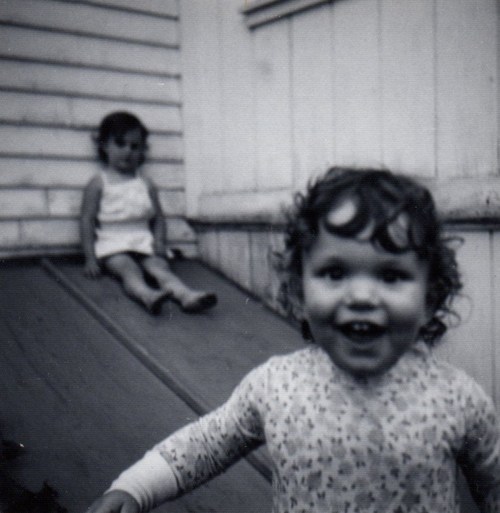
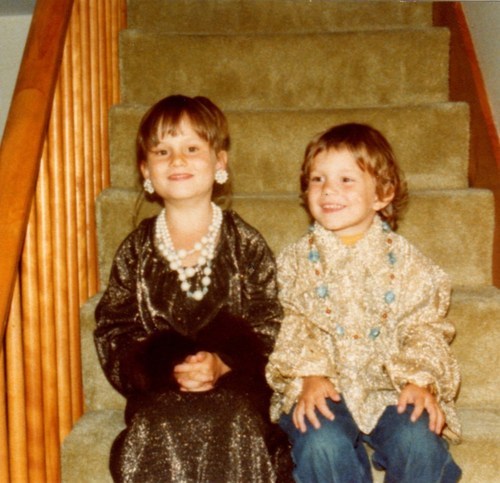 Eventually my mom graduated and took a job as a teacher, and things improved. They improved even more when she remarried and we became a two-income household. My lunches went from free to reduced-price. And by high school I paid top dollar for my soggy pizza and curly fries and had an allowance of three dollars a week. Which wasn’t half bad in the 1980s, all things considered.
I was a smart kid and did well at school. I got a generous financial-aid package to attend Harvard and found myself living in the Yard, taking classes from future and former US Cabinet officials when I was the age my mom had been when she was cleaning offices and struggling to put food on the table. I was surrounded by private school kids and legacy students. To say I experienced culture shock is putting it mildly.
So yeah, class interests me. I care a lot about public assistance to the poor, and I have some insight into the problems of working single parents and their children.
But oddly enough, I haven’t brought that focus much into my work as a children’s book editor, even knowing firsthand how powerful books can be for the disadvantaged. Once I sallied forth from Cambridge, Ivy League diploma in hand, I kind of forgot about my roots.
I was reminded of these roots recently, however, when the CBC hosted a diversity workshop here in Boston. Cathryn M. Mercier, Director of the Center for the Study of Children’s Literature at Simmons College, taught a three-hour “class on class.” The following is from the registration information:
This workshop will examine how class appears, or as sociologist William Julius Wilson claims, disappears, in literature for children and young adults. In an intensive, hands-on session, participants will learn how to read class by exploring the following questions:
- Where is class indicated in books?
- Where or how do we ignore the class indicators that are there?
- What kind of diversity does class status constitute and why should we care?
- What kind of other myths (power, visibility, inclusion, representation) are covered by the stories we tell about class in the stories we tell to our children?
The workshop content is proprietary, so I can’t get into the specifics of what we read and how the class was structured, but I can report that it was a lively discussion among colleagues. The attendees were mostly fellow publishers, many of whom were graduates of the Simmons children’s literature program. We examined middle-grade, YA, and picture books.
One strategy I’ll take with me into my editorial work is to look more carefully and deliberately for class markers and where they appear or don’t appear in text and art. Indeed, the latter is an intriguing issue to explore in any book: who is NOT in a given story, and why? Other questions that came up for me:
- Is it possible that when I edit a text for clarity and brevity, I might be stripping out class markers that the author has included? (Keep in mind that most of my editorial cuts happen well before an illustrator gets to see the text.)
- What effect does propagating a middle-class norm have on children either above or below that “normative” level? How important is it for children to see themselves in a book, and how does that affect their enjoyment of the title?
- Isn’t “middle class” a rather imprecise catch-all anyway? What do I mean by “poor”? “Middle class”? “Rich”?
- How can I better balance the natural impulse to show kids a better (easier/simpler) world with the need to teach them about the one they live in right now?
- Is it possible to separate class from other labels such as race and gender?
- Can I work harder to understand how my unconscious ideology and the author and illustrator’s unconscious ideology are influencing the book?
- Aside from encouraging artists to explore non-suburban settings and on occasion to depict an apartment building instead of a single-family home, what more could I be doing to normalize different socio-economic realities in the books I help shape?
I have no answers. Just questions. But the point is that I’m examining my role and my unconscious biases. By looking and seeing what’s actually there, change can be effected.
I got my first pair of glasses when I was in second grade. We were still poor, so I have no idea how my mother afforded them. I imagine yet another government program came to our aid. I’ll never forget looking up at the trees around the playground and seeing individual leaves where there had only been a shaggy green blob before.
When we consider how class, race, gender, culture, physical ability, religion, and sexual identity appear in children’s literature, we have to consciously remind ourselves to put on our proverbial glasses so we can see the full spectrum of human experience and include it in the books we make and give to our children. Looking at the world this way, we might even see kids playing in dumpsters.
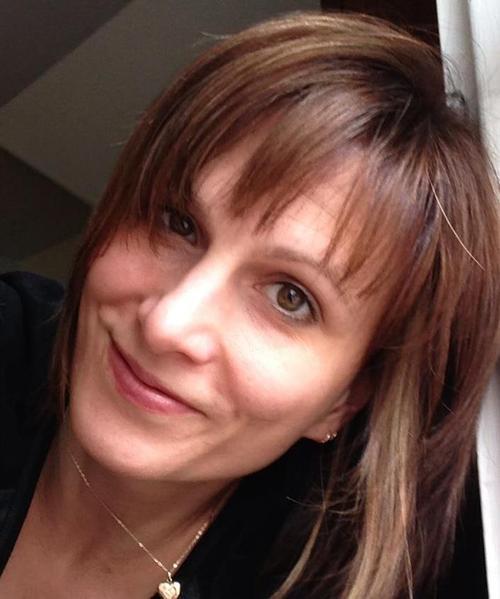
Yolanda Scott is editorial director at Charlesbridge, where she has worked since 1995. She is a co-founder of Children’s Books Boston and a former executive board member of The Foundation for Children’s Books, as well as a member of the CBC Diversity Committee. She lives near Boston.
-

The New York Times Book Review Unveils Notable Children’s Books of 2013 List
Rainbow Rowell appears twice (Eleanor & Park; Fangirl); topics as disparate as World War II, aliens, and magical cats are represented (Rose Under Fire by Elizabeth Wein, The 5th Wave …
-

Children’s Book Creators Take Part in the “Indies First” Movement
Kelly Barson, a young adult author, shared stories from her experience as a guest bookseller with ‘Publishers Weekly.’ “I had several favorite moments. The first was when I asked a …
-

A.S. King Partners with School & Public Libraries to Host Community Reading Events
“When I’m standing in front of students and teachers and adults—a mixed, multi-generational audience— there’s just nothing like it. There’s nothing like having that conversation and looking at the adults …
-

Committee Votes to Keep ‘Eleanor & Park’ in the Anoka High School Library Collection
“Earlier this year, the book had been selected by the school librarians of the Anoka-Hennepin district as well as the librarians at the Anoka County Public Libraries for the joint …
-

Random House & BookPeople Organize a Pen-Pal Program Inspired by ‘Laugh with the Moon’
“More than 40 schools have signed on to participate in the literacy initiative that will also provide local schools with tools for curriculum enrichment…To further engage students and teachers, educators …
-

Online Children’s Book Art Auction Starts Today!
FOR IMMEDIATE RELEASE NEW YORK, NY, Nov. 26, 2013 — An auction of more than 70 pieces of art created for children’s books launched on eBay today. New pieces are …
-

Books for Asia to Collect Children’s Books for Typhoon Haiyan Victims
As a result of the storm that took more than 4,000 lives and displaced 4 million people, entire towns were washed away or severely damaged. There will soon be an …
-

The CBC Diversity Newsletter Comes Early!
Make sure to sign up to receive the e-mail digest version here! -

Random House Partners with Bookstores to Launch a ‘Grinch’-Themed Community Campaign
The publisher has created a “Grinch Community Cares Project” event kit and partnered with stores to hold events throughout the month. The kit contains a calendar filled with “good deed” …
-

Jenny Han & Siobhan Vivian to Pen ‘Ashes to Ashes’
“I was a little nervous because I wanted us to stay friends beyond the writing stuff, and what if we got into a huge fight and never spoke to each …
-
CBC Diversity 101: The Disabled Saint
A Caricature, Not a Compliment
Contributed to CBC Diversity by Kayla Whaley
It’s difficult to find any representations of disabled characters in any form of media. In GLAAD’s annual look at minority representation on scripted network shows, there were only eight characters with disabilities in the 2013-2014 season. That means of all the characters on network shows in primetime, a whopping 1% had a disability.
That figure measures only a very small segment of the media, but it is indicative of a larger problem: the woeful lack of representation of people with disabilities across the board. I would argue that this dearth of disabled characters makes it even more important that the ones we do get are respectful and thoughtful portrayals.
I would also argue that those characters that aren’t—those that perpetuate harmful stereotypes, clichés, and tropes—are even more dangerous than they otherwise would be given that lack.
Personal Connection
I was born with a degenerative neuromuscular disease, and have used a power wheelchair since I was two. I can distinctly remember the first time I saw a character that used a wheelchair. I was ten. I just want to emphasize that I didn’t see a single character like me for the first decade of my life. It didn’t even occur to me to ask for a wheelchair-using character.
But then there one was. Here was a movie where someone like me would not only be a character, but the main character. I was ecstatic. Until I actually watched it, and then I couldn’t figure out why I felt so utterly disappointed, almost betrayed. I didn’t understand that feeling then, but I understand it now.
Description of Clichés/Tropes/Errors/Stereotypes
Perhaps my most hated trope having to do with disabled characters (and this one tends to happen most often to physically disabled characters, though not exclusively), is that of the “disabled saint”—the good little cripple, perfect in personality in spite of being wholly imperfect physically.
Innocent and pure and forever denied their humanity.
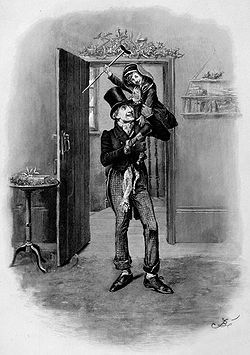
The classic example is Tiny Tim, though this trope exists everywhere. The movie I mentioned above was a Disney Channel original called Miracle in Lane 2. It tells the story of a boy who uses a wheelchair and begins soapbox racing. It’s been many, many years since I’ve seen it, but I distinctly remember being uncomfortable. I realize now it’s because the character wasn’t a character; he existed solely to inspire both the audience and the other characters, otherwise known as inspiration porn. The disabled saint trope is a specific (and very common) form of inspiration porn. But it’s important to note that while all “disabled saints” are necessarily inspiration porn, not all inspiration porn necessarily involves a “disabled saint.”
I want to be clear: disabled characters (and disabled people) can certainly be inspiring, but they are not inspiring simply because they exist while also having a disability. All forms of inspiration porn, including the “disabled saint” trope, tell the abled audience that people with disabilities exist to make them feel inspired. It removes the focus from the disabled characters, and turns them into props that exist entirely to impact the abled characters and audience.
The “disabled saint” trope is particularly insidious because it tells the audience that disabled people are and should be perfect in spite of (or maybe because of) their disabilities. It places an utterly impossible standard on actual people with disabilities. Because no one is perfect. No one is innocent or pure (whatever those words even mean), and expecting any and all disabled people to exhibit those qualities sets them up for “failure” when they turn out to be humans and not saints.
Representation matters, and when the only disabled characters shown are saints and inspirations, how does that impact actual people with disabilities? I can tell you how it impacted me. I can tell you how I’ve been told time and time again how “brave” and “courageous” I am for simply existing while using a wheelchair. I can tell you how almost every public acknowledgement of my accomplishments has come with a statement of how “she never lets her disability stop her/get her down/change her.”
I can tell you how important it felt to be the best in school. To be liked. To be funny. To be sweet and smart and perfect. Because I felt that I had to prove myself.
I can tell you how one time my dad told me he thought anyone born with a disability was also born with some exceptional quality to make up for it. I can tell you how I nodded along and tried to figure out what my special quality was that justified me existing, though I didn’t have the understanding or language to know that’s what I was doing.
I can tell you that representation matters. That there are no saints in this world. That neither I nor any disabled person exists to be an inspiration.
What I’d Like to See
I’m honestly not sure where I stand on the “no representation is better than bad representation” debate. But I do know I want to see a) more representation of disabled characters, and b) better representations, including fewer “disabled saints” (read: no more ever). I encourage you to add disabled characters to your stories, but I also encourage you to question your preconceptions, to research, to talk with disabled people. Ultimately, it all comes down to being intentional and respectful.
Don’t deny your characters—any of your characters—their humanity.
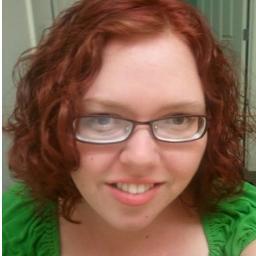
Kayla Whaley is a co-moderator of Disability in Kidlit, a freelance editor, a YA writer, and a fervent supporter of diversity in kidlit (and all lit).
-

Cynthia Kadohata Wins the 2013 National Book Award for Young People’s Literature
Julia Kuo created the illustrations. Atheneum Books for Young Readers published the book in June 2013. The story stars a Japanese-American girl named Summer who sets out to make her …
-

On the Disproportionate Number of White Boys in Children’s Books
Boys who grow up seeing themselves everywhere as powerful and central just by virtue of being boys, often white, are critically impaired in many ways…It seems reasonable to suggest media …
-

Derek Jeter’s New Imprint to Publish Books for Young Readers
“Jon Anderson, the president of Simon & Schuster Children’s Publishing, said that Jeter’s parents, Dorothy and Charles, were planning to meet with the editorial staff at Simon & Schuster to …
-

Teen Choice Book of the Year: Nominate Your Favorites Now!
All you have to do is look at the books listed on this page, and check the boxes next to your favorites before January 31, 2014. You can also vote for titles …
-

Barbara Park, Adored Creator of Junie B. Jones, Dies at 66 Years Old
via Kathy Dunn, Agent Director, Random House Speakers Bureau: “Barbara Park was best-known as the creator and author of the ‘New York Times‘ bestselling Junie B. Jones series, published by Random House Books …
-
CBC Diversity Newsletter: November 2013 v. 2
Click to view CBC Diversity Newsletter November 2013 v. 2 on GLOSSI.COM
-

National Coalition Against Censorship Names Sherman Alexie a ‘Defender of Free Speech’
The NCAC also recognized Wilma J. Grey, a New Jersey-based library director, with this honor. “The council, formed in 2009, is a group of intellectual, cultural, legal, and business leaders …
-

CBC Diversity: Industry Q&A with Author Sharon Dennis Wyeth
Tell us about your most recent book and how you came to write it.
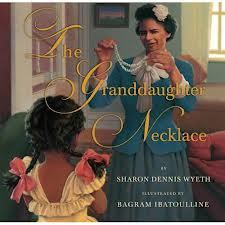
My most recent book is The Granddaughter Necklace. It’s a picture book based on family stories I collected from childhood on up. I am African American but discovered when I was an adult that my maternal line goes back to a woman in Ireland. This woman is featured in The Granddaughter Necklace along with six other generations in my maternal line. It’s a book I feel as if I’ve been writing my entire life.
Do you think of yourself as a diverse author?
For the major part of my career I’ve created books with protagonists of color. Primarily, because much of my work has its source in real life experiences I had growing up in the Black community. Early on, I also began to think very strongly about my readers and how important it was for those who were children of color to see protagonists of color in some of their literature. I also felt and continue to feel that it is equally valuable for the rest of our readers. So, yes, I would say that as an author I could be categorized as “diverse” (an African American becoming more and more diverse everyday now that I’ve discovered my Irish heritage and had my DNA traced back to tribes in Cameroon!). As a writer, diversity in literature is one of my missions and has characterized my career.
Who is your favorite character of all time in children’s or young adult literature?
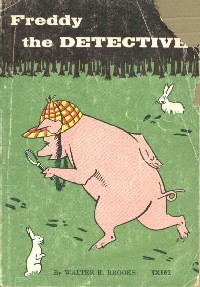
Very difficult, since I now also teach Children’s Lit and have read so much good stuff. Yet again, I go back to my own formative reading years and say for children’s books: it’s a tie between two pigs. Wilbur in “Charlotte’s Web” and Freddy in the Albert Brooks series “Freddy the Pig.” Freddy was so resourceful and could do just about anything he set his mind to, even though he wasn’t a “human.” “Ramona” by Helen Hunt Jackson was a book written long before I was born but I found it by myself in the public library at around the age of ten. It’s young adult. That book was so important to me because Ramona was a girl of color and I’d never seen that in a book before. I found it all by myself and so identified with her!
Hypothetically speaking, let’s say you are forced to sell all of the books you own except for one. Which do you keep?
I would keep my new book, The Granddaughter Necklace, on account of Bagram Ibatoullne’s illustrations that remind me so much of my own family. After that, the Sonnets of Shakespeare.
What does diversity mean to you as you think about your own books?
Essential; closest to my heart; closest to my experience. But of course I don’t think of my work as “diverse’ but simply my own work, writing what I need and want to write. The term diversity for me primarily makes me think of the reader. I’ve visited schools where the population was mainly Title 1 and when I read “Something Beautiful” a book about a child living in an impoverished neighborhood, well… that book was for those kids. I was so aware of that and one of them even told me once: “I am in that book.” So diversity in my own writing has much less to do with me than diversity in our readership and the importance of using story as a way to help ALL our readers make connections that are based on our common humanity. So many universals!
What is your thought process in including or excluding characters of diverse backgrounds?
Just do it without thinking that much about it. Except early in my career, I consciously created a Chinese American character (so carefully!) in a “mainstream” mass market series. The idea had been handed off to me. The series was about roommates in a boarding school. The other three protagonists were White but I made sure they were different in other ways, regionally and economically. It’s always been so important to me, right from the start. I was floored when I got mail from Chinese American girls thanking me for creating a character they could identify more closely with.
Write an example of a paragraph that is tone deaf when it comes to cultural diversity, then write the correct version. Explain the differences in the third paragraph.
Paragraph 1
Name is Corey. Daddy’s name is Roland. Mama’s name is Angel. We live on the Hart plantation. We are slaves. I wish i could read but I will never be able.
All we do is work the whole day.
Paragraph 2
Roland and Angel. These are the names of my parents. My name is Corey. We live on the Hart place. Mr. Hart doesn’t know that I read. Mr. Hart doesn’t know that my father is teaching me to write. My father and I are bird watchers. But we can’t let Mr. Hart know that either. One day, my parents say, things will be different. We’ll read and write and no one will try to stop us. One day, they promise, my family will be free.
Explanation
In the first paragraph, the word “slave” is used. This was a term I tried to skip when writing Corey’s Underground Railroad Diaries. In the second paragraph, I paint a picture of things the family is not able to do and use the word “freedom.” This will lead the reader to an understanding of the family’s circumstances (there’s enough to guess, anyway) and also help the reader to identify with the narrator. The narrator is reading in spite of the “Harts”, which empowers him; the narrator also talks about wanting to be free, which will also help the reader identify with his story and by that I mean any reader, I believe. A largely held stereotype was that there was universal illiteracy among early blacks, most of whom were enslaved. Though there were anti literacy measures, many early African Americans could read and learned to read surreptitiously. The introduction of “bird watching” in the second paragraph (a detail I chose myself for the Underground Railroad series) gives the character of color an interest that is cross cultural and in this instance highly plausible. The boy in the paragraph isn’t a “slave” he’s a “boy” who likes to read, loves his parents and likes to watch birds. His condition is “slavery” or “enslavement.”
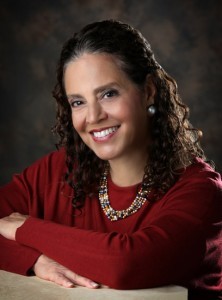
Sharon Dennis Wyeth has written award winning fiction and historical fiction for children and young adults. Two of her books are Children’s Book Council Notable Books. Her latest title is The Granddaughter Necklace. You can learn more about Sharon and her books by visiting www.sharondenniswyeth.com.

