
Blog
-

28th Annual Lambda Literary Award Finalists Announced
This year’s finalists in the LGBT Children’s/Young Adult category are: About a Girl: A Novel, Sarah McCarry, St. Martin’s Griffin Anything Could Happen, Will Walton, Push Gay and Lesbian History …
-

ALA, AASL Support School Librarians in Houston Independent School District
CHICAGO, IL — The American Library Association (ALA) and American Association of School Librarians (AASL) are assisting local efforts in Houston to maintain and expand school librarian positions, as a …
-

“I Just Don’t Identify with the Character”
Contributed by Kate Sullivan, Senior Editor at Delacorte Press
These days, many working in the industry have heard the news and are on board with the mission: it’s time to diversify the book market. Publishing is an ecosystem, and every level needs to be committed to making changes if this mission is to succeed.
As an editor, I think a lot about my piece in this effort, and I’m avidly watching what other editors are doing to make it happen. Recently, some conversations I had on Twitter surrounding #ownvoices and #divpit made me reflect about blind spots that even the best intentioned ally or advocate editors have—including myself—and I want to share those revelations so that we can keep pushing the efforts forward.
I know many editors who are ready for change, and are embracing it. They’re calling to the heavens, to Twitter, lunching agents, asking and begging for more diverse submissions. And… honestly, we haven’t been super successful yet. At least, I know I’m not the only one discouraged by the limited progress. Some authors of color or marginalized voices are getting bigger and better book deals but not enough. I’m seeing more books that feature characters of different ethnicities or backgrounds and sexualities, and fantasies inspired by different cultures, but most of them aren’t written by diverse authors. It’s progress of a sort, but we need to push further and do better.

So if editors are advertising that we’re open and ready, why isn’t it working yet? First of all, if we’re acting within the system that is the problem, we’ll never fix it. We can’t use our usual methods of expanding our lists to cover more diverse subjects and authors because it’s the very method that has been failing those authors for so many years. It’s like emailing IT to tell them that your email is broken.
In regards to diverse authors, the common refrain I hear from frustrated editors is: “the manuscripts just aren’t being submitted to me.” Well, no. If marginalized people grew up without seeing themselves in books, why would they try to join traditional publishing? We must go to them, was the point that Sarah Hannah Gomez made on Twitter last month, when she challenged agents to find marginalized voices on social media and invite them to submit. Why can’t editors get out of their comfort zone, too, and find short fiction written by marginalized voices and encourage those authors; email MFA professors and ask to reach out to students; and get referrals from the few diverse authors we already have on our lists?
How are you even on Twitter & NOT seeing diverse voices? This is 1 of the few places we thrive. Like how bad are you at internet #subtweet
— sarah HANNAH gómez (@shgmclicious) February 6, 2016Another refrain I hear a lot from other white editors when talking about the struggle to get more diverse books: “if they were as good as the other stuff in my pile, of course I’d acquire them.” But is that fair? Are they as good, but you can’t see it because of a blind spot? Analyzing manuscripts for acquisition is sometimes an emotional or gut-based reaction, and now and then editors don’t have the time to plumb deeper than that. A common pass letter to an author might say “I didn’t connect to the voice,” or “I didn’t identify with the character.” If you’re a white editor reading this, pause for a second and think about how an African American or Native American might feel getting that pass letter. I imagine they probably think to themselves: “Of course you don’t connect to the character. You’re white. You’ve never been discriminated against like this.”
Another thing we can do to break the system that keeps out diverse authors is simply to check ourselves. I believe that “I didn’t connect to the character/voice” is unacceptable when it comes to diverse perspectives. If most editors are white and straight and middle or upper class, of course they won’t “identify” or “connect” with a diverse perspective. For those manuscripts, many of us should take a pledge to examine it in more detail before moving on.
- What is it about the character that you didn’t
connect with? If it’s at all race- or sexuality-based, might it be worth
reading on? If not, consider sharing your
specific analysis of what wasn’t working
with the author or agent.
- If you don’t believe the story and you’re passing
because the race is “too prominent”, take another look, and try to “suspend (white)
disbelief”.
- If your problem was in not connecting with the
voice, analyze it at the sentence level: Are you not connecting with the
writing, or is it that you’re not connecting with the race or sexuality of the
character? If the writing is weak, say why in your pass letter. If it’s good, keep
reading or share with a colleague for a second read, even if it’s not for you.
- Is it a problem with pacing, story structure, or use of perspective that is leading you to pass? All are reasons not to connect with character or story that have nothing to do with identification.
The fact is: marginalized voices have the deck stacked against them because white straight middle or upper class editors can’t identify with their perspective. The level of analysis required from the above questions really only takes an extra 15 minutes of commitment from editors, but that level of feedback can make all the difference for an author. So even if you’re passing, you might be giving them a leg up that they might not otherwise get. If you’re really committed to your alliance, I know of an editor who reads the entire manuscript any time she gets a submission from a diverse author, so that she can give it the best chance, or provide richer editorial comments.
In her article “Your Manuscript is Not a Good Fit”, Paula Lee Young points out that publishing is a cultural system pervaded by whiteness and, I would add, pervaded by a certain level of economic security. And in that system, many gatekeepers are going to have blind spots borne out of experience and privilege.
A glass ceiling would be an improvement on this feeling of running everywhere into invisible electrical fences shrugged off as paranoid delusions by those who aren’t shocked every time they attempt pass through them.
In other words, we’re all standing on the other side of that fence saying “I want more diverse books, I want to change the system” and not working outside of that very system. Gatekeepers and allies and advocates can actively open the door we didn’t even realize we’d left half-closed—we just need to think creatively to see around our blind spots. These two ideas—reaching out and thinking longer—are just the tip of the iceberg.

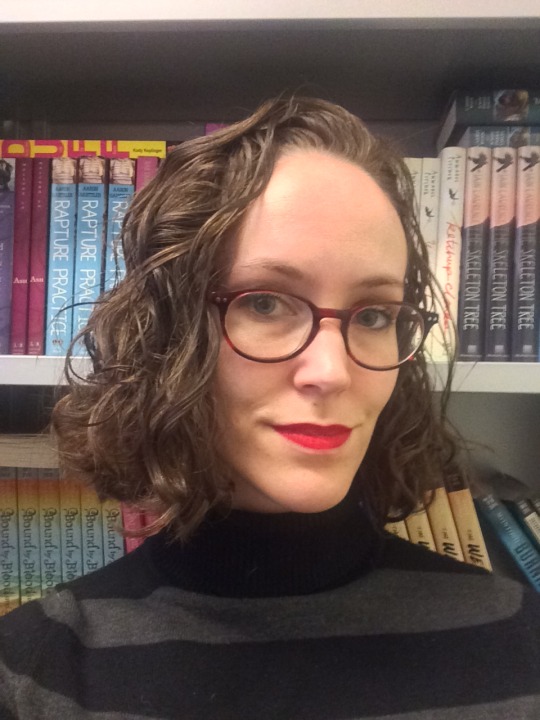
Kate Sullivan grew up in Belgium, the daughter of an air force colonel, where the tiny american library skipped straight from middle grade to adult fantasy and science fiction, which is where she fell in love with reading. She has worked on several NYT bestsellers, edited four Lambda finalists, and one book she edited has been turned into a film, and is currently a senior editor at Delacorte Press working on YA and middle grade.
- What is it about the character that you didn’t
connect with? If it’s at all race- or sexuality-based, might it be worth
reading on? If not, consider sharing your
specific analysis of what wasn’t working
with the author or agent.
-

Ninth Biennial Dolly Gray Award Winners Announced
December 23, 2015 — The Dolly Gray Children’s Literature Award was presented on January 20, 2016 at the Council for Exceptional Children’s Division on Autism and Developmental Disabilities (DADD) international conference in Waikiki …
-

Bedtime Story Prompts
Here are some ideas for generating nightly tales: The Quest: Create an India Jones-style narrative around an objective, an obstacle, and a resolution. Everyday Chaos: Spin a tale based on your everyday …
-

The New York Public Library’s Rose Main Reading to Reopen in Late Fall 2016
NEW YORK, NY — The New York Public Library’s historic Rose Main Reading Room and Bill Blass Catalog Room will reopen by late fall 2016 – several months ahead of the …
-

Michael Haggen Named Chief Academic Officer for Scholastic Education
New York, NY – March 15, 2016 – Scholastic (NASDAQ: SCHL), the global children’s publishing, education and media company, today announced the appointment of Michael Haggen as Chief Academic Officer …
-

Diversifying the Publishing Industry
While the We Need Diverse Books movement continues to gain momentum, the fact remains that publishing houses are staffed by predominantly white, middle class individuals. Low salaries, unpaid internships, and …
-

School Libraries Linked to Student Success
South Carolina is the first state to conduct a detailed study of this kind. In particular, seven qualities relating to school libraries were correlated with student achievement on tests for English language …
-

America’s Most Creative Teens Named as National 2016 Scholastic Art & Writing Awards Recipients
NEW YORK, NY –The nonprofit Alliance for Young Artists & Writers (the Alliance) today announced the national award recipients of the 2016 Scholastic Art & Writing Awards, the nation’s longest-running …
-

National Ambassador Gene Luen Yang’s Reading Without Walls Podcast: Episode 1 with Kate DiCamillo
Through his platform, “Reading Without Walls,” Yang hopes to inspire readers of all ages to pick up a book outside their comfort zone. See Yang’s inaugural interview with his predecessor …
-

#DrawingDiversity: ‘Wangari Maathai’ illustrated by Aurélia Fronty
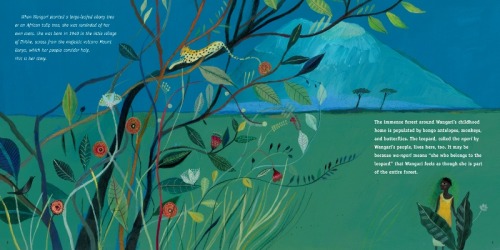
Wangari Maathai: The Woman Who Planted Millions of Trees by Franck Prévot, illustrated by Aurélia Fronty (Charlesbridge, January 2015). All rights reserved.
-

97th Annual Children’s Book Week Bookmark Revealed!
Download your free bookmark and activity sheet at bookweekonline.com! This year’s bookmark is designed by 2015 Children’s Choice Debut Author-finalist Cece Bell, creator of the graphic memoir El Deafo! It’s the perfect companion for all your …
-

Siblings Form Detective Agency Inspired by Kid-Lit Sleuths
For just $6, the Gore & Gore Detective Agency is at your service! So far, the young duo has investigated the case of the missing dog tag; the case of the mysterious …
-

Author Jennifer L. Holm on Diversity in Comics
Holm fell in love with comics as a child, though she longed to see an ordinary girl like herself reflected in their pages. Her Babymouse series, written in collaboration with …
-

Diary of a Wimpy Kid: Book 11 to be Published by ABRAMS on November 1, 2016
NEW YORK, NY — At least twenty international publishers will once again simultaneously publish and release Diary of a Wimpy Kid: Book 11 in the phenomenally successful children’s book series. …
-

Happy 100th Birthday, Ezra Jack Keats!
The Great Depression prevented Keats from attending art school. Instead, he worked several jobs, one of which was illustrating for comic strips. When World War II broke out he joined the …
-

The Art of Organizing Books
Sentimental attachment can make it difficult for kids and caregivers to let go of books. Helpful tips: “Make sure you don’t start reading [the books]. Reading clouds your judgment.” (Marie …
-

CineConcerts and Warner Brothers to Create a Series of Harry Potter Movie Concerts
The premiere concert will feature the first installment of the franchise, Harry Potter and the Sorcerer’s Stone. John Williams composed the music for this film. The Harry Potter Film Concert …
-

Author Chris Grabenstein on the Value of Literary Humor
A former class clown, Grabenstein recognizes the value of infusing his stories with the right mix of funny and frightening to keep readers invested. Comedy is a writer’s tool for …
