
Honoring AAPI Heritage Month in Books for Children and Teens
The CBC is celebrating American, Native Hawaiian, and Pacific Islander communities and cultures in many ways. We’ve curated a list from our AAPI Heritage Month booklist and titles championed by the National Consortium for Teaching about Asia and their Freeman Book Awards. For more resources, please visit The Asian American Foundation and History.com.
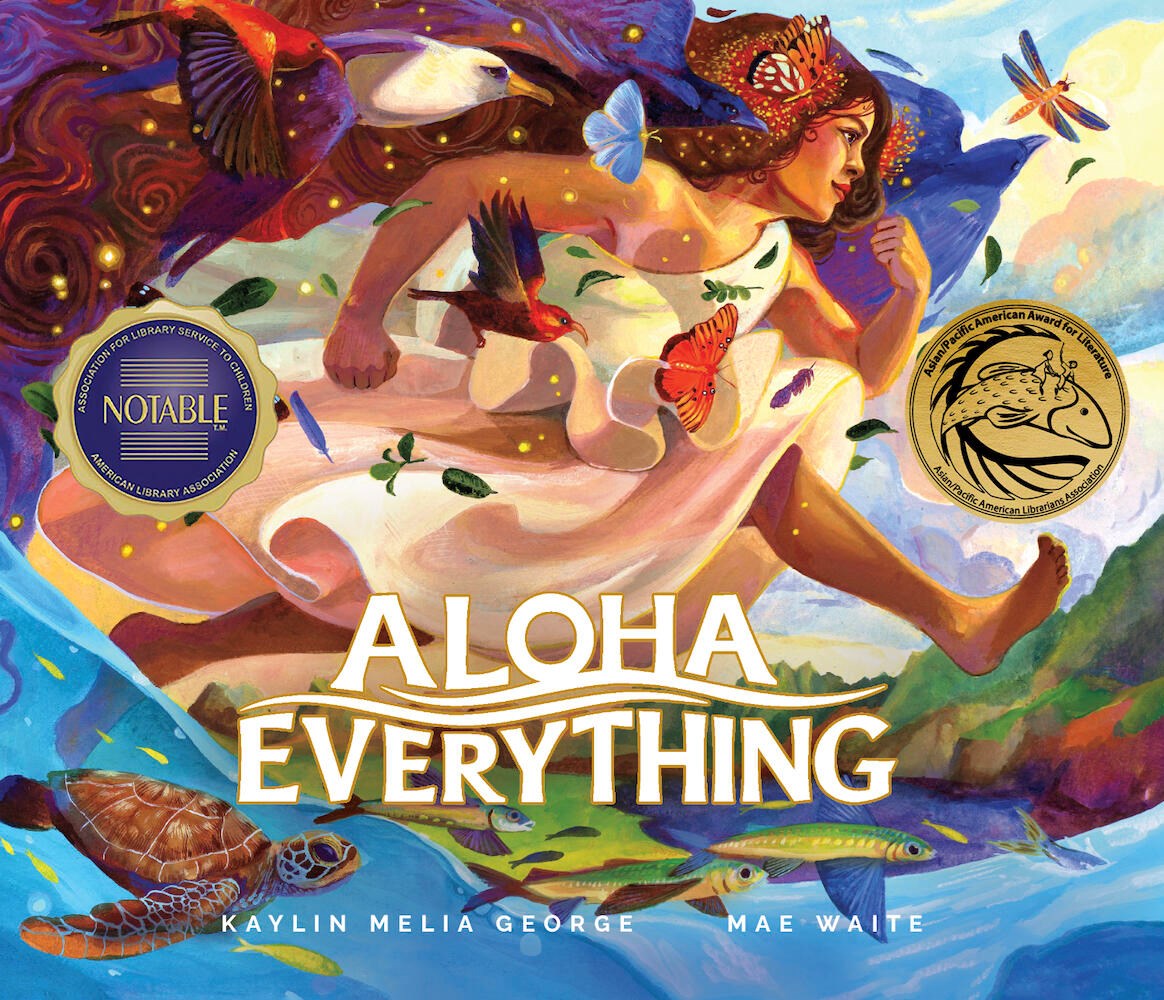
Aloha Everything, by Kaylin Melia George; illustrated by Mae Waite (Red Comet Press) — Places / Travel, Folklore / Fairytales / Myths, Cultural Diversity, Science / Nature, ages 3–5, 5–7.
Aloha Everything is a magical story that will take you on a thrilling journey through the breathtaking islands of Hawaiʻi!
In this exciting adventure, you’ll encounter mighty canoes crashing over ocean waves, regal hawks soaring high above the clouds, and brilliant lizards jumping nimbly through forest trees! Most importantly, you’ll meet a courageous young girl who learns, grows, and comes to love her island home with all her heart. Aloha Everything is both a captivating read and a fantastic educational resource for learning about Hawaiian history, ecology, and culture. With breathtaking hand-painted illustrations and beautiful rhyming poetry that will lull little ones into brilliant dreams of vibrant adventure, this book is sure to capture the hearts of both children and parents alike.
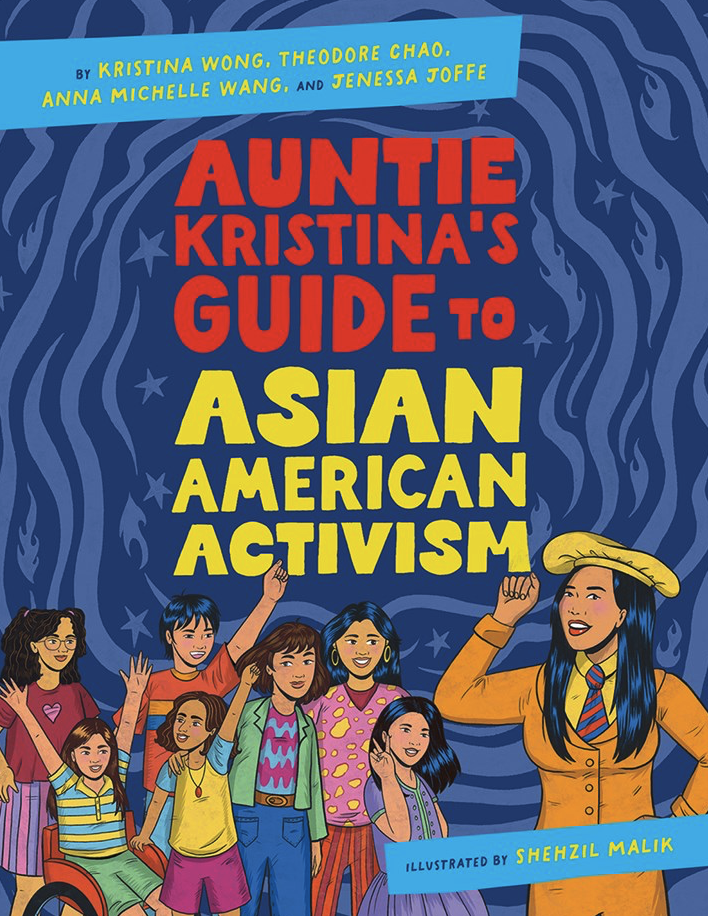
Auntie Kristina’s Guide to Asian American Activism, by Kristina Wong, Theodore Chao, Anna Michelle Wang, Janessa Joffe; illustrated by Shehzil Malik (Beaming Books) — Action / Adventure, Cultural Diversity, Family / Community, Imagination / Play, ages 9–12.
Activism is more than just screaming with signs—it’s also about discovering who we are, building spaces, and documenting our community.
Vibrant and witty, Auntie Kristina’s Guide to Asian American Activism shows young readers how to love their bodies, fight for social justice, and be proud of the history that’s made them who they are. Grounded in diverse lived experiences of featured Auntie Heroes and inspiring Young Rebels, this guide discusses the Asian American community, past and present; explores allyship with other communities of color; finds a place in national and global movements; and turns inward so young readers can practice love and self-care. Each chapter includes activism strategies for all kids—from those who love math and statistics to those who can’t wait for their next art project.
Along with her co-creators of Radical Cram School, Kristina Wong is Auntie Kristina, accompanying readers as they process uncomfortable realities, connect to the history of Asian America, and become leaders within their own communities and beyond.
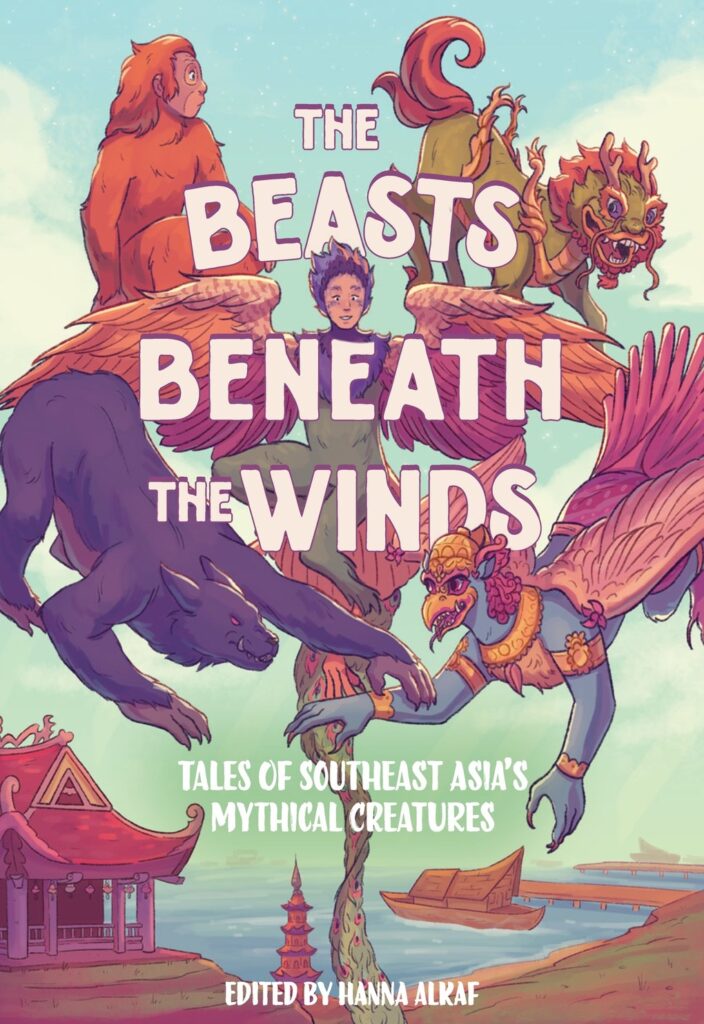
The Beasts Beneath the Winds: Tales of Southeast Asia’s Mythical Creatures, by Edited by Hanna Alkaf (ABRAMS / Amulet Books) — BIPOC Characters and Creators, Folklore / Fairytales / Myths, Fantasy, Places / Travel, ages 7–9, 9–12.
A sweeping and magical story collection showcasing the mythical creatures of Southeast Asia, including work by two-time Newbery medalist Erin Entrada Kelly and National Book Award finalist Shing Yin Khor
A turtle the size of an island. A cricket that can possess you if swallowed. A giant who turns enemies to stone. The legends of Southeast Asia—or “the lands below the winds,” as explorers used to call it—are populated with a whole menagerie of colorful beasts that inspire awe and fear in equal measure.
Yet, passed on as they are through story and song, so many of these stories remain rooted in some long-forgotten past and bound by the borders of the region, creatures of myth and memory and nothing more. Until now.
Welcome to The Beasts Beneath the Winds, a collection of Southeast Asia’s most elusive cryptids by a team of bestselling and award-winning authors. Within these gorgeously illustrated pages, readers will find the stories of seventeen regular kids who encounter these mythical creatures in the here and now, and—fortunately or unfortunately—live to tell the tale. Contributors include Hanna Alkaf (The Weight of Our Sky, Queen of the Tiles), Nadia Mikail (The Cats We Meet Along The Way), Brandon Hoàng (Gloria Buenrostro Is Not My Girlfriend), Mandy Moe Pwint Tu (Monsoon Daughter), Moniza Hossain (Being Ace), V.T. Bidania (Astrid & Apollo and the Happy New Year), Emma Goddard, Dow Phumiruk (One Girl, Maya Lin), Erin Entrada Kelly (Hello Universe, We Dream of Space, The First State of Being), Gail D. Villanueva (My Fate According to Butterfly, Sugar and Spite), Greg van Eekhout (The Boy at the End of the World, COG), Jesse Q. Sutanto (Dial A for Aunties), June CL Tan (Jade Fire Gold), Mae Respicio (The House that Lou Built, Any Day With You), Shing Yin Khor (The Legend of Auntie Po), Van Hoang (Girl Giant & The Monkey King), and Veeda Bybee (Courage on Ice, Lily and the Great Quake).

China’s Child, by Evi Triantafyllides; illustrated by Nefeli Malekou (Worldwide Buddies) — BIPOC Characters and Creators, Death / Grief / Loss, Folklore / Fairytales / Myths, Kindness / Generosity, Social Emotional Learning, ages 3–5.
For as long as she could remember, Mei Ling wanted a baby brother. She asked and asked, and wished and wished, yet nothing happened. Until one day… she came up with a plan! Imaginary friends (including a dragon!), a fantastical world, and adventures at every turn—a heartwarming read for all the little dreamers, explorers, and inventors out there.
- Thoughtfully designed for kids ages 4-8, with a hardcover format that makes it a keeper.
- A story that takes place during Chinese Near Year, making this the perfect Lunar New Year read!
- An exciting adventure that introduces young readers to Chinese traditions, delicious foods, and rich symbolism that brings the story to life.
- Mei Ling’s quest for a sibling makes this a great read for any children waiting for a baby brother or baby sister.
- A “search and find quiz” and a Mandarin glossary at the end of the book encourage children to revisit the story in interactive ways.
- Color-bursting illustrations, an enchanting storyline and a surprise foldout page will make this your new favorite read-aloud picture book
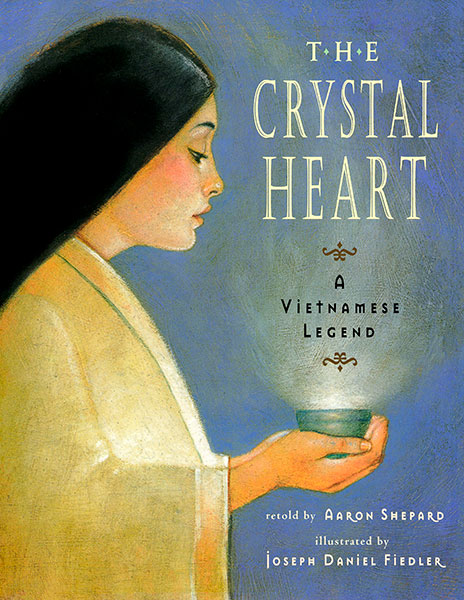
The Crystal Heart: A Vietnamese Legend (25th Anniversary Edition), by Aaron Shepard; illustrated by Joseph Daniel Fiedler (Skyhook Press) — BIPOC Characters and Creators, Family / Community, Immigrant Experience, Social Emotional Learning, ages 7–9.
My love is like a blossom in the breeze.
My love is like a moonbeam on the waves.
As the daughter of a great mandarin, Mi Nuong leads a sheltered life. But one day, sitting in her tower, a song floats to her from a distant fishing boat on the river. The voice is so beautiful, she knows the singer must be young and handsome—perhaps even a mandarin’s son in disguise.
Could it be that the song is for her? She longs to meet him, but how? And what will she find if she does?
In this poignant legend, a young lady discovers that appearances can deceive, but the heart speaks true.
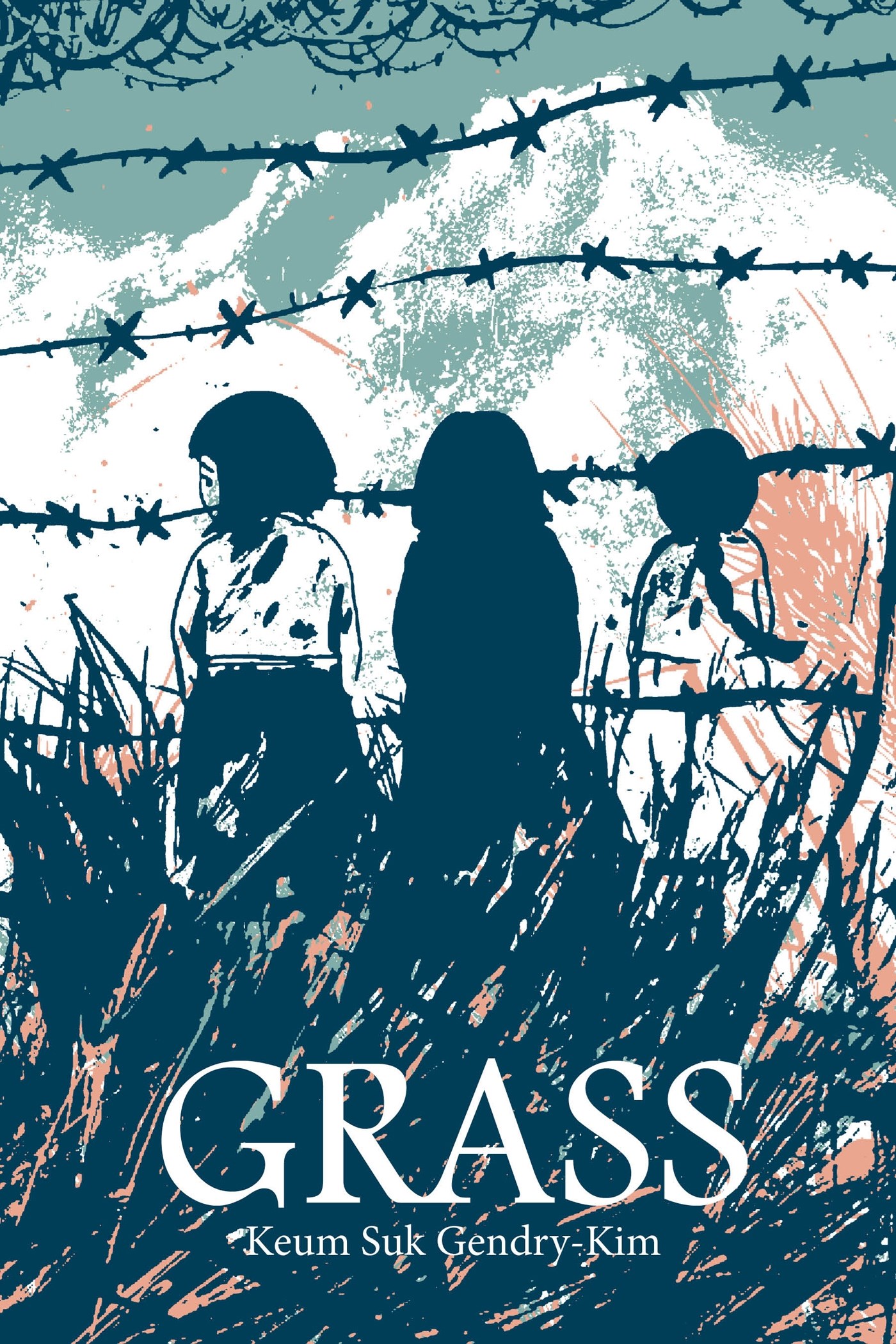
Grass, by Keum Suk Gendry-Kim; translated by Janet Hong; illustrated by Keum Suk Gendry-Kim (Drawn and Quarterly) — BIPOC Characters and Creators, Cultural Diversity, Social Activism / Equality / Feminism, Teen (12+).
Appeared on best of the year lists from The New York Times, The Guardian, and more! Winner of The Cartoonist Studio Prize for Best Print Comic of the Year!
Grass is a powerful antiwar graphic novel, telling the life story of a Korean girl named Okseon Lee who was forced into sexual slavery for the Japanese Imperial Army during the Second World War—a disputed chapter in twentieth-century Asian history.
Beginning in Lee’s childhood, Grass shows the lead-up to the war from a child’s vulnerable perspective, detailing how one person experienced the Japanese occupation and the widespread suffering it entailed for ordinary Koreans. Keum Suk Gendry-Kim emphasizes Lee’s strength in overcoming the many forms of adversity she experienced. Grass is painted in a black ink that flows with lavish details of the beautiful fields and farmland of Korea and uses heavy brushwork on the somber interiors of Lee’s memories. The cartoonist Gendry-Kim’s interviews with Lee become an integral part of Grass, forming the heart and architecture of this powerful nonfiction graphic novel and offering a holistic view of how Lee’s wartime suffering changed her. Grass is a landmark graphic novel that makes personal the desperate cost of war and the importance of peace.
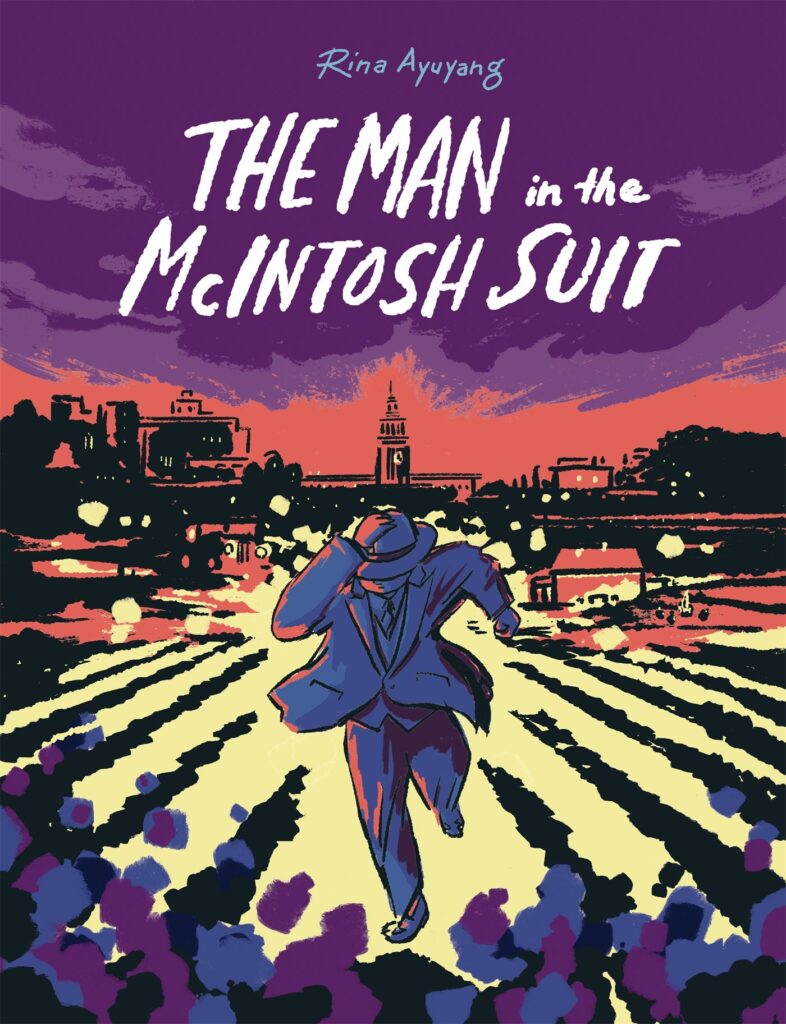
The Man in the McIntosh Suit, written & illustrated by Rina Ayuyang (Drawn and Quarterly) — Family / Community, Holidays / Seasons / Celebrations, Places / Travel, Teen (12+).
A Filipino-American take on Depression-era noir featuring mistaken identities, speakeasies, and lost love
The year is 1929 and Bobot is just another migrant worker in rural California. Or rather, a migrant worker with a law degree from the Philippines reduced to manual labor in America. Bobot, like so many other young Filipinos, finds himself bunking in the fields picking fruit by day. When his cousin writes claiming to have spotted his estranged wife in nearby San Francisco, he swipes a co-worker’s favorite nightclub suit and heads to the big city to find her. What follows is classic noir with seedy dives, mouthy pool sharks, and obsession. Rina Ayuyang indulges her passion for old Hollywood and elaborate movie musicals while exploring her immigrant roots in a playful and mysterious drama, creating something she never saw but always had hoped for—a classic tale about people who looked just like her. The Man in the McIntosh Suit is a gripping, romantic, and psychological exploration of a fledgling community chasing the American dream in an unwelcoming society, heightened by racial hostility and the bubbling undercurrent of the coming Great Depression
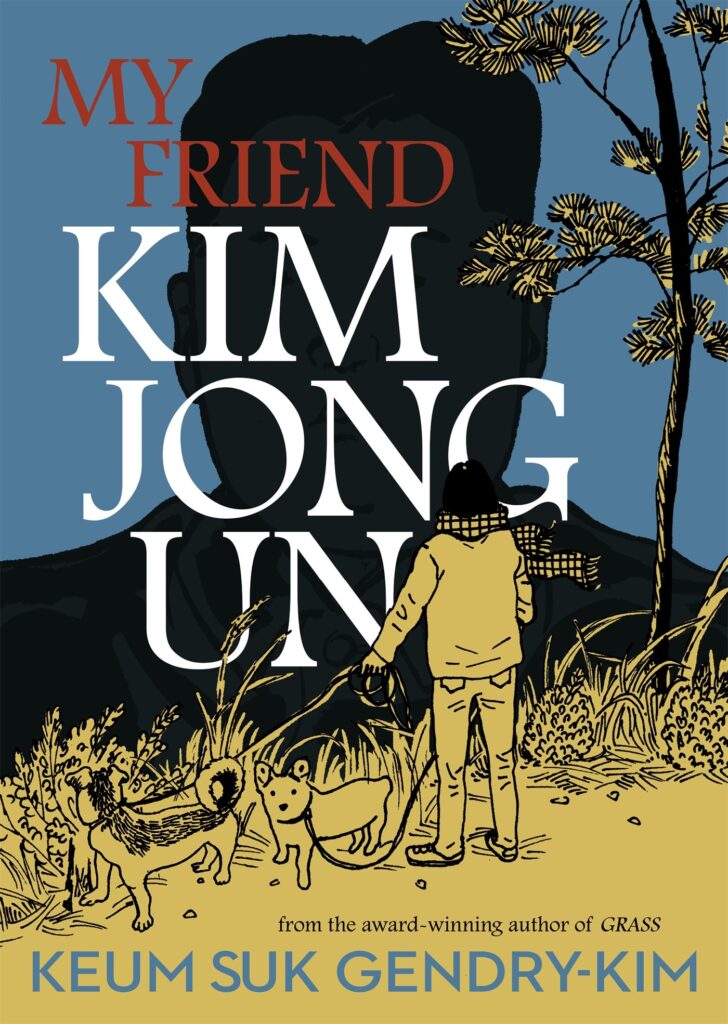
My Friend Kim Jong Un, by Keum Suk Gendry Kim; translated by Janet Hong; illustrated by Keum Suk Gendry Kim (Drawn and Quarterly) — Biography / Memoir, BIPOC Characters and Creators, Daily Life, Death / Grief / Loss, Government / Politics / Law, History, Non-English Languages, Teen (12+).
Award-winning cartoonist Keum Suk Gendry-Kim contemplates and explores the long shadow North Korea casts over Korean society
On an island located an hour from Seoul, North Korea sits visible from cartoonist Keum Suk Gendry-Kim’s home and studio. The specter of the infamous dictatorship and nuclear power looms over daily life. Artillery fire, helicopters, and sirens from a nearby military base paint the acoustic landscape. In her award-winning books Grass and The Waiting, Gendry-Kim documents the pain and heartbreak of Korea’s history. In My Friend Kim Jong-Un, she looks to the present—to the man currently responsible for upholding the national divide created after World War Two.
While the rest of the world partakes in the popularity of Korean culture, a certain unease and anxiety hangs in the air in South Korea as its people still grapple with the distrust and anger of one culture split into two distinct societies. Gendry-Kim explores the life of the supreme leader, searching for commonalities to make sense of the daily fear: from his birth to his international education, his hobbies, and his relationships. She weaves her personal accounts and includes interviews with former South Korean president Moon Jae-in, North Korean defectors, researchers, journalists, and even Kim’s former chef. Translated by the award-winning Janet Hong, My Friend… is a cautionary tale on what makes a dictator, at a time when these lessons are more relevant in the West than ever.
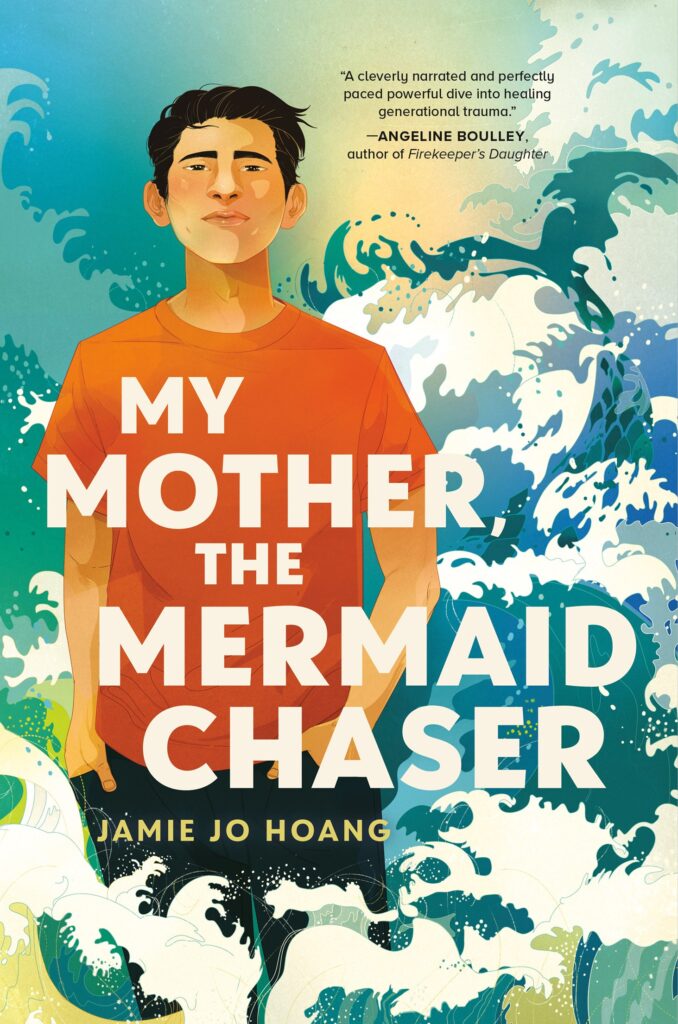
My Mother, the Mermaid Chaser, by Jamie Jo Hoang (Random House Children’s Book / Crown Books for Young Readers) — BIPOC Characters and Creators, Family / Community, Cultural Diversity, War / Conflict / Violence, Teen (12+).
Told in dual POV, this gripping companion piece to My Father, the Panda Killer, follows a teenage son who defies his sister’s wishes by searching for more information about their absent mother. Meanwhile, his mother’s poignant backstory reveals her struggle with grief and longing, culminating in her heart-wrenching decision to leave her children.
San Jose, 2008: Paul yearns to know more about the mother who abandoned his family, but she is the only topic no one discusses. Now’s he’s in Vietnam, feeling displaced and considered an outsider. Plus, a ghost is haunting him even though he doesn’t believe in ghosts. His cousin and the grandmother he’s never met before now keep telling him that he’ll get answers only if he’s willing to open his ears.
Vũng Tâu, 1975: Ngọc Lan is eleven when her family breaks apart: her brother is drafted into the army; her father leaves on the last helicopter to the US. She and her sister are sent from Vietnam on a harrowing journey by boat. Only Ngọc Lan will survive. But what is the American dream when you are haunted by the death of your sister, missing your homeland; seeing ghostly mermaid sightings; lost in an abusive marriage; struggling as a parent? Told in the alternating perspectives of Paul and Ngọc Lan, My Mother, the Mermaid Chaser is a haunting story about the intergenerational effects of war, estranged family bonds, and how a teenager discovers a new connection to a lost part of himself.

Sarang Saves the School, by Korena Di Roma Howley; illustrated by Joowon Oh (Candlewick Press) — BIPOC Characters and Creators, Places / Travel, School / Education, Family / Community, ages 3–5, 5–7.
Inspired by true events in South Korea, this tender and tenacious tale of female empowerment—at any age—proves that it’s never too late to fulfill a dream.
At a seaside school in a sunny fishing village, Sarang and her classmates are surrounded by empty desks. More and more families have been moving away, and, with so few students, their rural school may be forced to close. Their village may be getting smaller, but it’s still home—a place filled with love and memories. So Sarang hatches a plan. If the school needs more students to keep its doors open, why not offer local grandmothers, including her own beloved Halmeoni, the education they were denied as girls? Can Sarang and the other students and villagers convince the reluctant grandmothers to join forces and embark on their educational journey together? Set in contemporary South Korea and inspired by real events, Sarang Saves the School is a fresh and timely take on the power of intergenerational bonds and a charming testament to taking action for causes you believe in.
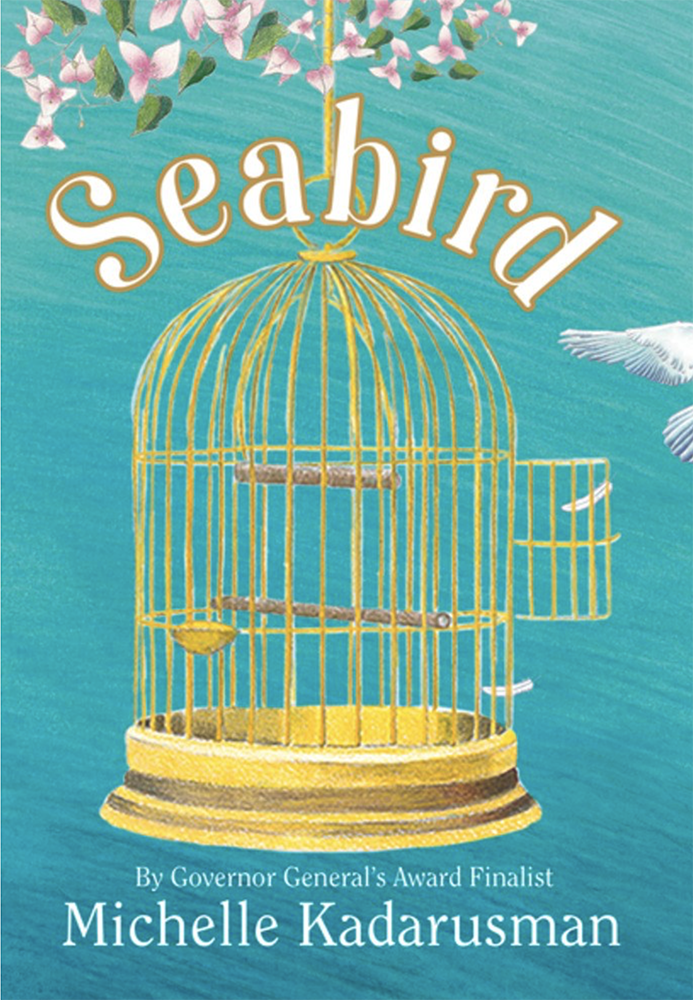
Seabird, by Michelle Kadarusman (Pajama Press) — Historical Fiction, BIPOC Characters and Creators, Social Activism / Equality / Feminism, School / Education, ages 7–9, 9–12.
Inspired by a true story, Seabird follows the early teen years of Kartini, whose forced isolation ignites her desire for freedom and the right to have a say in the decisions that shape her life.
Kartini was born in 1879, during Dutch-colonized Indonesia, then known as the Dutch East Indies. Due to her high-born status, Kartini is forced to enter home seclusion just before her twelfth birthday with the intention that she will remain home until she is married.
During seclusion, Kartini, who is fluent in the Dutch language, begins a self-directed education and writes letters to a former schoolmate named Lesty. This period of isolation sparks her interest in feminist thinking and ignites her desire to improve education opportunities for all Javanese girls and women.In Seabird, Governor General’s Award finalist Michelle Kadarusman shows us that no matter how powerless you feel, your voice can have great impact, and by virtue of writing down your dreams and ideas, you can inspire generations to come.
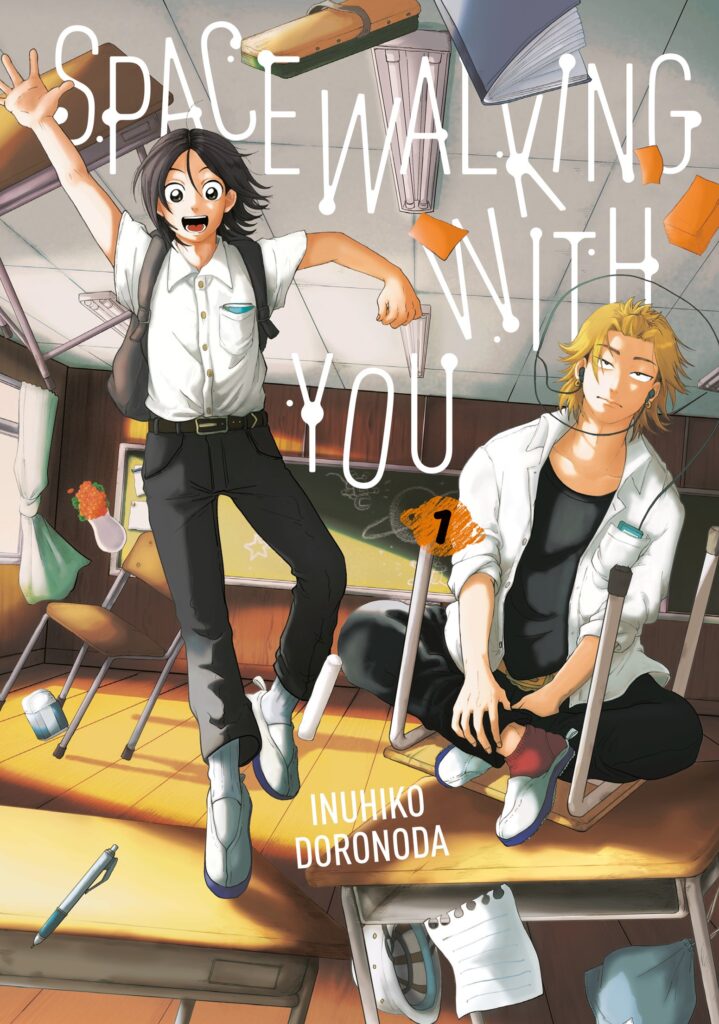
Spacewalking With You, written & illustrated by Inuhiko Doronoda (Kodansha) — Friendships, School / Education, Coming of Age, Humor, Teen (12+).
Kobayashi just can’t focus—not on studying, not on work—and the adults in his life think he’s in danger of becoming a worthless dropout. Then, one day, a strange new presence arrives in his class: an energetic and naive kid named Uno. Kobayashi saves Uno from getting scammed, and that close encounter launches a new friendship. Uno’s definitely a space cadet, but Kobayashi can’t help admiring the way he floats through life, and before he knows it, he might start feeling his feet lift off the ground, too…
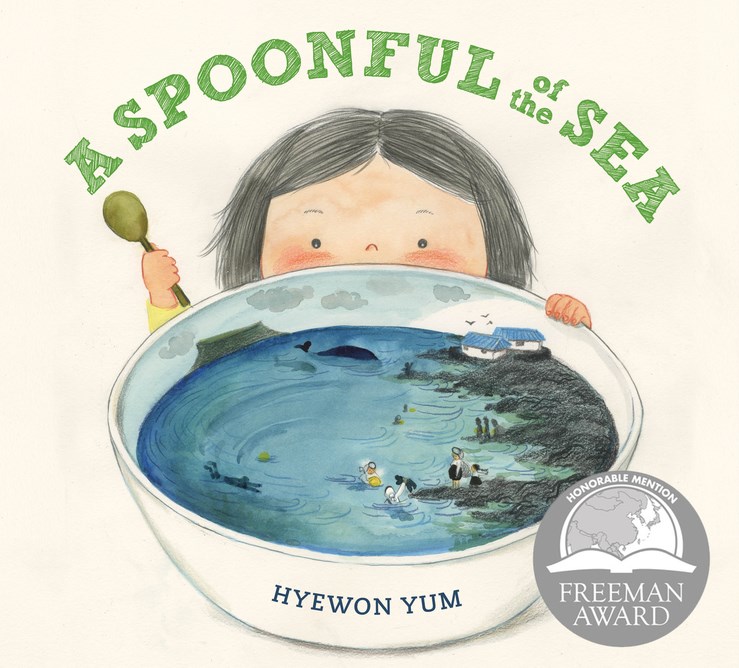
A Spoonful of the Sea, written & illustrated by Hyewon Yum (W. W. Norton / Norton Young Readers) — BIPOC Characters and Creators, Cultural Diversity, Food / Cooking, Folklore / Fairytales / Myths, ages 3–5, 5–7.
Honoring the tradition of serving miyeokguk on birthdays and inspired by the lives of Korea’s haenyeo, this lovely picture book celebrates the bond between mothers and daughters.
On her birthday, a girl is presented with a bowl of miyeokguk, seaweed soup—instead of the cake she wants. As she stirs her soup, her mother tells her how mothers eat it after giving birth and how it is served on birthdays to honor them; about haenyeo, women who dive into the ocean’s depths to harvest shellfish and seaweed; and how, many mothers ago, a pregnant haenyeo saw a whale eating seaweed after giving birth and tried it after having her own baby—creating a tradition that would continue for generations of daughters to come.
Award-winning picture book creator Hyewon Yum has crafted a luminous and heartfelt celebration of motherhood, heritage, and the deep-rooted connection between women and nature.
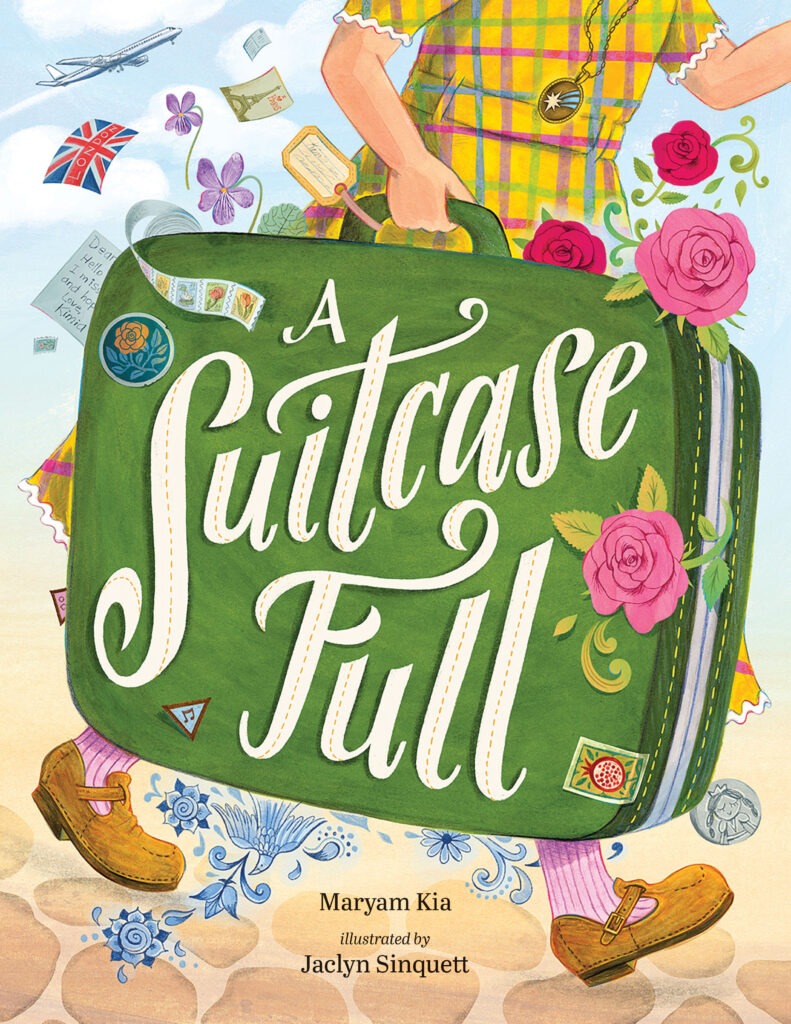
A Suitcase Full: A Story of Starting New and Carrying Home in Your Heart, by Maryam Kia; illustrated by Jaclyn Sinquett (Free Spirit Publishing) — Biography / Memoir, BIPOC Characters and Creators, Death / Grief / Loss, Government / Politics / Law, History, Non-English Languages, War / Conflict, ages 5–7.
A Suitcase Full explores themes of the immigrant experience, home, identity, and the power of family. When young Kimia and her parents are forced to flee Iran, they set off on a journey around the world.
A Suitcase Full is a heartfelt picture book about the love of family, the power of one’s story, and the beauty of embracing change while leaving and finding home. When a young girl’s family is forced to flee Iran, there isn’t time to make a plan. With only one suitcase, Kimia is forced to leave behind many cherished possessions as well as say goodbye to her beloved grandmother, Nana-joon. As years pass, the family lives in vibrant cities like London and Paris, but are never able to stay for long. After traveling halfway around the world, they finally find a new place to call home on the island of O’ahu. When Kimia’s new teacher assigns the class a special project—bringing a suitcase filled with meaningful objects—Kimia finds a way to weave her past into her present, celebrating both her roots and her growth.
Through stunning illustrations and poignant storytelling, A Suitcase Full invites readers to explore their own life stories and identities, to embrace changes as opportunities to learn and grow, and to appreciate travel and cultures around the world.
With A Suitcase Full, readers can:
- Share in the joys and challenges of starting fresh in a new place
- Explore themes of resilience, belonging, and what it means to carry your story with you
- Find comfort and hope when adjusting to new homes or schools
Based on the author’s childhood, A Suitcase Full encourages shared storytelling and conversations about family history, migration, language, culture, and resilience.
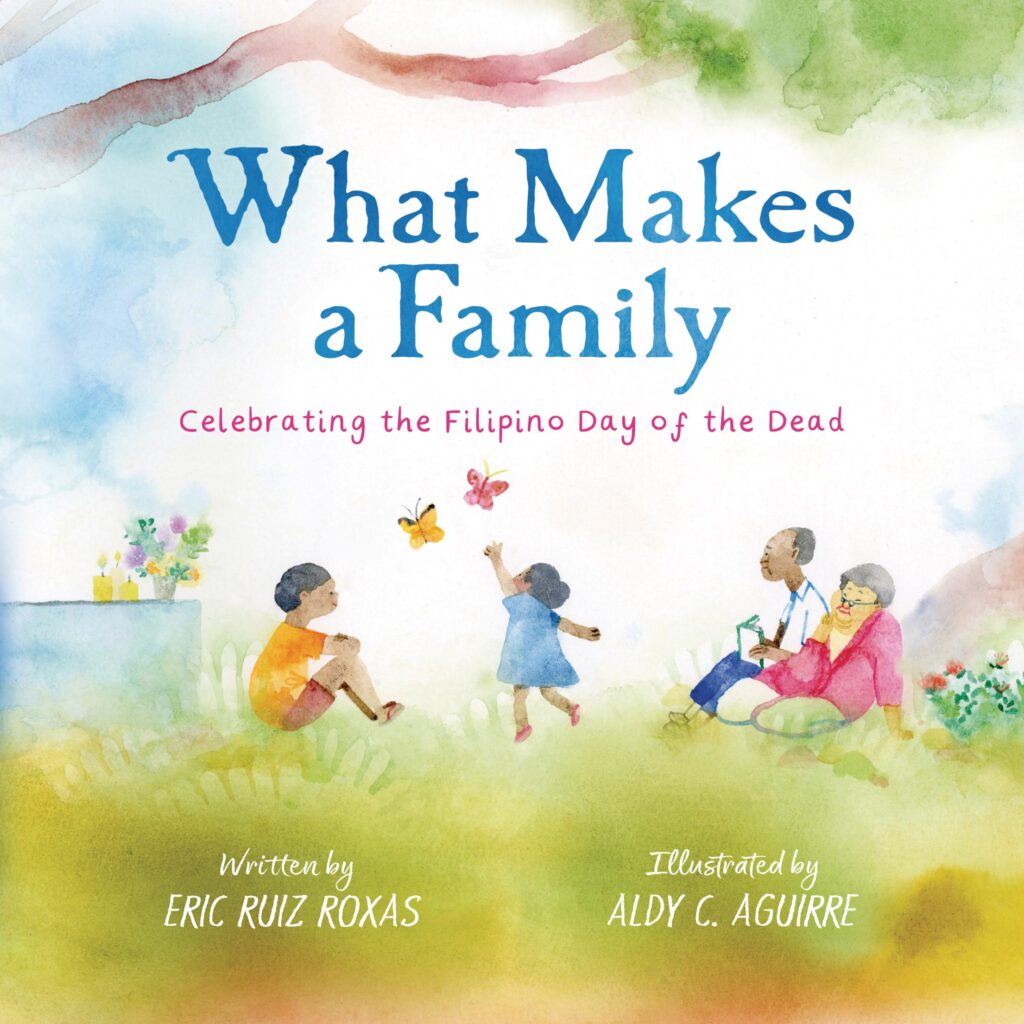
What Makes a Family: Celebrating the Filipino Day of the Dead, by Eric Ruiz Roxas; illustrated by Aldy Aguirre (Lantana Publishing) — Action / Adventure, BIPOC Characters and Creators, Historical Fiction, History, LGBTQIA+, Mystery / Thriller, ages 5–7.
It is Undas, the Filipino Day of the Dead—a day when families visit the cemetery and gather around their dead loved ones’ tombs. It is a day not of mourning but of celebration—a day in which stories are shared and lives remembered.
Today, Pedrito and Pipay will encounter families of all shapes and sizes, all united in their desire to honor their loved ones. Whether through quiet prayer and contemplation or joyful song and laughter, whether through the sharing of great feasts or the lighting of a single candle, each family will find a way to pay tribute. As the siblings trace their route through the cemetery, they will learn that families aren’t defined by their size, wealth, gender, or distance from one another but by the love they share—a love that echoes like prayers, burns like candles, and blooms like flowers in life and beyond. In this exquisitely illustrated story of family love within a diverse and inclusive community, life and hope continue despite the sadness of loss.
Looking for more great reads? Check out all of our CBC Celebrates blog posts!
