
Industry News
-

There's a Party in Your Head and Everyone's Invited
Contributed to CBC Diversity by Melissa Grey
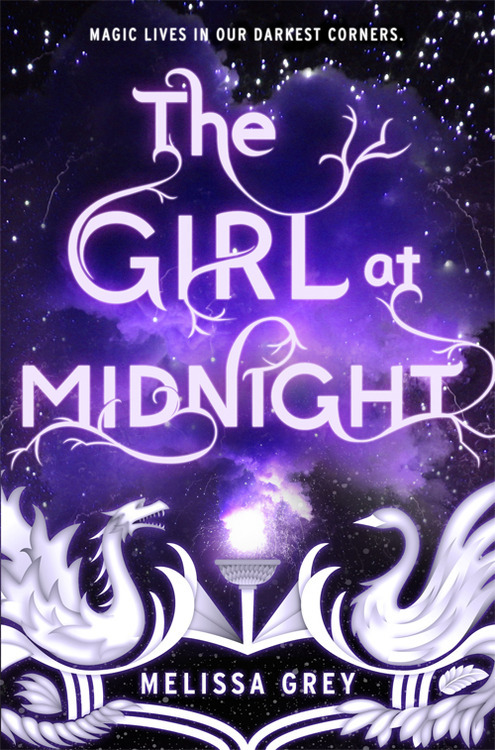
There are seven narrators in The Girl at Midnight – a fact I wasn’t very open with during the querying process because I was worried the number might scare off potential agents. My thinking was that by the time someone read enough of the manuscript to discover just how bonkers I went with the number of point-of-view characters, they would either be invested enough in the story or they’d already soured on it. The gamble paid off.
Because there are so many narrators, I’m often asked how I approach writing a single story with so many PoV characters. I’m not always fastidious when it comes to writing methodology but these are a few points to keep in mind when writing different perspectives (especially when they’re different from you in terms of sex, gender, race, culture, etc.).
It is not a single story
You’re the star of your own life, right? Well, that’s how your characters feel about their lives, even if they’re not the book’s main character. Every character is the hero of their own story, even the villains. No one thinks of themselves as the side dish. So, even if a PoV character has only a single chapter in a book of sixty, they should still have their own perspective on the story. They need their own motivations, their own desires, their own outcomes. When I was plotting out The Girl at Midnight, I made a list of what each character wanted more than anything and what they actually got in the end (so often, the two are not the same). Each character thinks the story is theirs. It’s important to be mindful of that.
Research, research, research
Research is key. It’s always critical, no matter what you’re writing, but it’s absolutely essential when you’re writing an experience different from your own. I am not a gay man, but there is one in my book, so I did my homework. I’m dealing with mostly nonhuman characters in The Girl at Midnight trilogy but ideas of racism, bigotry, and prejudice are still a part of it, so I did that homework too; even though I have personal experience with prejudice (I’m a woman and not white), my experience is not universal. Reading fiction and nonfiction about and, more importantly, by people different from you is so, so, so important. It will inform how your characters approach the world of your book and the problems in it.
Write outside the box (or book)
One of the strategies that really helped me get inside the heads of so many characters was writing stuff that was never going to be in the book. I used to write fan fiction (ain’t no shame in it!) and one of the common types of fic is called Five Times Fic. It’s basically short stories like Five Times Harry and Draco Kissed and One Time They Didn’t. Each ‘time’ is usually short, maybe 100-200 words depending on the writer, so it’s all about those slice-of-life moments that show you the heart of a character. I wrote drabbles like that for several of the characters in The Girl at Midnight when they were proving elusive (Caius was a bit slippery sometimes) and it was such a fun way to get to know them. I didn’t have to worry about building a whole plot or impressing my writing partners or wowing an editor. Those little side stories were for my eyes only and they really, truly helped. I find they’re also a great way to combat writer’s block. And they’re just plain fun. Fun is so essential. Writing a book is hard, but that doesn’t mean it can’t be fun!


Melissa Grey was born and raised in New York City. She wrote her first short story at the age of twelve and hasn’t stopped writing since. After earning a degree in fine arts at Yale University, she traveled the world, then returned to New York City where she currently works as a freelance journalist. To learn more about Melissa, visit melissa-grey.com and follow @meligrey on Twitter.
-

Nikki Garcia: How I Got into Publishing
Assistant Editor at Little, Brown Books for Young Readers
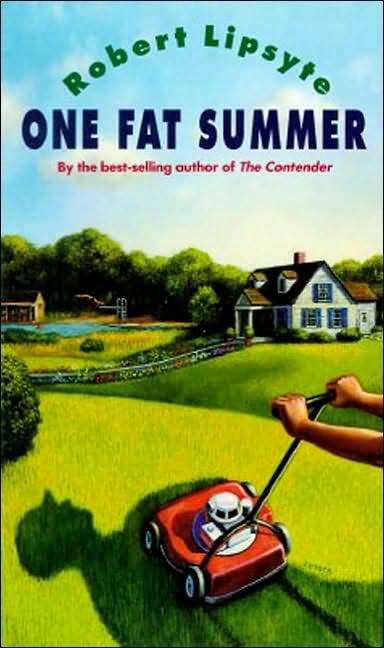
To tell you how I got into publishing, I could start by mentioning that my mother always had a book in her hand, and taught me to do the same—or that I spent most of my time lost in books like One Fat Summer by Robert Lipsyte.
These experiences definitely shaped me to be the kind of person who would find myself in the world of publishing but, honestly, the idea of a publishing career didn’t even pop into my mind until the day I watched Margaret Tate and Andrew Paxton (played by Sandra Bullock and Ryan Reynolds) banter on the silver screen in The Proposal.
I remember that being a particularly difficult time for me. I’d just spent the last year working at Massachusetts Eye and Ear Infirmary while taking pre-med classes at night. Although I was proud of the idea of becoming a doctor, I wasn’t eager to go to work and class every day, but I didn’t like the idea of quitting either. Then one weekend, as I watched Margaret and Andrew throw humorous insults at each other, I noticed Margaret’s hardcopy manuscripts sprinkled across her desk. I was fascinated by the part where Andrew was trying to convince her to buy a manuscript that he loved. I remember thinking, Is this a thing? Does this career actually exist?! That night, I looked up the industry guides that my school had available, and ta da, there it was—an industry guide on publishing. Seriously…never doubt the power of media.
Of course, deciding to be an editor was much easier than actually convincing someone to let me be one. Once I was finished with my classes, I hit the pavement and had an informational interview with anyone who’d meet with me. My first informational interview was with Michael Pietsch, the then publisher of Little, Brown and Company. He was kind enough to put me in touch with another editor, and a direct contact in human resources. Even with those new contacts, I knew I was going to have to intern and get some experience, so luckily I found a unique internship at The New Press.
I spent a month in each department: editorial, publicity/marketing, production, and finance. The internship at the New Press made me perfectly qualified for an in-house floater position that opened up at Hachette Book Group at just about the time my internship was ending. Like my internship, I would be available to work on various projects within any department in the company.
While working as a floater, I was lucky enough to receive Alvina Ling as my mentor in the Hachette Mentor Program. I spent the next six months picking her brain about the life of an editor, reading submissions, and drafting jacket copy and declines. Often Alvina would ask me if I still wanted to work in editorial, and every time my answer was the same. Yes!
Once the six months were over, she agreed to keep meeting with me, and this continued for another six months as well, until an editorial assistant position opened up working under her and another editor. I interviewed for the position, and luckily I got the job.
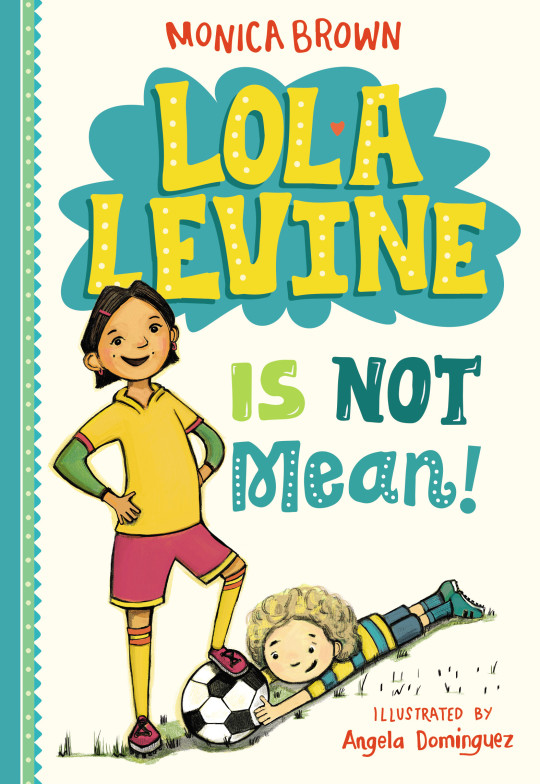
Five years ago I hadn’t even known publishing existed. Now I work for one of the best companies in the industry. Since my start as a floater, I’ve acquired my first book, Lola Levine is Not Mean (November 2015), along with other books in the series, all featuring a spunky biracial and bicultural second grader.
I know what it’s like to feel lost in deciding what you want to do with your life, and I feel very lucky to have found my way to this cool place surrounded by other book lovers. What I’ve learned is that it’s important to keep your eyes open. You never know where you might find the answer, because it might just be in the form of two funny actors in a romantic comedy.
Hey, it could happen.

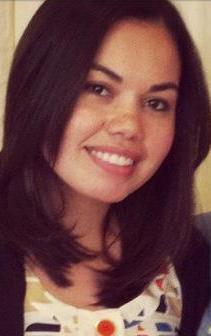
Nikki Garcia is an assistant editor at Little, Brown Books for Young Readers where she works on books for all ages. During her time at LBYR, she has had the honor of working with picture book authors such as Peter Brown and Frank Viva, as well as novelists such as Wendy Mass, Matthew Quick, and Holly Black. Born and raised right here in New York City, Nikki graduated from St. John’s University, and thankfully didn’t have to travel very far to make her dreams come true.
-

The Harry Potter Alliance Begins Worldwide Book Drive
The Harry Potter Alliance, an international non-profit that uses the power of stories to fight real world injustice, has kicked off a campaign to donate 60,000 books to communities in …
-

Banned Books Week Celebrates Young Adult Books in 2015
New York, NY — Young Adult books will be the focus of Banned Books Week in 2015, the event’s national planning committee announced today. Banned Books Week, the annual celebration of the …
-

2015 Eisner Award Nominations Announced
Best Publication for Early Readers (up to age 7) BirdCatDog by Lee Nordling & Meritxell Bosch A Cat Named Tim And Other Stories by John Martz Hello Kitty, Hello 40: …
-

Jon Scieszka on Connecting with Reluctant Readers
In addition to grabbing readers with his unusual characters and signature humor, Scieszka edits anthologies for Guys Read, the online literacy program for boys which he founded. I’m always looking …
-

Jacqueline Woodson On Why She Used Poetry to Share Her Childhood Stories
This book features a collection of poems that paints vignettes from Woodson’s childhood. For her, poetry was the best way to share these biographical stories. She explained that “memory doesn’t …
-

2015 Ezra Jack Keats Book Award Winners Honored
The Ezra Jack Keats Foundation in partnership with the de Grummond Children’s Literature Collection at The University of Southern Mississippi has announced the winners of the 29th annual Ezra Jack …
-

#MathicalBooks Social Media Contest – Starts April 28!
What is Mathical: Books for Kids from Tots to Teens?Books can be a fantastic way to get kids of all ages excited and interested in math. Now, there’s a new …
-

Authors for Earth Day
Participants mentor young readers by giving them “an authentic research project with real-world impact.” At least 30% of their speaking fee is donated to a non-profit conservation organization selected by …
-

New Edition of Teaching Resource for K–8 Math Answers Questions Teachers Are Asking
New York, NY — About Teaching Mathematics, an influential professional development book for K–8 math teachers, is now available in its fourth edition. The author, one of today’s most highly respected …
-

Winners Announced For The 2015 Indies Choice and E.B. White Award Winners
INDIES CHOICE YOUNG ADULT BOOK OF THE YEAR The Darkest Part of the Forest by Holly Black (Little, Brown Books for Young Readers) E.B. WHITE READ-ALOUD AWARD – MIDDLE READER …
-

Founder of TOON Books Françoise Mouly on Comics and Visual Literacy
After moving to the United States from Paris in 1974, Mouly began reading comics as a way of absorbing the language. Comics offered her a kind of cultural and emotional …
-

'The Absolutely True Diary of a Part-Time Indian' Was The Most Frequently Challeneged Book of 2014
Sherman Alexie’s The Absolutely True Diary of a Part-Time Indian came in at number one. This National Book Award-winning young adult novel first appeared on the 2010 edition of this …
-

How I Got into Publishing
Publicist at Simon & Schuster Children’s Publishing and Saga Press
When I was looking for my first job, I’d ask as many people as I could how they got their start in publishing. I would collect stories from internship mentors, interviewers, people I met at networking events, whoever, in exchange for bright-eyed enthusiasm. As I found out, there’s no single path to publishing, but rather a network full of detours, twists, and forks that make up our small (yes, small) publishing village.
On the surface, my path seems straightforward. My junior year at Columbia, I joined my college’s alumna mentor program as I began pondering life after college. Since I specified that I was interested in publishing, I was matched with the excellent and wonderful Juliet Grames, now associate publisher of Soho Press. Juliet was invaluable to me. At her advice, I did three internships before graduating in 2010: at an agency, in children’s editorial, and in adult trade marketing. She introduced me to other people in publishing, and I lived in her spare bedroom in Harlem while job-hunting in New York.
After graduation, I laid out my plan for intense networking: interviews both informational and professional, panels, coffee dates, lunch dates, Kid Lit Drink Nights and KGB Fantastic Fiction Nights, basically anywhere I knew publishing people would be. Five months later, I began working as a publicity assistant at Little, Brown Books for Young Readers.
But even on my networking-heavy path, there were divergences. Though I had loved books all my life, I didn’t even consider publishing a career possibility until I met Juliet. My Chinese immigrant parents had always encouraged me to go into a technical field, and for my first two years at Columbia I’d majored in environmental engineering. When I’d transferred to anthropology, I was met with confusion and anxiety. Less “What is anthropology?” and more “Can you get a job with that degree?”
Chastened but not surprised by this response, I decided to write my undergraduate thesis on books and the transformative power of reading and libraries in immigrant communities. Yes, I thought, I will use academia to validate my personal choices. I learned about Pierre Bourdieu’s forms of capital: cultural, social, and economic.
- I learned that I had a fairly good base of cultural capital, combining the values of education and a hard work ethic I’d learned from my parents with the the knowledge and worldviews I’d gained from voraciously reading books.
- Financially, my parents had dragged themselves out of poverty into a comfortable suburban life in New Jersey, and had saved enough to send me to college without loans, so I considered myself lucky on that front, too.
- As for social capital, well–that’s where the networking came in.
Looking back, I’m keenly aware of the opportunities I had as a Chinese-American woman–and the hiccups I had to overcome. A love of books is not enough to work in publishing. Some candidates can’t afford to accept an unpaid internship to get their foot in the door, let alone three. Some need to consider higher paying industries to pay off their loans or take care of their families. Others don’t live near New York, or have any publishing companies near them. And some, like me, never knew what publishing was until the “aha” moment when I realized that people worked to make this book I was holding in my hands. And these reasons are inseparably tied to diversity of race, ethnicity, class, geography, and more.
I am the sum of my acquired experiences by learning, reading, and talking to others. I keep an open mind about others’ paths–whether they came to publishing later in life, or after working in another industry, or moved from rural Missouri–knowing each one is equally valid and worthy. Through the efforts of CBC Diversity and a focus on diverse recruitment, I hope that publishing village turns into a metropolis.

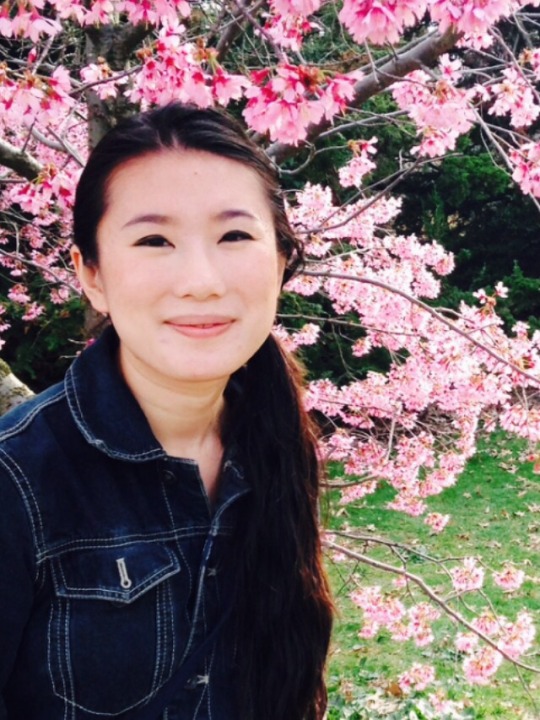
Faye Bi works as a publicist at Simon & Schuster Children’s Publishing and Saga Press. She tweets at @faye_bi.
- I learned that I had a fairly good base of cultural capital, combining the values of education and a hard work ethic I’d learned from my parents with the the knowledge and worldviews I’d gained from voraciously reading books.
-

Librarians Who've Created "Unlimited Possibilities @ Your Library"
Here’s a look at some of the pioneer youth librarians that made the list: Lewis Caroll: Did you know that before penning the children’s classic Alice’s Adventures in Wonderland, Caroll …
-

LBYR Polls Fans to Decide On a Cover For a Libba Bray Short Story
The story follows two best friends, Agnes and Leta, and how these two characters handle new developments in their friendship. Bray revealed in a blog post that the piece originally …
-

We Need Diverse Books Gains 501-c-3 Nonprofit Status
Under the direction of founder Ellen Oh, WNDB has launched the Walter Dean Myers Award and grant program for diverse authors; a publishing internship program; a WNDB in the Classroom …
-

Mo Willems & Tony DiTerlizzi Collaborate On a Picture Book
The story follows Diva, a courageous little dog, and Flea, a confident street-smart feline. Disney-Hyperion has scheduled the release date for October 13, 2015. (The Mo Willems Blog)
-

Neil Gaiman on Influencing His Kids to Become Avid Readers
Other than reading to them every night, I just made sure the books were there for them to discover. I think the most important thing I did to raise kids …
