
Blog
-

Epic! Signs Deal With Macmillan Publishers
Redwood City, CA – Epic!, the leading children’s eBook subscription service, today announced an agreement with Macmillan Publishers, one of the world’s foremost English-language publishers, to deliver award-winning children’s eBooks …
-

Industry Q&A with Alyssa Mito Pusey
Senior Editor at Charlesbridge
Interview by Yolanda Scott
Thanks for agreeing to do this, Alyssa. The first diversity question today is how do you self identify?
Growing up in Hawaii, I thought of myself as Japanese American, when I thought of race at all. Because Hawaii is something like 50% Asian, I didn’t think of myself as “Asian”—until I moved to the Mainland for college. Suddenly I was aware of myself as a “minority” and a “person of color.” I started thinking of myself as Asian American, which I still do today.How did your background influence your early reading habits, if at all?
I didn’t really pay much attention to my Japanese heritage, sad to say. I read whatever I liked—whatever the library had. The same childhood classics as everyone else. After Narnia and Middle Earth, lots and lots of fantasy.Did you envision the characters in the fantasy books you read as white or as other races and ethnicities?
White mostly. When you’re reading about someone with red hair and violet eyes, well, she’s white. And when everyone you see in movies, TV, and books is white, you make assumptions. It was actually difficult for me to wrap my head around Ged (from Ursula K. LeGuin’s Earthsea books) being brown-skinned—even though he’s clearly pseudo-Polynesian in the text. It took me a while to figure it out; the cover of my beloved paperback whitewashed him. The only other non-white characters I ran into were in Laurence Yep’s books. He seemed to be the only author at the time writing fantasy about Asian characters.How did you get into children’s publishing?
I wanted to be a writer when I was a kid. I even wrote a report in fifth grade about the publishing industry. By the time I got to college, I knew I loved children’s books but I didn’t know what I wanted to do with them. I interned for The Horn Book and a small publishing company but still wasn’t sure. During grad school, I got my first internship where I actually got to edit something. I immediately realized that this was what I wanted to do. I was enrolled in a PhD program at the time, but I took the Master’s and ran.What appeals most to you about the job of editing?
I love the craftsmanship of editing. When you’re actually editing—getting your hands dirty—it’s messy and open-ended and exciting. I love figuring out the weaknesses in a manuscript and brainstorming ways to fix them. Helping the author clarify his or her vision takes creativity, problem solving, and thinking outside the box.Could you tell me about the most recent diverse book you published?
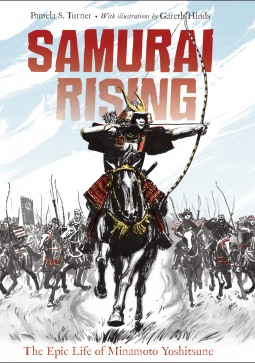
Samurai Rising by Pamela S. Turner, illustrated by Gareth Hinds, to be published in February 2016, is a middle-grade biography of Minamoto Yoshitsune, one of the most famous samurai in Japanese history. It’s one of the most thrilling books I’ve ever edited—full of drama, intrigue, violence, and romance. It still gives me goosebumps every time I read it. Yoshitsune is one of the main characters in The Tale of the Heike, a great Japanese work. I had learned a little about the Heike in college, but when I read the manuscript for Samurai Rising, it came to life. Working on the book pulled together a lot of threads for me: my Japanese heritage, my interest in martial arts (I’m a long-time aikido practitioner), and my love of the Japanese aesthetic. The book has deepened my understanding of, and appreciation for, my own culture. And editing the book made me go to aikido practice with renewed seriousness!
What is one factor holding you back from publishing more diverse books?
Availability. I just don’t see a lot of diverse submissions, and not a lot from diverse authors. Many of the submissions I receive are also serious or sad, with little kid appeal.Can you give an example of a successful diversity title on the Charlesbridge list?
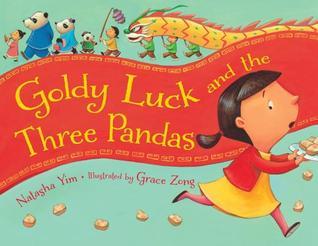
Goldy Luck and the Three Pandas by Nastasha Yim, illustrated by Grace Zong, is a Chinese American retelling of Goldilocks and the Three Bears. This book was a surprise success to me. I thought it would do well, but I didn’t expect it to be so widely embraced. It’s an accessible way for Chinese Americans and people from other backgrounds to learn about the basics of Chinese New Year. More universally, it’s a clever story with absolutely adorable art.
Who would you consider to be a diversity pioneer in children’s literature?
Lenore Look’s Alvin Ho books are just brilliant. They’re everything we editors ask for in terms of diverse characters who just happen to be diverse. Alvin’s Chinese American culture is integral to the story, but it doesn’t drive the plot or hit you over the head with a message. The books are about Alvin and who he is as an individual. And they’re funny.If you have an author who wants to write about characters outside of his/her own background, how do you generally handle that?
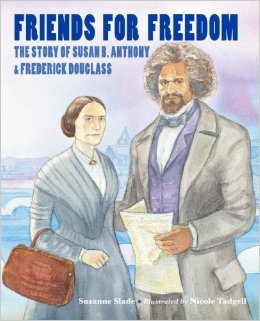
We see a lot of submissions of diversity books from people writing outside of their cultures and backgrounds. Alarms go off, and you have to be really careful as an editor. First, I try to be sure that the writing is respectful. I also consult with experts from the culture and try to find an illustrator from that culture. These people bring things to the table that you and the author may never have considered.
For example, in Friends for Freedom, Suzanne Slade wrote about the friendship of Susan B. Anthony and Frederick Douglass. In Suzanne’s head, she had handled Susan’s and Frederick’s stories evenly. In my head, Susan was the main character—but I didn’t question that direction. When the illustrator, Nicole Tadgell, who is African American, saw the text, she pointed out that the stories were presented as equal but in fact weren’t. She asked if we could do something about that. Suzanne, realizing Nicole was right, worked hard to shift the focus. The two friends are now treated equally, which is one of the main points of the book.
Does being a person of color affect your acquisition or editorial process?
Whenever I receive a manuscript featuring characters of color, I get excited—hopeful. That may be because I’m a “person of color,” but I think it’s true for all of us editors at Charlesbridge. If I’m being honest with myself, books with Asian—especially Chinese or Japanese—characters or settings immediately spark an interest, since I’m more familiar with these cultures.The funny thing is that, as an editor who specializes in nonfiction, I haven’t actually edited a ton of “diversity” titles. When you’re working on books about animals, urban gardening, and black holes, you can may be include scientists of color and a diverse cast in the illustrations—but that’s not usually the main point of the book.
The exception to this, of course, is biographies. Lately there’s been a real surge in biographies of little known people, partly due to Common Core. But even in this burgeoning genre, people of color are still getting shafted. When I was recently looking up Asian and Asian American biographies, I was shocked all over again at how little there is out there—Lee & Low seems to be the only publisher consistently putting out these books.
This is one area where I feel like I could help make a difference. With the publication of books like Mario and the Hole in the Sky (a 2016 biography of chemist and Nobel laureate Mario Molina) and Mountain Chef (a 2017 biography of National Park trail cook Tie Sing)—as well as Samurai Rising—I’m hoping to help young readers find themselves in nonfiction.

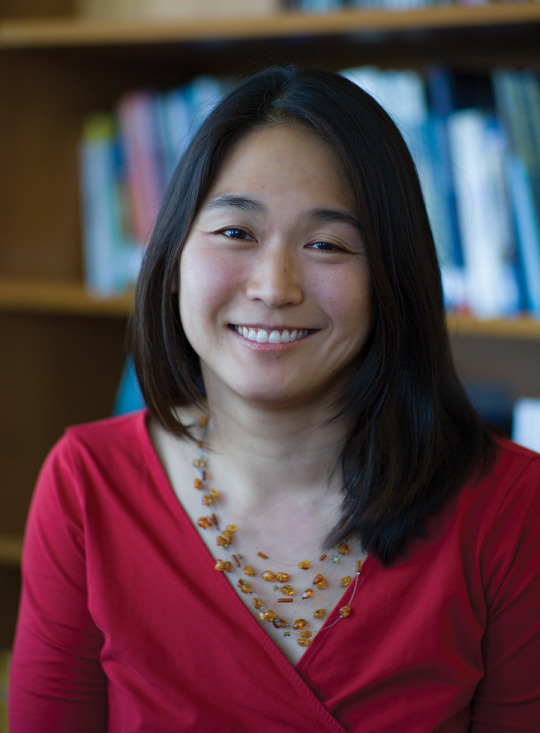
Alyssa Mito Pusey is a senior editor at Charlesbridge, editing picture books and middle-grade chapter books and specializing in nonfiction.
-

Actress Julianna Margulies to Write Picture Book Story
Editorial Director Maria Modugno handled the acquisitions process. Random House Children’s Books will release Three Magic Balloons in May 2016. Three Magic Balloons centers on a trio of sisters whose …
-

The Children’s Book Council and DOGObooks.com Partner to Encourage Kids to Read More This Summer
FOR IMMEDIATE RELEASE Tiburon, CA May 20, 2015 — For the 3rd year in a row The Children’s Book Council is proud to once again partner with DOGObooks.com on their …
-

16 Students and 5 Teachers Named National 180 Award Winners for Academic Success
NEW YORK, NY – May 11, 2015 – Sixteen incredible students and five dedicated teachers in grades 3 through 12 have been named 2015 National 180 Award winners by Scholastic (NASDAQ: …
-

Happy Birthday, Margaret Wise Brown!
Brown was a shy and thoughtful child with a love of animals that would later shine through her work. She attended Hollins University in Virginia before returning to New York …
-

Razorbill Acquires Sequel to An Ember in the Ashes, The New York Times Bestselling Novel by Sabaa Tahir
New York, NY — Razorbill, an imprint of Penguin Young Readers, has acquired the sequel to An Ember in the Ashes, the New York Times bestselling debut novel by Sabaa Tahir. An Ember in …
-

Diverse Characterization Matters
(or Why I’m Grateful for Being Forced to Watch a Kid’s Show About Mermaids)
I was visiting my sister in Boston a month ago, and found myself amused (and strangely inspired) by watching, of all things, the kid’s show Bubble Guppies. If you haven’t heard of it, it’s basically a cartoon about a group of merperson preschoolers who go on adventures and learn life lessons in the sea (is merperson correct? Mermaid boys and girls who go to school in the ocean…I’m not sure why I’m looking for any of it to make logical sense. It’s cute and draws my two nephews in like flies).
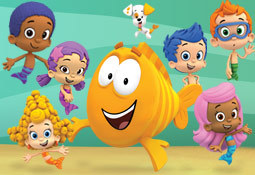
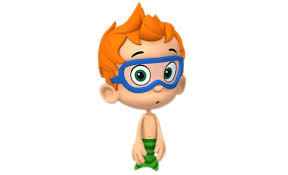
The point is that this show follows your typical preschool cartoon formula. Present children with a group of very enthusiastic (one might say too enthusiastic) preschool characters who sing, smile a whole lot, and are oh so happy to make learning fun! What caught my attention in watching this show with my two-year-old nephew Cole one morning was that there was one kid in the group (named Nonny) who was clearly different than the rest. I’m not talking about the color of his skin or his cultural makeup (which this show represents nicely with a diverse cartoon cast), but his personality. Unlike the others in the show, Nonny rarely smiles (even when singing, which is amusing to watch. He has a permanent skeptical face). He’s shy, always looks wary of the goings-on around him, and is thoughtful and reserved. Basically he’s the kid I was as a child, the kid I see some of my friends have now, the kid who stays on the outside of the group until it’s safe to come in and play.
It occurred to me in watching this character that I would have loved Nonny growing up because he reflected me and didn’t fit in naturally with the rest of the more extroverted and boisterous group taking the focus and attention. And in the show, that was presented as a-OK.
I mention this story because I think this sort of thoughtful characterization on the part of the show creators (yes, on a preschool cartoon) is applicable to the way we look at the literature that is shaping our children today. When you take a look at the ongoing diversity conversation in this industry, you have to experience it through an impressionable child’s eyes, and how all characters in every story are portrayed within the diversity spectrum from top to bottom. Children are so malleable and so hungry to explore and understand the world around them and, most importantly, how they fit inside it, that they are hyper-attuned to how any character they see that reflects their own image fits into his or her surroundings (in television, literature, and other mediums). Nonny works well because, while he’s different, he’s not called-out for being so, nor ostracized from the group as the stereotypical quiet kid. He just joins into the group when he wants, and kids who watch the program have the benefit of watching a character who is a little quieter and yet still has a place inside that world (of merpeople).
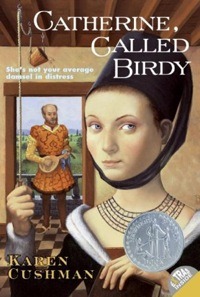
Now I’ll confess here that I’m a white female working inside the publishing industry, so my inspirational characters growing up were Eloise (as a small child), Catherine (from Catherine, Called Birdy), and Jane Eyre (minus the crazy wife in the attic). But those characters were so vital to my own childhood development in identifying with strong female figures with heart and intelligence and endurance I could aspire to in my own life, that they’ve stuck with me still now that I’m into my thirties. And for my nephews, my friends’ children, and my own (theoretical) children down the line, I want to gift them with a world where they have access to a variety of characters who fit their identities that they can safely attach to and learn from, both in personality and in their cultural makeup.
While I think we are making strides toward more diverse children’s literature, so, so many children of differing cultural backgrounds remain so sorely underrepresented in the books created for them today. And just like my connection with little Nonny on Bubble Guppies, there are so many children throughout the world looking for a bit of themselves in everything they’re soaking in with the literature they devour. It breaks my heart that some of them likely aren’t finding it.
So it’s worth reiterating that producing, marketing, publicizing, and selling children’s books featuring diverse characters isn’t just an item to check off our list to then move on to the next thing. It’s a necessary, fundamental shift that is vital to how we do business to gift future generations with a more colorful and safe world to develop in, to become the best people they can be. With so many kids of all different backgrounds looking for a little bit of themselves in the literature that’s shaping them, day by day, it is our duty to make sure that literature is up to the task.
-

Announcing Our Children's Book Week Bookstore Display Contest Winner!
View photos of all the entries here. Share the best of Book Week with your friends and fellow kid lit lovers! Book Week is beautiful! See bookstore window displays here: …
-

Hollywood Director Todd Haynes May Adapt Wonderstruck
Selznick drew inspiration from a great number of sources for this project including an E. L. Konigsburg novel, a documentary called Through Deaf Eyes, and two exhibits at the American Museum of Natural …
-

Chelsea Clinton Aims to Inform and Inspire Young Readers to Change the World in Book this Fall
New York, NY — In a new book for young readers ages 10-14 scheduled for publication on September 15, 2015, Chelsea Clinton breaks down some of the world’s biggest challenges …
-

Coloring Books for Adults
Penguin Random House recently acquired the next two books by Johanna Basford the “queen of coloring,” to be released in the fall of 2016. The book will be edited by …
-

Rick Riordan Has Written a New Percy Jackson Companion Book
Artist John Rocco created both the interior illustrations and the cover art. Disney Hyperion will release the book on August 18, 2015. That date coincides with Percy Jackson’s birthday. (Rick Riordan’s …
-

Children's Book Council to Receive BookExpo America's Industry Ambassador Award
Norwalk, CT, May 19, 2015: BookExpo America (BEA) is pleased to announce that the Children’s Book Council has been singled out to receive this year’s Industry Ambassador Award. This will …
-

New York Times Bestselling YA Fantasy Author Laini Taylor Signs New Three-Book Deal with Little, Brown Books For Young Readers
New York, NY – Following the international success of the Daughter of Smoke & Bone Trilogy, Little, Brown Books for Young Readers will publish three new young adult novels by New …
-

Happy Birthday, L. Frank Baum!
Baum did not begin writing for children until he was in his forties, having previously worked as a journalist and businessman. He developed a love of storytelling by spinning tales …
-
Erin Stein to Launch Imprint
The first title that will be released by Imprint is a book entitled Babies Ruin Everything; the release has been scheduled for Spring 2016. Matthew Swanson and Robbie Behr, husband-and-wife …
-

Tuck Everlasting Musical to Debut On Broadway in 2016
The Broadway-bound musical — about love, family and living life to the fullest — features a book by Claudia Shear, music by Chris Miller and lyrics by Nathan Tysen. It …
-

The CBC and the unPrison Project's Prison Nursery Libraries Initiative Featured on MSNBC
In honor of Mother’s Day and the 96th annual Children’s Book Week, the Children’s Book Council partnered with the unPrison Project to establish prison-nursery libraries in 10 states. Jiang-Stein spoke …
-

What Are You?
A Post That Has Nothing to Do with Sookie Stackhouse
Contributed to CBC Diversity by Christian Trimmer
“What are you?”
“Uh…”
“I mean, where are you from?”
“Oh! Chicago.”
“No, where are you from from?”
“America?”Throughout my life, I’ve had conversations like the above. It’s human nature to put people into categories, and I was not easily placed. I inherited my Vietnamese mother’s eyes and cheekbones and my white father’s nose and skin tone, giving me what has been called an “exotic” look.
From an early age, I made efforts to define my racial identity (something kids do as early as two years old, for themselves and others, according to a number of studies). As a boy, I identified as white. Other than my mom, who was the only one in her family to move to the United States, all of my relatives were white. The neighborhood I lived in was predominantly white. Plus, everyone on the TV shows I watched and in the books I read were white (or animals). On top of that, when I went to Little Saigon in Chicago with my mom, I felt distinctly “other.” It’s not surprising that I would choose to identify with my white half. Dr. Erin Winkler, an associate professor at the University of Wisconsin, notes, “[C]hildren pick up on the ways in which whiteness is normalized and privileged in U.S. society…picture books, children’s movies, television, and children’s songs…all include subtle messages that whiteness is preferable.”
But my classmates had different ideas. My eyes were slanted enough to earn me the label “Chinese” (it was the 1980s—everyone Asian was Chinese). I excelled at school, particularly in math, and was an accomplished tennis player (a sport that requires focus and discipline), only because, as my peers regularly informed me, I was Asian.
Throughout high school, I continued to try to downplay my Vietnamese heritage—I wanted to be like the cool, popular white kids around me. When I got to college, though, I started to self-identify as Asian (I’ll tell you why over a drink). Mind you, I didn’t join any of the Asian-American groups on campus; I simply started saying “I’m Asian” when asked “What are you?” After moving to Los Angeles, I switched back to white (I’ll tell you why over a drink). My commercial agent thought differently, sending me to castings where I was alternately the whitest, most Asian, or least Hispanic person there.
It’s only within the last decade that I’ve embraced both sides of my heritage. (The opportunity to choose one’s own racial identity is a relatively new one.) It’s important to me that I honor my mom and dad’s influences on me, so I make a point to correct people if they place me in just one category. For a while, I used the word “Eurasian.” Now, I describe myself as biracial and give the specifics if asked.
I’ve chatted with friends who are biracial or multiracial, and we’ve all had very different experiences, depending on our mix, gender, and geography. One thing we have in common is that none of us could single out a book from our childhoods that captured the experience of being multiracial. Where were the books for us? Don’t “exotic” people deserve to have their stories told, too?
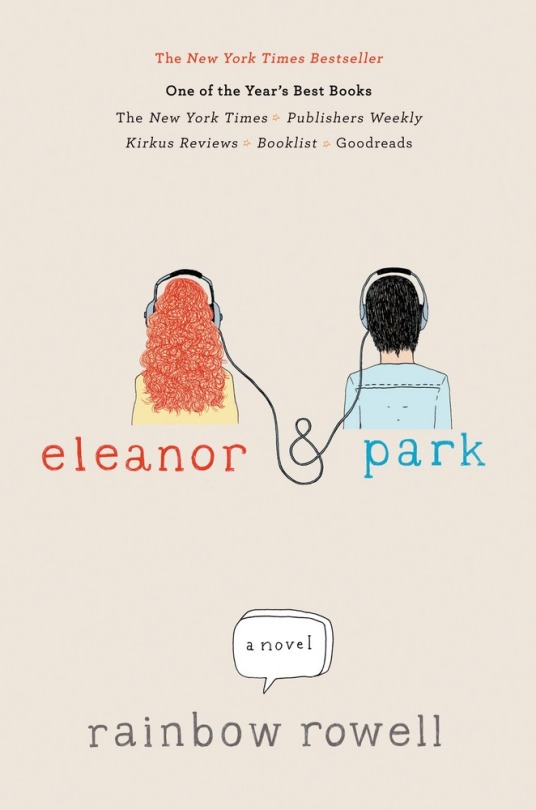
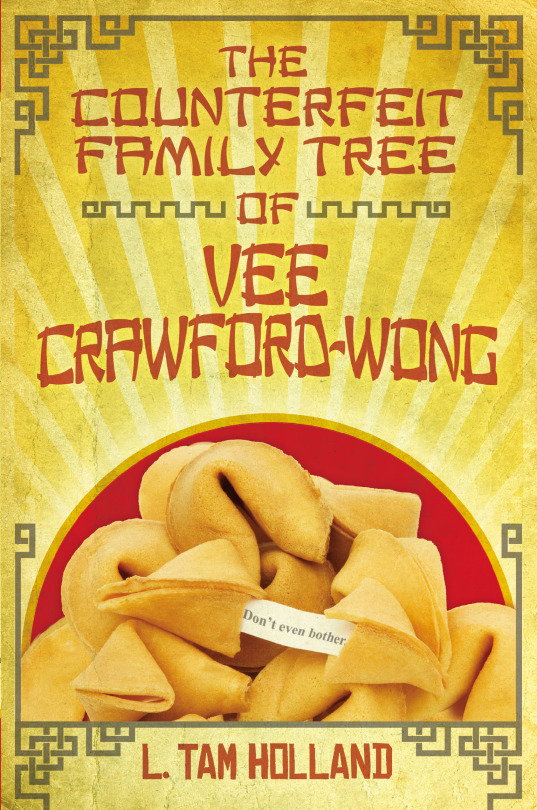
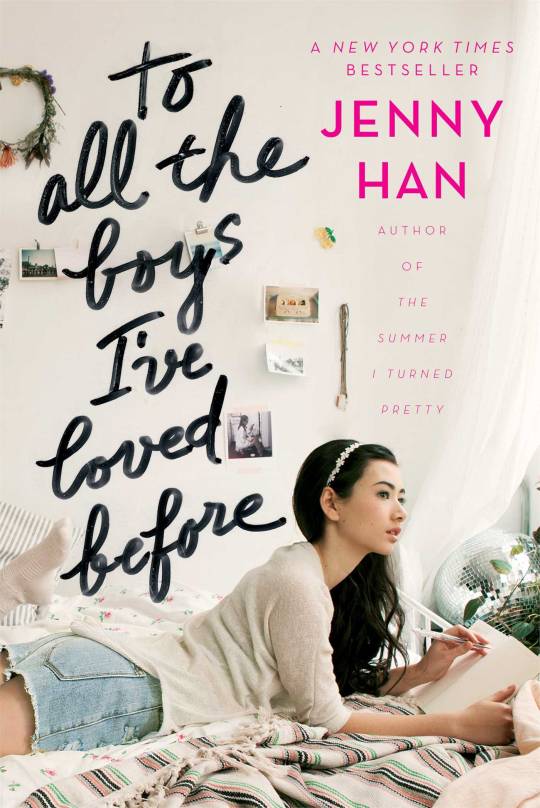
Happily, today there are a number of children’s books that are about or star kids who are mixed. (Do a search on Goodreads and you’ll find lists for all reading levels.) I’ve had the pleasure of reading novels that have characters whose upbringings mirror my own, books like The Counterfeit Family Tree of Vee Crawford-Wong by Lindsay Tam Holland, To All the Boys I’ve Loved Before by Jenny Han and Eleanor & Park by Rainbow Rowell. I saw myself in Vee, Lara Jean, and Park’s stories. I would have loved to have read them as a teenager.
With nine million Americans identifying as more than one race, with one in every seven marriages being between spouses of a different race or ethnicity, and with the number of mixed-race babies soaring, the demand for more of these stories is growing.
As an editor, I’m looking to acquire projects that address the biracial experience. As a writer, I hope someday soon to add to the canon of existing titles.

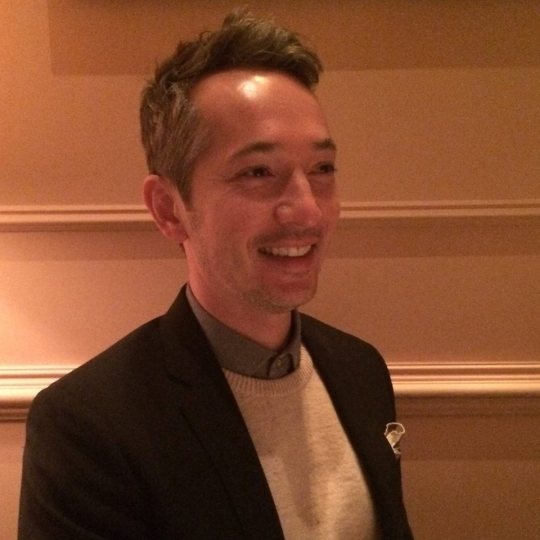
Christian Trimmer is an executive editor for Simon & Schuster Books for Young Readers. He is also the author of the picture book Simon’s New Bed, out 8/25/15. Learn more at christiantrimmer.com.
