
Industry News
-

The Uni Project Brings Pop-Up Reading Rooms to NYC!
The Uni Project’s network of staff and volunteers frequently teams up with local community organizations and libraries to bring books to underserved neighborhoods. They thrive in part on donations by the Metropolitan Museum of Art, New York …
-

3 Authors Talk About Art That Changed Their Lives
The participants include Leigh Bardugo, Gayle Forman, and Patrick Ness. Bardugo named the novella, Rita Hayworth & The Shawshank Redemption. Forman prefers to rely on music when she seeks comfort. …
-

3 Tony Award-Winning Broadway Veterans Team Up For a ‘Mrs. Doubtfire’ Musical
“Menken, a Tony winner for Newsies and an eight-time Oscar-winner for songs from the films The Little Mermaid and Beauty and the Beast (among many others), will write the music, …
-

Lauren Oliver on J.K. Rowling’s Influence
Now a children’s and young adult author in her own right, Oliver continues to reread the Harry Potter books, each time renewing her connection to Rowling’s magical world: Last fall, …
-

Remembering Illustrator Margaret Bloy Graham
Graham was born and raised in Toronto, where she developed an artistic passion at a young age, studying at Toronto’s Art Gallery and later the University of Toronto. She moved to New …
-

Natalie Babbit’s ‘Tuck Everlasting’ Turns 40
To this day, Babbit feels that she created the book as she intended. If given the chance to go back and re-write the novel, she would not alter the painful ending: …
-

2015 Sydney Taylor Book Award Results Announced
YOUNGER READERS Winner My Grandfather’s Coat by Jim Aylesworth with illustrations by Barbara McClintock (Scholastic Press) Honors Goldie Takes a Stand by Barbara Krasner with illustrations by Kelsey Garrity-Riley (Kar-Ben …
-

Gene Luen Yang to Write an Educational Graphic Novel For Kids
“Comics are such a powerful educational tool. Simply put, there are certain kinds of information that are best communicated through sequential visuals. Look at airline emergency cards or the instructions …
-

We Need Diverse Books Announces Short Story Contest
Phoebe Yeh, VP/Publisher of Crown Books for Young Readers/Random House, has acquired publication rights to the collection, which will be edited by WNDB President Ellen Oh for release in January …
-

2015 Edgar Award Young Adult Nominees Announced
The 2015 Edgar Award Nominees in the Young Adult Category The Doubt Factory by Paolo Bacigalupi (Little, Brown Books for Young Readers) Nearly Gone by Elle Cosimano (Penguin Young Readers …
-

New Edition of ‘Will Grayson, Will Grayson’ to Feature New Cover
“Five years ago, the book about two friends with the same name debuted at #3 on the New York Times children’s chapter book bestseller list. To celebrate the anniversary, the …
-

The Eric Carle Museum Welcomes New Chief Curator
Amherst, MA—Ellen Keiter has joined The Eric Carle Museum of Picture Book Art as the new chief curator, replacing H. Nichols B. Clark, the Museum’s founding director and chief curator. …
-

SCBWI’s 2014 On-The-Verge Emerging Voices Award Winners
The prize, which includes an all-expense paid trip to the SCBWI Summer Conference in Los Angeles and and one-on-one meetings with industry professionals, is a part of SCBWI’s mission to bring traditionally …
-

Two Producers Option ‘This Song Will Save Your Life’
“Tony-winner Kevin McCollum (Avenue Q, Rent) and TV producer Michael Novick (best known for Glee) announced the deal today for the 2013 young adult novel, about a misfit teenage girl …
-

Holly Black Reveals The Influences Behind ‘The Darkest Part of the Forest’
“There are a few bits of folklore I drew on specifically for The Darkest Part of the Forest. I started with the idea that I was going to rewrite a …
-

When It Comes to Books, Allow Kids to Enjoy Freedom of Choice
“For decades, researchers have been suggesting that a little structured fun with books can help kids learn to appreciate them, and that kids who like to read tend to become …
-

Age Appropriateness & Children’s Literature
Many are in favor of allowing kids and teens to “self-police” the books they read, trusting that they can decide what material they are equipped to handle. Shielding children from potentially upsetting …
-
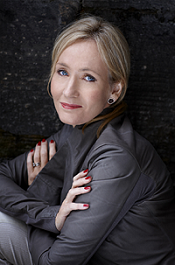
J.K. Rowling & Fan Activists Score Unprecedented Victory Against Child Slavery
Fan activism just landed a major victory. Warner Bros., the studio behind the Harry Potter movies, is moving forward with plans to make all Harry Potter chocolate sold at Warner …
-

Announcing the 2015 Sendak Fellows
This year’s recipients are: Richard Egielski Marc McChesney Doug Salati Stephen Savage The fellowship was inaugurated in 2010 by Maurice Sendak, the goal of which, in Sendak’s words, was to …
-

‘It’s Possible’ Series: Walking and Talking with Walter Dean Myers
An “It’s Possible” post contributed to CBC Diversity by Regina Griffin
Whenever I think of Walter, I remember walking together. From the moment we met, we walked endlessly, tiptoeing like cartoon characters over the hot bricks of Centennial Park in Atlanta, strolling down the River Walk in San Antonio, giddy after a speech’s end, striding up steep hills in San Francisco, with Walter practically lifting me up, because my feet could not stay in the slip-on shoes I had insisted on wearing. We walked all over Chicago, listening to blues music, delighting in crowds celebrating not one, not two, but the three-peat of Bulls victories, though Walter’s heart would always remain with the Knicks of Earl “the Pearl” Monroe and “Clyde” Frazier.
We walked the long avenues of Washington, DC, sometimes in 100-degree weather, sometimes in light snow. Once we arrived after an actual blizzard hit and somehow managed to make it to Anacostia for an Open Book event. That event was made unforgettable by some struggling young dads who got there against the odds, even if it meant carrying their children through more than a foot of snow on uncleared streets and sidewalks. Walter Dean Myers was coming. They weren’t going to miss him.
Walter and I became colleagues, editor + writer, and friends during our walks. He was curious about everything, and so we spoke about anything: the best point guards, school reform, the latest Conor McPherson play, Delta versus Piedmont blues, Matisse’s book Jazz, slavery in New York State, new finds for Walter’s ephemera collection, which of us loved W.B. Yeats more, the boxers, Walt Whitman’s poems, ships of the line and how scary it must have been to be a powder monkey on them.

Our walks, our talks, led us to the beginnings of many different projects, books that ranged throughout the age levels and different genres of children’s publishing. Basketball madness—demonstrated by our stopping at the Cage (the courts on Sixth Avenue and West Fourth Street) to pay homage and critique the players—led to the signing up of Slam. Our joint interest in boxing and love of history, our admiration for people who make a difference, led to his doing a biography of Muhammad Ali, which ended with our both learning the damning truth of boxing’s costs. That same passion for history infused his work on Malcom X: By Any Means Necessary, his biography for older children. Walter felt the importance of presenting as thorough and as rich a history to kids as he could; he felt it as our duty and obligation. No more lies; no more half-truths.
Bits of different conversations, ideas, and interests would meet and challenge one another until a book was born. Early one morning, Walter and I met in the Village. As we passed by the stoop of my building, where I often sat, we discussed how images are presented, how they are framed to make a point—that a person sitting on a stoop in Harlem would be presented differently from my sitting on my stoop in the West Village. He eventually decreed that the picture set in Harlem would end up in sepia, the paper distressed.
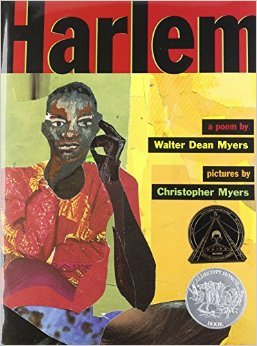
This point, coupled with our joint admiration of the Matisse cut-outs, led to his writing a picture book that would celebrate Harlem during a difficult time in its history. Vivid, colorful images, brimming with joy and pride, would honor not only the neighborhood, but also the people who had made it what it was, and the people who lived there still. To Walter, providing an alternative narrative to the “standard” one—a strong, exhilarating riposte to the usual jeremiads of decline and danger, one that did not ignore problems, but that recognized a larger context—would prove a firm step on his mission toward change. That the final book paid more of an homage to Romare Bearden’s work than Matisse’s, as well as showcasing his son’s first picture book art, only made the journey to it more thrilling, because the evolution of a project, of a neighborhood, of a nation, can inspire awe.

Yet our discussions were not only about the next project. Those decades we spent walking through convention centers, theaters, and school auditoriums gave me an education in seeing, in putting myself in other people’s shoes. Witnessing the way Walter always introduced himself to serving staff at parties, experiencing the genuine interest he showed in every person he met, with curiosity and deep respect, even—or perhaps, especially—prisoners, challenge me to do better, both as an editor and as a citizen.
Yet it was during those walks through convention centers that he began to get discouraged. At a BEA, he said, come on with me and pointed out that the shift to more graphic, iconic images had essentially erased the progress made toward presenting covers that reflected more of our country’s people. A month later, we did the same thing at ALA, and continued to do so at every conference we attended together until his death.
Now that Walter has left us, I will no longer be able to walk all over this country chatting with him about everything, anything, and nothing at all.
But I will still be able to move in the direction he sought. I will still be able to work for social justice and a more complete representation of our country.
I’m going to call upon all of you to join me by quoting a poet Walter and I both loved:
“We must march, my darlings.”
—Walt WhitmanI won’t be walking, I’ll be marching.

 Regina Griffin is an Executive Editor at Egmont USA. She was previously the Editor-in-Chief of Holiday House, and before that an editor at Scholastic Inc., where she first had the honor of publishing Walter Dean Myers.
