
Industry News
-

Netflix Plans to Develop An Adaptation of A Series of Unfortunate Events
The company is partnering with Paramount on this project. Back in 2004, Paramount released a film based on this popular middle grade series; that movie featured Jim Carrey as the …
-

Exclusive CBC Member Special: $250 discount on The Nielsen Children’s Book Summit on December 12
CBC Members only: $250 Discount E-mail us for the member-exclusive discount code to use when you register online. Expires: 12/1/14Register now! What it is: An exclusive executive-level event that will …
-

‘Publishers Weekly’ Unveils The Best Children’s Books of 2014
Some of the titles featured on the picture books list include Sam and Dave Dig a Hole, written by Mac Barnett and illustrated by Jon Klassen; My Teacher Is a …
-

Jeff Kinney Talks About His Creative Process
“What I do is I spend about six months just writing jokes, and they’re disassociated with everything—they’re not even connected to one another. So what I do is come up …
-
Industry Q&A with editor Grace Kendall
Please tell us about the most recent diverse book you published.
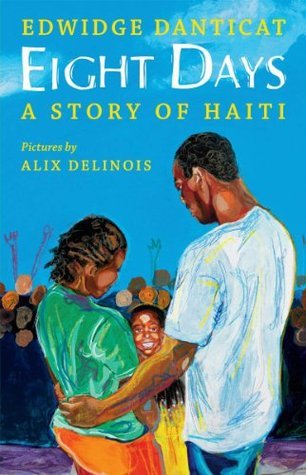
While I was at Scholastic, I had the great pleasure of editing Edwidge Danticat’s first picture book, Eight Days: A Story of Haiti. It explored a young Haitian boy’s experience in the eight days following the devastating earthquake.
I also published the Jewel Society series, which features four best friends of varying backgrounds and academic interests. By working together and using their individual strengths, the girls solve a series of jewel heists in and around the Washington, DC area. A smart and sassy series for girls!
And here at FSG, I’ve just acquired a young middle-grade series starring two best friends, one of which is Latina. They live in a quirky neighborhood, inspired by The Mission District of San Francisco, where the townspeople are as diverse as the girls’ adventures, and where Spanish is spoken widely.What is one factor holding you back from publishing more diverse books OR what’s the biggest challenge for publishing companies who want to feature more diverse titles?
There is nothing at Macmillan holding me back from publishing diverse books. As an editor committed to publishing more authors and illustrators of color, I’m always on the look-out for new talent. The Brown Bookshelf is a great place to go to learn about diversity in children’s literature and to get ideas about people I’d like to work with! In fact I wish there were more resources like it (websites or associations) that collected and featured diverse children’s book creators, especially those who are not yet published. And of course I rely on agents who are representing new talent with an eye toward diversity.
What is an example of a current bestselling diversity title?
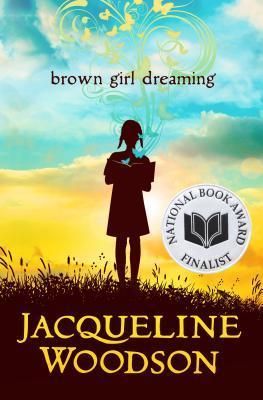
Brown Girl Dreaming by Jacqueline Woodson (Penguin) is a New York Times Bestselling title.
I’m also excited about the buzz that the following books are getting in the marketplace and in the media:- How It Went Down by Kekla Magoon (Holt/Macmillan)
- The Great Greene Heist by Varian Johnson (Arthur A. Levine Books/Scholastic)
- The Port Chicago 50: Disaster, Mutiny, and The Fight For Civil Rights by Steve Sheinkin (Roaring Brook/Macmillan)
Who would you consider to be a diversity pioneer in children’s and/or young adult literature?
The editors at Arthur A. Levine Books/Scholastic (Arthur Levine, Cheryl Klein, and Emily Clement) continue to impress me with their commitment to publishing books with a range of perspectives. The work they do with diverse authors and illustrators—as well as books originally published outside of the United States—is truly inspiring.
If you have an author who wants to write about characters outside of his/her own background, how do you generally handle that? Do you encourage your author to dive into research, or do you dissuade your author from venturing into what is unfamiliar to them?
I haven’t yet had this experience with one of my authors, but here’s what I generally suggest to writers who ask me the same questions at conferences.
- I imagine we would have a discussion about why he or she wants to write outside of their own experience. I think it’s important to be honest about your intentions in telling a certain kind of story, as it will no doubt affect the politics (intended or unintended) of your writing later on.
- If we agreed to move forward, I would encourage the author to research the subject matter (time, place, people) as well as consult with individuals who share a similar background to the characters in his/her work.
- Finally, as the editor, it would be my responsibility to review the writing on the page and assess how I think the work would serve the children reading it. I would also find a secondary reader or two (again with a similar background to the characters and story at hand) to give me their honest opinion of the book.
Tell us about your editing process. When you edit cross-culturally, how do you ensure that the book gets a culture with which you might not be as familiar “right”?
If I’m editing a book featuring a culture, heritage, or place that I feel unfamiliar with, I will definitely enlist the help of an expert or someone intimately experienced with the subject matter at hand. I do this most often with nonfiction titles, even if the author might be considered an expert in the field or has had an expert read over their work. I budget for this early on in the publishing process, and always prefer to have at least a second pair of eyes to help us.
If you could receive a manuscript about one culture or subculture that you don’t normally see, what would it be?
Native North Americans, for sure. I grew up loving (and studying) Sherman Alexie’s work; and I’m jealous of Cheryl Klein’s publication of If I Ever Get Out Of Here by Eric Gansworth. To name some specific groups, maybe the Florida Seminoles or the Aleutians from the islands of Alaska.
I would also love to see stories about and/or by people from the Caribbean and Cuba. Having grown up in Miami, Florida, I’m always drawn to communities rich with change at the hands of immigrants. Port cities or border towns can make for dynamic settings.
And lastly, I would love to work on books from or about South Africa. I lived and studied there for six months, and am always looking for characters or writers from that wonderfully diverse country.
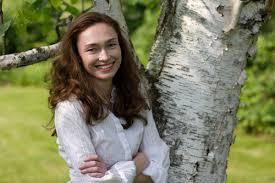
Grace Elizabeth Kendall, Editor, Farrar, Straus, Giroux Books for Young Readers/Macmillan. She works on a wide range of material from picture books to young-adult novels, both fiction and nonfiction. Before joining FSG in the spring, Grace worked at Scholastic where she edited Hot Rod Hamster: Monster Truck Mania! by Newbery Honor author Cynthia Lord and New York Times Bestselling Illustrator Derek Anderson; A Bunny in the Ballet by debut author/illustrator Robert Beck; and the middle-grade series Jewel Society by Hope McLean. She also worked on Eight Days: A Story of Haiti by two-time National Book Award Nominee and MacArthur Fellow Edwidge Danticat and illustrated by Alix Delinois.
-

Scholastic Announces First-of-Their-Kind Literacy Events to Help Schools Support Family and Community Engagement
NEW YORK, NY – Scholastic, the global children’s publishing, education and media company, today announced the release of Scholastic Literacy Events, comprehensive family engagement kits that educators can use to engage …
-

Katie Alender Shares Her Secrets For Writing Scary Stories
“I can’t watch horror movies! They’re way too scary, ha ha! It does seem a little odd that I’m a total wimp about anything spooky. I’m especially awful at watching …
-
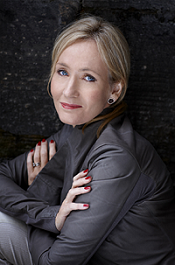
Pottermore Offers New Content By J.K. Rowling With Revealing Details About The ‘Great Villain’ Dolores Umbridge
LONDON, ENGLAND – Exclusive new details about the witch and Hogwarts Professor Dolores Umbridge were revealed today in the latest writing by J.K. Rowling available on the author’s website pottermore.com. The new …
-

‘New Yorker’ Cartoonist Liam Francis Walsh to Create a Wordless Picture Book
Neal Porter, the head of his own imprint at Roaring Brook Press, managed the acquisitions process and intends to publish the book in Fall 2016. Daniel Lazar, a literary agent …
-

First Book and HarperCollins Children’s Books Introduce First-Ever Bilingual Edition of Goodnight Moon
First Book’s “Stories for All Project” Addresses the Lack of Diversity in Children’s Books, Bringing Classics and Diverse Books to Kids in Need WASHINGTON, Oct. 29, 2014 /PRNewswire-USNewswire/ — Goodnight …
-

Alex London to Write a Middle Grade Series Inspired By ‘Redwall’
“The books will feature an animal world inspired by Brian Jacques’s Redwall series; as a child, London wrote Jacques a fan letter telling him that he wanted to be a …
-

Jason Segel Talks About Collaboration
Segel devoted most of his professional life to an acting career in Hollywood so he did not have any experience with writing children’s books. Miller, the New York Times bestselling …
-

Katherine Paterson’s Nonfiction Debut
In spite of a late start, Paterson eventually found great success as a writer. She has garnered two National Book Awards as well as Newbery Medals for Bridge to Terabitha and Jacob Have I …
-

Writing Tricks From Successful Young Adult Authors
“Rainbow Rowell never set out to be a YA author. Her first book, Attachments, was for and about adults, and though Eleanor & Park is a teenage love story set …
-

Pottermore to Release New J.K. Rowling Writing About Dolores Umbridge On Halloween
London, England – In a special Halloween treat for Harry Potter fans, J.K. Rowling’s website pottermore.com will post new original writing on October 31 about the witch and former Hogwarts professor Dolores Umbridge. The character …
-

Call for More Inclusive Stories in the Science-Fiction & Fantasy Genre
Within the past few years, the call for more representative children’s books has been steadily building. A Twitter conversation between YA fantasy authors Ellen Oh and Malinda Lo sparked the popular We …
-

Daniel Handler Introduces a New Indies First Initiative Called Upstream
This would allow indie book shops that are not located in big cities to sell autographed books to their customers. Handler wrote a letter and posted it online in the …
-

CBC Diversity: Embracing Diversity Without Qualifiers — An Observation
Last week, I came across an interesting article via one of my personal favorite pop culture websites Pajiba.com (their Walking Dead and Game of Thrones coverage makes this self-affirmed geek very happy – what can I say?) - an article that initially enraged me. And then stuck with me and made me think.
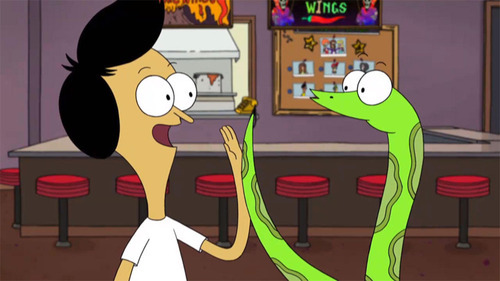
The article in question called out a recent, somewhat controversial interview with author Matthew Klickstein, creator of a new book called SLIMED! An Oral History on Nickelodeon’s Golden Age, on the site Flavorwire. In the interview, Klickstein discussed the network’s “diversity problem” and, in specific examples, pointed to current Nickelodeon shows (such as the popular Sanjay and Craig) where he criticized instances of showcasing diversity for the sake of diversity, casting lead roles in animated shows where there was no reason for said characters to be ethnically diverse.
There are plenty of hot-button points Klickstein makes in his interview specifically on topics in the ongoing diversity dialogue that I won’t get into here, but what stuck with me long after reading was a point Klickstein made that resonated with me in a way I don’t think was his intention. According to Klickstein, the strength of a good character within any medium comes down in the simplest form to the writing and development, and in that way, maybe it shouldn’t matter whether said character is Caucasian, Hispanic, African-American, or any other ethnicity, if said ethnicity doesn’t impact the show’s storyline.
My argument in response to that basic reasoning is that Klickstein is demonstrating exactly why it’s so vital to introduce greater diversity into mainstream culture, from television to the publishing industry. Every literary character in his or her most basic composition has quirks, flaws, personality traits, and essential elements that make him or her unique and worthy of exploration by a writer, regardless of the medium. Some of those elements are clearly influenced by a person’s ethnic background, or the life they’ve lead within their individual skin, whether for better or for worse. But there remain basic elements, essential elements, to just being a human being that connect all of us on a basic level that transcend those lines, elements that are vital to character development in any really great piece of writing.
Klickstein’s point is that at the end of the day, the character is what matters, but my argument in return is that, if at the most basic level, essential human elements are shared between all of us, why not embrace every opportunity to color all of literature and television with characters who embody those human traits, even if specific cultural factors aren’t incorporated into the storyline?
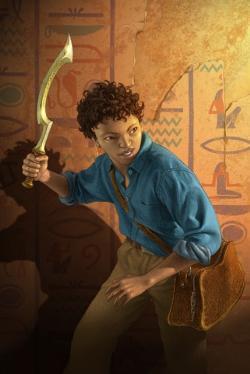
Does Sanjay need to be an Indian character to be an entertaining one on Sanjay and Craig? No. Did Carter Kane in Rick Riordan’s The Kane Chronicles need to come from a mixed-race background? No. For the elements of the story that keep the essential plotlines moving in those particular instances, ethnicity only appears in broad strokes to come into play in physical depiction.
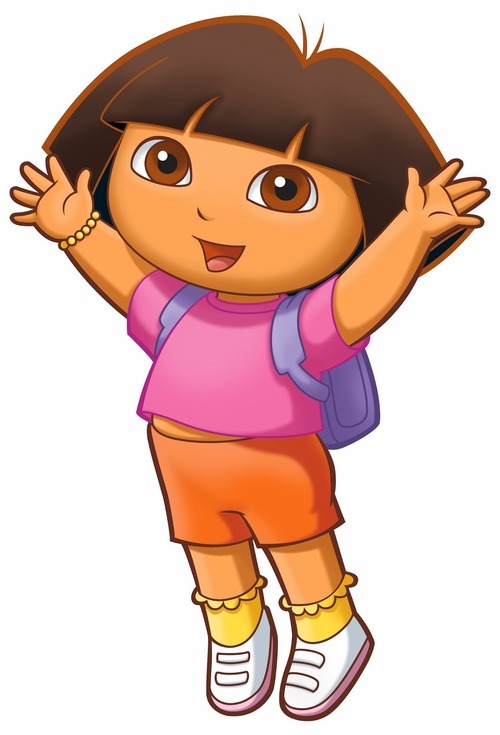
And that’s the point. Kids growing up, watching TV and reading, need to see themselves and their respective cultures represented truthfully on screen. But they also need to see a world where kids go through regular, every-day problems that are shared human experiences transcending cultural barriers. Sure, Dora the Explorer could have been a Caucasian character (with impressive Spanish-speaking skills), successfully teaching children basic educational concepts. But by the same token, Harry Potter could have been an African-American character too. His character trajectory as depicted by J.K. Rowling would have been essentially the same, and yet one little boy or girl out there might have been impacted in seeing this regular, ordinary kid look a little more like them.
I’m not advocating for diversity for diversity’s sake without thoughtful look at how all ethnic backgrounds are depicted in entertainment. And I realize I’m making a bit of a broad strokes statement by claiming that characters with diverse backgrounds can be swapped around like stand-ins in a school play (or that Harry Potter wasn’t, in my mind, a fantastic character just as Rowling depicted him). It’s certainly much more complicated than that.
But I do think it’s important to remember and to consider that, as a publishing community, we are providing for future generations with a road map of our culture through the literature we offer the world. Don’t we want that world, even in the most mundane interactions and even in the most broad-reaching story lines, to reflect the fascinating, and diverse world it’s become?
-

Cecelia Ahern to Publish Her Debut Young Adult Fiction Books
“Ahern, whose bestselling books for adults include PS, I Love You and How to Fall in Love, sets Flawed and Perfect in a future society where perfection is valued above …
-

CBC Diversity: ‘PW’ Panel Warns Industry, Lack of Diversity Threatens Publishing
'PW' Panel Warns Industry, Lack of Diversity Threatens Publishing:
At a panel about the lack of diversity in the book publishing industry, hosted by PW, a number of publishing professionals warned that the overwhelmingly white makeup of the industry threatens its long-term viability.Two of the three amazing panelists were a part of DIBs (Diversity in Books), the group of editors who helped create the CBC Diversity Committee. Alvina Ling and Stacey Barney not only talked about some of the barriers (to entry into the publishing world along with publishing more inclusive stories), but highlighted some of the amazing bright spots in publishing that need to be celebrated in this conversation. Some of these include:
- Diversity committees instituted inside publishing houses
- Titles written by and starring people of color that have reached the bestsellers list
- Outreach to schools and universities (in-person and through virtual career fairs that introduce students early to the possibility of a career in publishing)
After about an hour of moderated discussion, the conversation was opened for audience participation. One question that was asked of the panel near the end was, “To continue to move the conversation forward, but also as a means to institute more action and change, what collaborations/partnerships/programs would you like to see instituted to help promote more diversity in-house as well as get more books supported that are written by and about people from different cultures?”
Some of the panel’s answers?
- More scholarship programs for publishing programs/internships to help with the financial burden of getting your start in publishing
- More partnerships with media outlets to cover more diverse offerings
- Finding a way to utilize celebrities to endorse reading cross-culturally
- More support systems to allow individuals to be in the publishing world (like mentorship programs)
