
Blog
-

John Green Vows Never to Use The 'R-Word' in a Book Again
In reply, Green confessed that he does regret its inclusion in his book. He also publicly declared not to use the word again in any future projects. “Yeah, I regret …
-

Scholastic Acquires Middle Grade Novel by Emma Donoghue, Author of the International Bestseller 'Room'
NEW YORK, NY—(June 16, 2015)—Scholastic, the global children’s publishing, education and media company, has acquired the first middle grade novel by Room international bestselling author Emma Donoghue. The Lotterys Plus …
-

WNDB Internship Project Recipients Announced
The diversity nonprofit’s internship committee chose five interns of diverse backgrounds to receive a $2,500 stipend from WNDB for living expenses while interning at a New York City publishing house …
-

44 Governors' Spouses & 4 Governors Sign On As "Reading Ambassadors" For 2015 Scholastic Summer Reading Challenge
NEW YORK, NY – Forty-four U.S. Governors’ Spouses, along with the Governors of Colorado, Vermont and the U.S. territories Northern Mariana Islands and U.S. Virgin Islands have signed on as “Reading Ambassadors” for …
-

Ally Condie, Acclaimed, International Bestselling Author of The Matched Series, to Publish Debut Middle Grade Novel with Penguin Young Readers
New York, NY – June 15, 2015 – Ally Condie, author of the critically-acclaimed, international bestselling Matched trilogy, will publish her debut middle grade novel SUMMERLOST, with Dutton Children’s Books, an imprint of Penguin Young …
-

Bibliotherapy
According to neurological studies, the same regions of the brain are activated both by reading about an experience and directly undergoing it. In part because of these neural connections, regular …
-

2015 National Book Festival Poster Unveiled
The National Book Festival will be held on Saturday, September 5, from 10 am to 10 pm in Washington, D.C. De Sève is one of more than 150 writers and …
-

Jesse Andrews On Writing the Script For Me and Earl and the Dying Girl
My first draft wasn’t really a screenplay. It was this Frankenstein-y thing, half movie, half novel. It was the right length, but it didn’t have the right pacing and rhythm, …
-

Go Global: We Are the World
Contributed to CBC Diversity by Veronica Grijalva
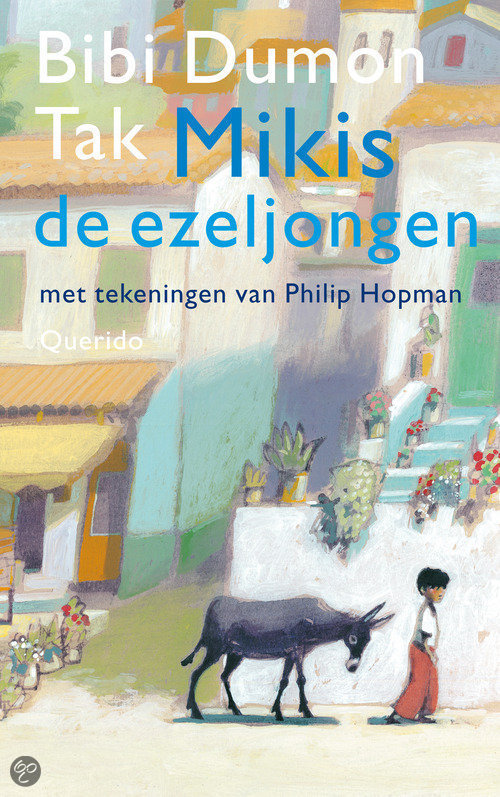
During my first year attending the Frankfurt International Book Fair a question was asked of me by many editors at foreign publishing houses. The question was this, “Why don’t English language publishers translate more books?” Years of working in International Rights later, I still receive this question frequently and I still have no good answer. The main reason is that English has become the dominant language in the industry, but that attitude is seeing a shift in recent years. It is our responsibility to represent not just the diversity of our country, but also international diversity. In our increasingly globally connected world it is vital that we understand diversity on all levels, at home and outside of our borders.
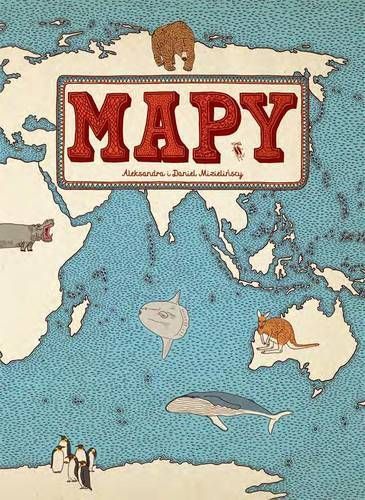
I’m a child of Mexican descent, and have grown up half in and half out of that world. Finding books that were representative not only of my experience, but also of my family’s heritage, was extremely difficult. As an adult I’ve visited over a dozen countries and can read in two languages other than English. In the same way that visiting a friend’s house for the first time is an important moment in the development of empathy, visiting other countries gave me a richer understanding of the world and my own place in it. Children’s books in translation could provide that experience earlier in life.
Children who have read the stories of many countries would have a stronger foundation for understanding international diversity. They’d be better able to respect differences and react with sympathy. Many would be able to experience the stories from the countries of their family origins. Young readers today have an unprecedented access to children and media from other countries. I moderate a forum for teens with registered users from over 30 countries, and it’s not unusual to have to step in and explain cultural differences during inevitable arguments. Imagine if those children had a frame of reference for those interactions, if they had lived in that culture in the pages of a book.

Educators might worry that young readers would be hesitant to read stories that aren’t set in their home country but, if a child can enjoy stories set in fantasy worlds, their unfettered imaginations can imagine and enjoy fantastic experiences set half a world away. Books in translation could also offer unique teaching opportunities, as supplements to social studies, geography, and history lessons. They could act as a foreign exchange trip without having to leave the classroom.
Books in translation do present publishers with unique challenges, and many countries have created grants and resources to help. The Frankfurt and London book fairs have pages featuring translation grant information, the Bologna Children’s Book Fair hosts a Translator’s Café, more and more agencies are stepping up to represent foreign literature, and book fairs such as the Sharjah International Book Fair have begun sponsoring translations grants. Initiatives such as Words Without Borders and Literature Across Frontiers offer educational resources and connect international writers to the English speaking public. Services like PubMatch make finding a translator or a foreign language reader simpler than ever.
With the whole world of children’s literature open to us it has never been easier to give children the world.
Here are a few resources to help you Go Global:
- Translation grant from the Sharjah International Book Fair
- Translation grants from the London International Book Fair
- Translation discussion panels at the London International Book Fair (video)
- The world directory of children’s book translators from the Bologna Children’s Book Fair
- Translation grants from the Frankfurt International Book Fair
- Words Without Borders
- Literature Across Frontiers
- How to obtain translation grants by 2 Seas Agency (article)

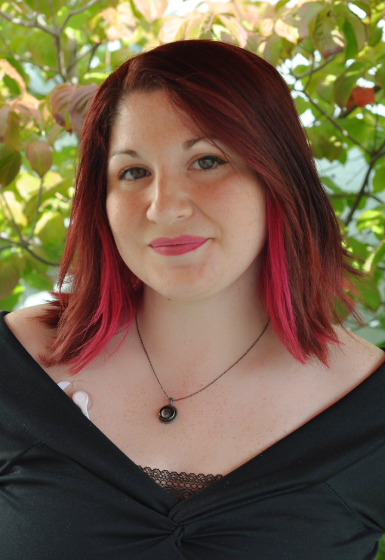
Veronica Grijalva was raised by books. She works as a Rights Associate, bringing translated books to kids around the globe.
-

AAP Introduces Annual Snapshot of U.S. Book Market
According to the survey, the trade category’s largest growth was in the children’s and young adult genres — with double-digit growth in revenue (20.9%) and units (13.5%) — surpassing the adult fiction …
-

A.S. King to Write Her Debut Middle Grade Novel
Cheryl Klein, an executive editor at Scholastic’s Arthur A. Levine Books, managed the acquisitions process. Klein negotiated the terms of the agreement with Michael Bourret, a literary agent at Dystel …
-

Ferguson Municipal Public Library Named 2015 Library of the Year
Earlier this year, library director Scott Bonner received the American Library Association’s Lemony Snicket Prize for Noble Librarians Faced with Adversity. The Library of the Year award will be presented during a …
-

Literacy Has a New Super Hero: Chris Riddell Unmasked as New Waterstones Children's Laureate
Chris Riddell, creator of the bestselling Goth Girl series, double CILIP Kate Greenaway Medal winner and political cartoonist, has today (Tuesday 9 June) been appointed the ninth Waterstones Children’s Laureate …
-

The Rise in Transgender Children's Books
Recent and forthcoming titles include I am Jazz (Dial Books/Penguin Young Readers Group), a picture book co-written by transgender teen Jazz Jennings; the middle-grade novel Gracefully Grayson by Ami Polonsky …
-

Announcing the 2015 Anne Izard Storytellers’ Choice Awards
Westchester, NY — The Anne Izard Storytellers’ Choice Awards Committee is pleased to announce the recipients of the 12th biennial Awards. The awards will be presented in a ceremony on Tuesday, June 16, …
-

Ezra Jack Keats Inducted into the NYS Writers Hall of Fame at Sixth Annual Ceremony
NEW YORK—June 5, 2015—Ezra Jack Keats (1916-1983) is among seven distinguished writers who were inducted this week into the NYS Writers Hall of Fame. The induction took place on June …
-

HarperCollins to Launch the Explore the World of Margaret Wise Brown Program
First up is a fresh edition of The Dead Bird, featuring art by Christian Robinson, who won Coretta Scott King Illustrator Honors for Josephine: The Dazzling Life of Josephine Baker, …
-

Vermont Youth Book Awards Announced
The 2015 Dorothy Canfield Fisher Award goes to Escape from Mr. Lemoncello’s Library by Chris Grabenstein (Random House, 2013). Named in honor of the late Vermont author, the Fisher Award …
-
Scholastic Completes Sale of Educational Technology and Services Business Segment
New York, NY – Scholastic Corporation (NASDAQ: SCHL), the global children’s publishing, education and media company, announced today it had completed the previously reported sale of its Educational Technology and Services …
-

All You Really Need to Know is What Jacqueline Woodson Said at BookCon
I always feel a little nostalgic and reflective at this time of year, because I started my publishing career in June of 1993. Looking back at the market then, I mostly giggle. Then I think about what I was complicit in perpetuating, and I want to barf.
This is the first book I ever helped to edit.
This is the first novel I ever published.
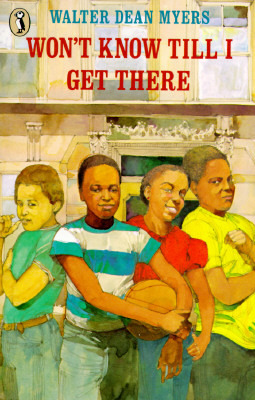
Two thousand years from now an archaeologist might reasonably assume that in the early nineties there was a law banning books for teens that didn’t feature straight white blond girls. I remember I brought up Won’t Know Till I Get There by Walter Dean Myers at an editorial meeting that fall—I’d read it in 8th Grade—and people stared at me, slack-jawed, not comprehending why I thought it would be cool to talk to him and maybe even try to work with him. “On a basketball book?” was one response. (From a very smart and well-meaning colleague whom I still love and respect, no less; I’m sure that person would also want to barf now, remembering this.)
On that note, not to make this post all about me, I have to add: June 2015 does mark an especially proud professional and personal moment. Soho Teen just published Adam Silvera’s debut, More Happy Than Not. I only mention this because I can imagine the response I would have gotten if I’d pitched the premise at the conference room table twenty-two years ago, to a room full of smart editors:
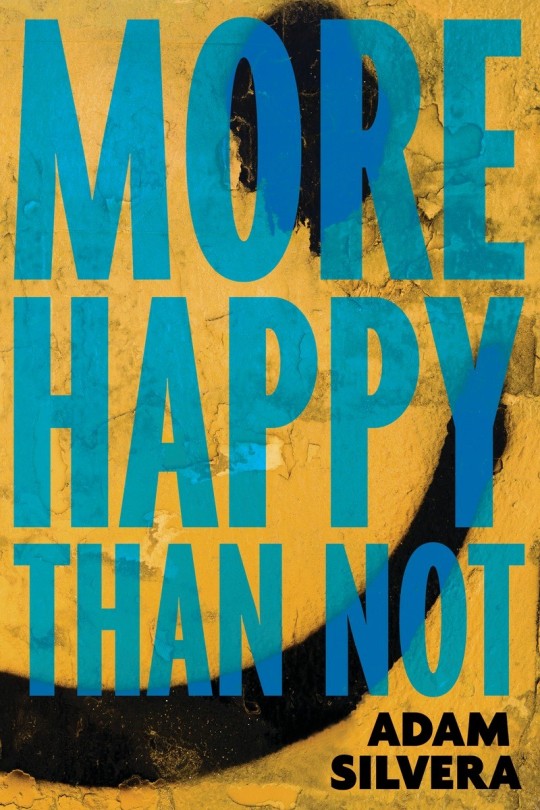
“A gay Puerto Rican boy from the Bronx wrestles with his sexual identity…”
I wouldn’t have made it that far. I wouldn’t have made it past “gay.”
It would be nice to pat myself on the back—I just did—but this post (I swear!) was intended to be a diversity takeaway from BEA and BookCon. In short, from my perspective, there has been real progress (in spite of the fact that the Children’s Breakfast Panel was still white-authors-only, almost comical given the 2014 BookCon backlash). And I am proud that the progress has come from inside the industry through the CBC, which was just awarded the BEA Industry Ambassador Award for its Diversity Initiative (of which I am a part) and outside the industry through the grassroots organization We Need Diverse Books, which has raised awareness and called out the industry’s collective intransigence.
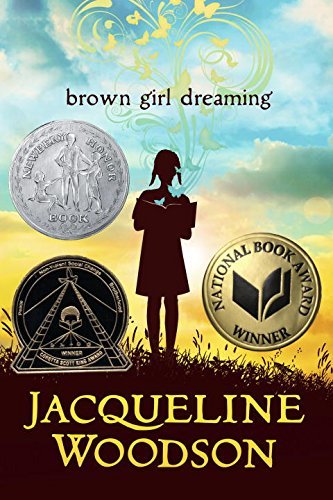
So I’ll leave you with a beautiful nugget of wisdom from one of my favorite authors, Jacqueline Woodson, who sat on the BookCon We Need Diverse Books panel on Sunday May 31st. When asked why she thought Brown Girl Dreaming resonated with so many, she said it was her most deeply personal book to date. “The most personal is the most universal,” she concluded.
That is diversity, right there.
It is also all we really need to know or keep in mind when we make business decisions. We should all have that carved into our office doors. I hadn’t even realized it until she articulated it, but it speaks exactly to why I acquired Adam Silvera’s novel. And it speaks to why we in publishing are all finally, maybe, (I hope?) starting to lumber in the right direction.
