
Blog
-

SCBWI Reveals the 2014 Golden Kite Award & Sid Fleischman Humor Award Winners
“The Golden Kite Awards are to recognize excellence in children’s literature. Instituted in 1973, the Golden Kite Awards are the only children’s literary award judged by a jury of peers. …
-

Idaho School Board Bans ‘The Absolutely True Diary of a Part-Time Indian’
“The school board’s decision to seek an alternative book to convey ‘the cultural messages’ of Alexie’s work came after complaints from parents that the book contained sexually charged material inappropriate …
-

Rainbow Rowell to Pen the ‘Eleanor & Park’ Movie Screenplay
“Set in 1986, and following one school year in Omaha, the novel follows the tentative romance of two 16-year-olds: Eleanor, a somewhat heavy girl overwhelmed by insecurities and trying to …
-

Matthew Baldacci Named Vice President of Marketing, Scholastic Trade Publishing
FOR IMMEDIATE RELEASE New York, NY (April 8, 2014) — Scholastic (NASDAQ: SCHL), the global children’s publishing, education and media company, today announced the appointment of Matthew C. Baldacci as …
-

CBC Diversity: Reflections on Mental Illness, Stigma and Story
Contributed to CBC Diversity by Erin E. Moulton
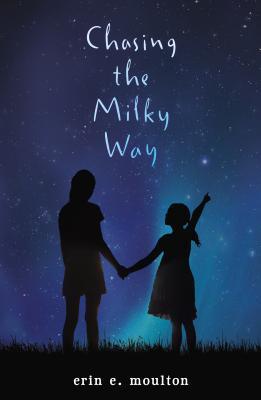
My third book, Chasing the Milky Way, is due out in June. It’s about Lucy Peevey, a young girl who wants to win a robot competition for a cash prize and a college scholarship. She lives with her Mama, little sister, and best friend, Cam, at the Sunnyside Trailer Park. As they get ready to depart for the big weekend, Mama’s in the throes of an episode (Mama has a mixed diagnosis of Bipolar and Schizoaffective disorder), and things get complicated.
When my editor at Philomel, Jill Santopolo, and I started talking about Chasing the Milky Way, I realized that I was aching to discuss the stigma of mental illness. You see, my mom has worked in the mental health field her entire adult life. Growing up, she would take us to work with her at a rehabilitation house, and we had the opportunity to get to know the residents there. One said he was a space cowboy and told me his mind was a thousand years old. One could describe in detail how she knew she was Joan of Arc, reincarnated. One had a few baby dolls that she mothered, bringing them on walks and tending to their daily needs. Another took great pride in the yard work he could do around town, but to live on his own would have been too difficult. He struggled with basic functioning. One only appeared every few months or so when her manic depression (bipolar disorder) got really bad. I’d find her marooned on the sun porch holding a cushion like it was a life raft. Sometimes, she wouldn’t move for hours.
The facility, and the people in it, were quite normal to me. They had good days and bad days, interests, skills and worries. They had family and friends. But it didn’t take me long to realize that some of my classmates at school knew the facility, and were wary of it. They often had stories about what went on there (mostly fashioned by those on the outside, not bothering to look in). It became apparent that some people didn’t think the house should be in the community at all. This was my first brush with stigma. That was growing up in the 80’s and 90’s. The stigma remains in both public and self perceptions.
In a 2011 research article in the Journal of Mental Health Counseling, analysts Bathje and Pryor note that pervasive stereotypes include perceptions that the mentally ill are inherently dangerous, unkempt or disheveled, or somehow responsible for the onset of their illness, leading to common responses of fear, irritation and lack of sympathy.
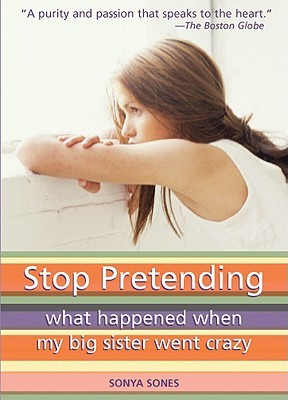
As I was writing, I wanted to make sure that I did not add to this stigma. I found that I had to cull from a variety of sources to make sure that I was creating an accurate, human and non-stereotypical portrayal of the Bipolar experience. I looked to both fiction and nonfiction for help on this subject. After spinning around the web, Novelist, anthologies, and blogs, I found some solid realistic representations of Bipolar Disorder in YA and MG lit to use as mentor titles. Here are two fiction favorites:
- Stop Pretending: What Happened When My Big Sister Went Crazy by Sonya Sones (HarperTeen, 1999)—Based on a true story, this book uses verse to explore the loss of a big sister as she is hospitalized for mental illness (later diagnosed as Bipolar Disorder). The sense of confusion, bond between sisters, and absence of a loved one are beautifully represented here.
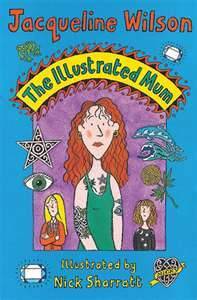
- The Illustrated Mum by Jacqueline Wilson (Delacorte, 2005)—10 year old Dol loves her mom, but sometimes things “go weird.” When her sister goes to live with her father, Mom spirals farther into manic depression and Dol is left trying to piece her life and family back together.
Though the fiction titles were helpful, I found that I needed to hear real people tell their stories. I needed to get a variety of perspectives. I needed to get my manuscript vetted by someone on the inside. I needed to understand clinical terms. As I mentioned, Mama has a mixed diagnosis of Bipolar and Schizoaffective disorder. I chose to give her a mixed diagnosis because, through my research, it became apparent that diagnosis was difficult, especially when resources were limited or doctors and treatment plans had changed. I found great information in a variety of places:
Resources:
- For personal stories online: www.notalone.nami.org and www.ted.com/playlists/9/all_kinds_of_minds. (Many of these are not about bipolar, but you won’t regret watching every last one).
- Memoirs on Bipolar Disorder: An Unquiet Mind by Kay Redfield Jamison (Vintage, 1997), A Brilliant Madness by Patty Duke (Bantam, 1999), Marbles by Ellen Forney (Gotham, 2012).
- Memoir on Schizoaffective Disorder: What A Life Can Be: One Therapists Take on Schizoaffective Disorder by Carolyn Dobbins (Bridgecross Communications, 2011). I emailed Carolyn directly after reading her book and she graciously took the time to read my ms, providing invaluable insight and advice.
- Documentaries with helpful interviews, statistics and perspectives: Up/Down, directed byKyle Gehrig (2011) and Stephen Fry: The Secret Life of the Manic Depressive directed by Ross Wilson (2006).
- My two favorite websites that include loads of facts, information, ideas for advocacy and community became http://www.nami.org and www.nimh.nih.gov
- Diagnosis and clinical terms: The DSM-IV: Diagnostic and Statistical Manual for Mental Illness (American Psychiatric Association, 1994). The DSM-V is now available, though was not during my research.
It seems to me that story immersion is an empathetic endeavor. It is our best chance at simulating an experience which we have never come across in real life. I tried to absorb every last bit of experience from these resources and craft a realistic book that has plenty of plot. I told myself: I am good at empathy. Empathy is what I do. But it doesn’t make me any less nervous to put this book out into the world. I made sure to add an author’s note, resource list and Teacher’s Guide (coming soon), to provide for further discussion of mental illness and stigma in the classroom. In the meantime, perhaps we can start the discussion here?
Questions:
Before we begin, I would like to clarify the term mental illness to help guide the conversation. Mental illness currently covers the following disorders:
Anxiety Disorders, Autism Spectrum Disorders, ADD/ADHD, Bipolar Disorder, Borderline Personality Disorder, Depression, Dissociative Disorder, Dual Diagnosis(substance abuse and mental illness), Eating Disorders, OCD, Panic Disorder, PTSD, Schizoaffective Disorder, Schizophrenia, Seasonal Affective Disorder, Tourette’s Syndrome (Duckworth, 2013).
1) Here’s a biggie: Did you know that 61.5 million Americans will suffer from a mental illness in a given year. 1 out of 4. ¼ of the population (Duckworth, 2013). It seems to me that representation = perception and that accurate representation in our cultural narratives could help combat stigma. Industry Insiders : Do you have a pulse on if realistic works are being written and submitted? More for YA or MG? Are specific disorders explored more than others?
2) Librarians: Do you find it easy to locate fiction books with mental illness? I found that sometimes books that hadn’t specified a disorder in the description would get an amateur diagnosis from a reader or content creator and would be placed on specific disorder lists. Diagnosis seems hard in reality and fiction. (It reminds me of this article: Pathology in the Hundred Acre Wood: http://www.cmaj.ca/content/163/12/1557.full)
3) Teachers: Do you feel that you have adequate resources to talk about mental illness in the classroom? Do you think more books with teacher guides could make this subject more accessible? If not, what would make it accessible?
4) Readers: What are your favorite realistic YA or MG books about mental illness? Did the protagonist suffer from the illness? Secondary character?
5) Writers: What are your hesitations in writing about mental illness(whether or not you have personally experienced mental illness)?

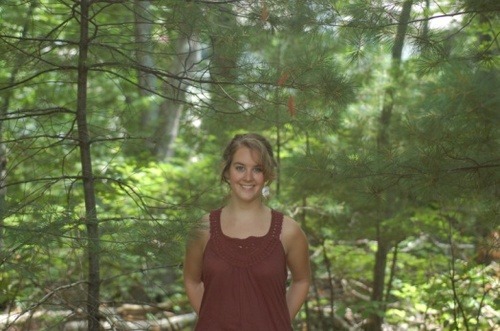 Erin E. Moulton graduated with an MFA in Writing for Children from the Vermont College of Fine Arts. She is the author of Flutter: The Story of Four Sisters and One Incredible Journey (Philomel/Penguin 2011), and Tracing Stars (Philomel/Penguin 2012). Erin is co-founder of the Kinship Writers Association and is currently the YA librarian at the Derry Public Library. Erin lives in Southern New Hampshire with her husband and puppies where she writes, reads, drinks tea and dreams. You can visit her online at www.erinemoulton.com or on Facebook as Erin E. Moulton (Author), or find her on twitter @erinemoulton.
 -

Peanut Butter and Jellyfish: Jarrett J. Krosoczka Discusses His Picture-Book Process
“I didn’t sit down at my sketchbook and say, ‘I’m going to write a story that’s about anti-bullying and helping people regardless of your history with them;’ I just wanted …
-

Ever Thought Beverly Cleary Should Have Written ‘The Pug and the Motorcycle’?
Lunch Lady creator Jarrett Krosoczka’s pug Ralph certainly thinks so! Watch Jarrett’s hilarious Children’s Book Week Champion video, and join him in celebrating the 95th annual Children’s Book Week (May …
-

National Student Poets Amplify the Teen Voice for National Poetry Month
Selected by White House Committee, Student Poetry Ambassadors Connect Youth Across the Country to the Dynamic Art of Literary Self-Expression New York, NY — During their tenure as teen literary …
-

CBC Diversity: A Conversation With Ruth Tobar, Chair of the 2014 Pura Belpré Award Committee
Interview conducted by Wendy Lamb
Wendy Lamb:
Can you please tell me something of your background, and your work in children’s books?
Ruth Tobar:

I worked as Publisher and Executive Director at Children’s Book Press and have been involved with REFORMA, the National Association to Promote Library & Information Services to Latinos and the Spanish Speaking for over a decade. In that time I have helped to plan and identify resources for the 10th and 15th Pura Belpré Anniversary Celebraciones and served on the 2010 Pura Belpré Award Selection Committee. I have participated on other committees and have worked with the leadership of REFORMA to strengthen the association at many levels. I have volunteered at REFORMA’s RNC IV Conference in Denver and have assisted in any way I can. As a person of color and a publisher of multicultural children’s books, I saw the value of having children of color reflected in published works and involving the community that is reflected in the books as well.
WL:
Why did you take on the role of chair of this award?
RT:

I was deeply honored when I was asked to chair the 2014 Pura Belpré Award Committee. I accepted the role of chair of the Pura Belpré Award Committee because the co-chairs of REFORMA’s CAYASC committee, Ana Elba Pavón and Lucia González, believed that my experience and background put me in a good position to lead the committee. As chair my goals are to build a team that will work collaboratively to select the highest quality books that reflect the Latino experience in the United States and Puerto Rico. I am humbled by the opportunity. The committee is comprised of a group of excellent and dedicated librarians and their names are Mary Clark, Alicia K. Long, Paula Gonzales, Maria X. Peterson, Celia C. Perez and Armando Ramirez and Oralia Garza de Cortés, who served as the Cultural Competence Consultant and is one of the founders of the award.
WL:
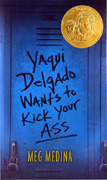
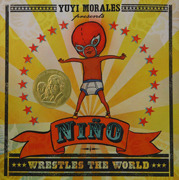
This year’s winning books are a varied, rich group. In fiction: the Award book, Yaqui Delgado Wants To Kick Your Ass by Meg Medina, has one of the most memorable titles ever. Matt de la Peña’s Honor book, The Living, is an intense high adventure thriller. Another Honor is a remarkable biography in poems by Margarita Engle: The Lightening Dreamer: Cuba’s Greatest Abolitionist; the third Honor is a kind of folk tale, Pancho Rabbit And The Coyote: A Migrant’s Tale, written and illustrated by Duncan Tonatiuh. This also won an Honor in illustration. The other winners in the Illustrator category are equally impressive. Each one is original, and so appealing: The Award book is Nino Wrestles The World, by Yuyi Morales, and the Honor Books are María Had A Little Llama/ María Tenía Una Pequeña Llamita written and illustrated by Angela Dominguez, and Tito Puente Mambo King/ Rey Del Mambo written by Monica Brown and illustrated by Rafael López.
Are you finding that your pool of high quality books is growing?
RT:
There is excellence in what there is being published. The top is very high quality. In terms of the quantity of books and the ability of a teacher, librarian or parent to select among many excellent books—now that is where the problem is currently. Since 2010, when I served on the committee, the numbers have gone down although talent has not diminished, but the number of submissions has gone down, and we are in crisis mode.
You look at the Newbery and Printz and Caldecott books—usually it’s white winners. With the exception of a Newbery Honor for Margarita Engle, for The Surrender Tree, or David Diaz’s Caldecott for Smoky Night, Latinos are excluded.
WL:
How can publishers do a better job of finding and publishing writers from a Spanish-speaking background?
RT:
There’s been an ongoing conversation about Latinos in print for the past year; The New York Times published an article in December 2012 entitled “For Young Latino Readers, an Image Is Missing” about the lack of Latino children’s literature and recently another article entitled “Where Are the People of Color in Children’s Books?,” and Latino librarians held a panel discussion at ALA Annual in Chicago, facilitated by Lucia González. It was very well attended—the panel included Oralia Garza de Cortés, Teresa Mlawer, Liza González Sánchez, and Jason Low. They talked about the increasing number of Latinos in the US population, and the decreasing number of books by Latinos. Publishers such as Arte Público, Cinco Puntos, and Lee & Low are consistent in their publishing of Latino works, but the bigger houses must have more of a presence. As we grow in population, the Latino community’s presence in publishing stays the same or even decreases.
The publishing houses could also reach the Latino community by hiring Latinos in decision-making positions at all levels of their organizations. The talent pool within our community filled with talented, professional, and very creative people and would happily work to publish, market, and sell high quality Latino literature for children.
Publishers should look at two blogs: the Lee and Low’s The Open Book, and Celia C. Perez’s, All Brown All Around, a blog about Latinos in children’s and YA Books. Celia is a member of the 2014 Pura Belpré jury. Both blogs are excellent and very informative. The websites of Latino authors and artists, of the small multicultural and Latino publishing houses, Día de los niños / Día de los libros, the Pura Belpré Award, the Tomás Rivera Book Award and the Américas Book Award are also great resources to identify Latino authors and artists.
Publishers should also talk to everyone who has ever been a part of the Pura Belpré committee—they have a really intimate knowledge of this area. Every children’s librarian, anybody who buys or selects books or helps a kid out at the library, the local people who give their time, are the people who have the answers. Publishers should attend Latino poetry slams, the arts festivals, and the cultural events as well. The Latino community is incredibly talented and the arts are alive in our communities throughout the United States and Puerto Rico.
WL:
Ruth, thank you so much for speaking with me—what an interesting and helpful conversation. Thank you, too, for your work with REFORMA, with the Pura Belpré Committee, as an educator, and as a former publisher. I look forward to hearing memorable speeches at this year’s Pura Belpré ceremony. I say ceremony—but it’s more than that—it’s always a celebration!
RT:
The 2014 Pura Belpré awards ceremony will be at the American Library Association conference in Las Vegas on Sunday, June 29 from 1:30 until 3:30 pm (please check the conference program for the most up-to-date information). In 2016, REFORMA and ALSC will celebrate the 20th anniversary of the awards at ALA in Orlando, which will honor Dr. Henrietta Smith.

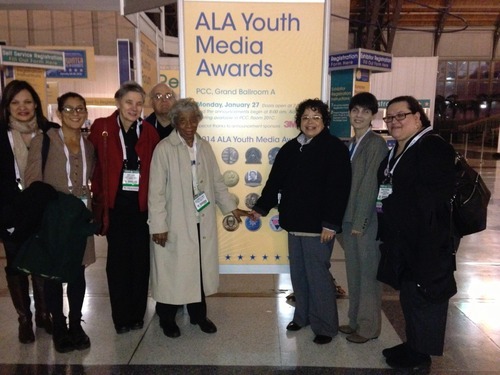
Ruth Tobar holds a Bachelor of Arts degree in literature from Michigan State University and a Master of Education degree from Harvard University Graduate School of Education. She has many years of experience in the fields of education, non-profit management, publishing, and multicultural literature for children. Ruth is currently the director of Plaza Comunitaria in Grand Rapids, Michigan, a school for adults who did not have the opportunity to finish their schooling in their country of origin and served as Executive Director and Publisher for Children’s Book Press, a non-profit publishing house in San Francisco that published the award-winning children’s book The Storyteller’s Candle/La velita de los cuentos by Lucía M. González and Lulu Delacre.
-

Jean Craighead George’s Children Collaborate On Their Mother’s Last Book
“In their acknowledgments at the end of the novel, Craig and Twig thank their mother ‘for leaving us with this ‘homework assignment,’ which pulled us together after she died.’ What …
-

Children’s Book Author/Illustrator Todd Parr to Receive 2014 Mills Tannenbaum Award for Children’s Literacy
FOR IMMEDIATE RELEASE March 28, 2014 (New York, NY) The 2014 Mills Tannenbaum Award for Children’s Literacy will be …
-

CBC Diversity: White with Envy
I grew up jealous of white children.
Though hardly fluent in English herself, my mother had tried very hard to read me English fairy tales when I was young. As a child, I was familiar with Anderson, Grimm and many stories written by Enid Blyton. I remember thinking then, questions like: Where was my snow? Why aren’t there fairies living in our garden? What does a Christmas pie taste like? And especially hated it whenever my mother would say, “We don’t have any of those things here, my dear; they are all in English places overseas.”
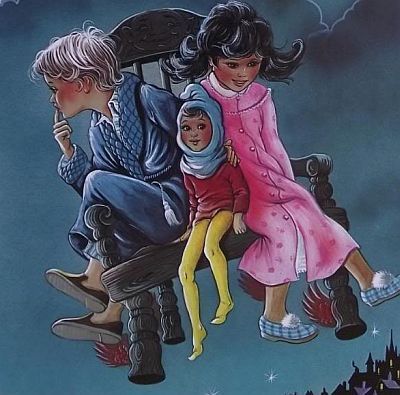
Last year, I had tried to recapture that feeling in a poem I wrote for a poetry class at Manhattanville College inspired by Enid Blyton’s famous series The Wishing-Chair:
THE WISHING CHAIR
Dear Wishing Chair,
please fly me out of Malaysia–
the most boring place on Earth.Won’t you take me on an adventure
to magical places,
where there are elves, and pixies
and toadstool fairies.
where children are read bedtime stories,
where there is snow on Christmas Day,
where the weather changes four times a year–
and not stay the same all through the year.
Boring, boring, boring!Dear Wishing Chair,
please fly me out of Malaysia–
and take me to places,
like England and America.Even as a child, I knew the children in the books I read were different from me and everyone around me. To me, these stories probably read more like high fantasy – the characters lived in a world that resembled next to nothing in mine! So consumed was I with this desire to live their lives, that I don’t remember ever wanting to read something with a main character of my own skin color. To my parents and many around me, I lived in my own world – a world inhabited by people with very fair skin.
Enid Blyton influenced my earliest writing, and I finished writing my first book the year I turned 17; it was a story of 71,000 words set in New York City – a place I’ve only ever read about. Understandably, the manuscript has stayed hidden in my drawer ever since its completion.
The major turning point in my writing came 2 years ago during my study under Prof. Phyllis Shalant at the Manhattanville College. The class was encouraged to draw inspiration from our own culture and heritage, which was when I realized exactly how much I have been taking mine for granted; why, we have fox demons, dragons, monkey gods and most of all, kung fu!! *yelled with the same vigor as Po the Dragon Warrior* If I could fall in love with fairies and elves and wishing chairs, other children could very well fall in love with the wonders of Asian stories, too. And from that moment, I truly wanted to become one of those who could bring magic like that to children.
Although, admittedly, I still dream of publishing a book with a white protagonist, my main goal in my writing is to give young readers this gift that I had received from authors like Enid Blyton and Roald Dahl long ago– the awareness of many exciting worlds that exist beyond where we live– this awareness that had led me on all the amazing adventures away from home that I never would’ve had if I had never been an extremely jealous child.


A Chinese born and raised in Malaysia, Celeste is currently a graduate student completing her MFA in Creative Writing at The New School and Manhattanville College. Celeste writes mainly middle-grade and young adult fiction and is represented by Rosemary Stimola of Stimola Literary Studio.
-

‘Paper Towns’ Movie Adaptation with Executive Producer John Green
Nat Wolff, who plays Isaac in the TFiOS movie, will star as Q in the adaptation of Paper Towns. As of yet, there is no word on who will play …
-

Macmillan Celebrates 15th Anniversary of ‘Speak’ with RAINN Donation Campaign
Macmillan to Match Up to $15,000 in Donations to RAINN In celebration of the 15th anniversary of the publication of Laurie Halse Anderson’s groundbreaking Speak, Macmillan will be matching donations …
-

Jarrett J. Krosoczka to Host BEA Children’s Art Auction
FOR IMMEDIATE RELEASE New York, NY, April 2, 2014—The American Booksellers Foundation for Free Expression (ABFFE), the bookseller’s voice in the fight against censorship, announced today that the Annual Children’s …
-

Daniel Handler On Developing His Writing Style
One participant asked: “How exactly in the name of all sanity did you develop your writing style?” Handler replied: “One does not develop a writing style in the name of …
-

CBC Diversity: Keeping it Real in Bologna
If you read the recent PW wrap-up of the 2014 Bologna Book Fair, you’ll notice its buoyant tone, at least for those of us who occasionally publish realistic YA fiction. I have no shame in admitting that I love everything John Green has published. If the current industry narrative mandates thanking the “John Green Effect” for changing the heart of The Market, so be it. And if The Market—that all-powerful “villain with the ferret” (awesome metaphor care of Christopher Myers in The New York Times), that Dark Force upon which we Publishers project our inertia, insecurity, excuses for failure, and self-congratulation in the wake of success—will now welcome brilliant coming-of-age books about, say, a girl who writes fan fiction about a fictional series…I’m in.
So, my takeaway from Bologna was this: Yes! It’s true. Overseas, The Market welcomes realistic YA fiction, as well. There is one caveat: As long as that reality is pretty much confined to white people.
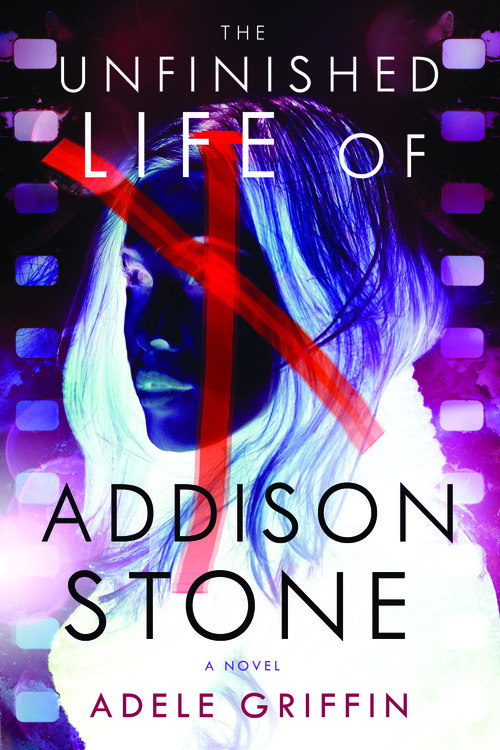
As a white person, and for purposes of this blog post, I am quite comfortable with writing “white people.” To ratchet up any potential insult, I am not too concerned with offending any fellow white people in the Publishing Industry, here or abroad. I will also happily cop to hypocrisy on this front. I had success selling rights at Bologna with a contemporary realistic YA about a white girl: The Unfinished Life of Addison Stone, by Adele Griffin (also white). PW does not exaggerate: I was bouncing around the fair, even weighted down with pasta and ham. Adele’s book is amazing and deserves to be read by as many people as possible.
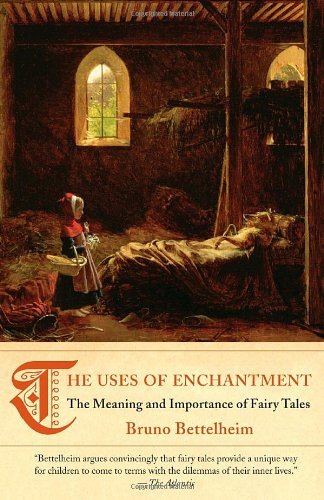
That said, the reception I got for some other books I love just as much as Adele’s or any other on the Soho Teen list wasn’t as effusive. If you mention, for instance, the words “gay” or “Latino,” you might lose interest. Maybe I should have changed my pitches? I had them at “realistic” and “contemporary,” I swear. It doesn’t matter if a book touches upon issues of identity and denial in a way I’ve never seen. Or that at its heart there’s a unique, epic, mythic journey worthy of citation by Bruno Bettelheim and Joseph Campbell (both of whom were also white). Or awesome blurbs fifteen months in advance of publication… Or a secret as delicious as E. Lockhart’s We Were Liars, another YA smash of the fair. (Which I also love. Which I won’t spoil. But which is also about a white girl and her white family.) Nope. An extraordinary novel whose protagonist isn’t a straight white girl might not satisfy The Market.
So why am I writing this post? If there was anything that I missed at Bologna, I’d love to be proven wrong. If any of you rights representatives or agents or editors or authors (or anyone else) know of great new forthcoming YAs featuring protagonists who aren’t straight white girls—and whose rights are selling abroad—please write in and tell me that I am an ignoramus, and that the world is heeding the term “realistic.”
-

Rock ’n’ Roll Legend and Bestselling Author Keith Richards to Publish Picture Book for Children in Collaboration with Artist Daughter Theodora Richards
Gus & Me: The Story of My Granddad and My First Guitar; National Publication Date for Print and Digital is September 9, 2014 Megan Tingley, Executive Vice President and Publisher, …
-

Free Author Readings for K-8 Classrooms Nationwide on April 4, Now with the Chance to Win Complete Classroom Sets of the 2014 Children’s Choice Book Awards Finalists!
Contact:Shira Schindel, Qlovi(551) 697-1983sschindel@qlovi.com New York, NY – March 27, 2013 — Qlovi, the classroom eBook and literacy software company, partners with the Children’s Book Council, the non-profit trade association for …
-
Coffee County Students Make Dramatic Reading Gains in First Semester of Literacy Grant
Data from Students Enrolled in iRead™, READ 180® and System 44® Programs Show Outstanding First Semester Gains in Reading Achievement DOUGLAS, GA – In reviewing early data from the first few months of a …
