
Blog
-

CBC Diversity 101: Religion in YA
Contributed to CBC Diversity by Aaron Hartzler
Every six months or so, I see an essay devoted to the absence of religion and characters of faith in young adult literature. Google “religion in YA” and you’ll see plenty of posts which rightly address the fact that only a small percentage of the books marketed to teenagers by major publishers include any reference to religion. Most of these are consistently found in historical fiction.
Studies show that a lack of religious content in YA books is not due to a lack of adolescent interest in matters of faith. According to Soul Searching: The Religious and Spiritual Lives of American Teenagers (2005, Oxford University Press), 60% of teens say that religious faith is an important part of their lives, and 40% pray every day. Thirty-five percent attend weekly services of some kind, while another 15% go to church at least once a month. One in four report that they are “born again.”
I know these facts to be true—not only from survey data, but from personal experience.
My Personal Connection

I grew up in the Midwest, the oldest of five in a fundamentalist evangelical family. Two weeks before graduation, I was kicked out of my Christian high school. Recently, I wrote a YA memoir about that experience for Little, Brown called Rapture Practice.
Religion was not simply a part of my life as a teenager, it was the major player. My dad taught at a Bible college and preached around the country. We believed that our friends and neighbors were doomed to spend an eternity in a literal hell if they didn’t come to believe as we did.
During my teen years doubts about the religion to which my family subscribed grew deafening. My faith ran up against the brick wall of some questions regarding my sexuality that I wasn’t even fully prepared to ask until I got to college. All I could admit to myself back then was an increasing awareness that my life would not look like the life my parents had imagined for me.
Even this brief description of my personal experience with religion points out what a tricky thing it is to write teen characters dealing with faith. Much ink has been spilled over the absence of faith in YA lit, and theories abound as to why that is.
I’d like to address not the “why” but the “how” of writing about religion for young adults. How do we keep it balanced and fair? How do we make sure that references to faith and religion are a function of character and story instead of the other way around?
Stereotypes & What I’d Like to See More Of (aka a book that handles this well).
The best advice my friend A.S. King ever gave me about writing was that on the page, “Fundamentally, we deliver ourselves.” Religion, belief, faith (or the lack of it) are subjects that an author cannot help but write from a personal perspective. In that sense, there’s no “wrong” way to include religion in a book—as long as the structure and tenants of good storytelling are in place.
Here are five common stumbling blocks I’ve seen when it comes to writing about religion for teens, and a corresponding book that I think pulls it off with flying colors.
1. Not all religious people are anything.
Not all religious people are hypocrites. Some, like my parents, actually believe the things they say they believe, and practice what they preach. Not every Reverend is the cosmic kill joy John Lithgow played in Footloose, nor is every pastor’s daughter a nymphomaniac. However, if it’s true that the only man who could ever move you “was the son of a preacher man,” then that’s a perspective from which you can write a story.
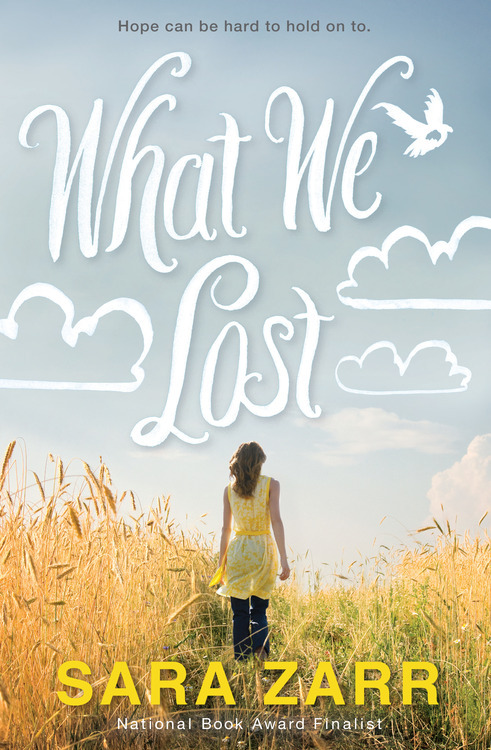
In Sara Zarr’s What We Lost (originally published as Once Was Lost), Samara’s father is a minister, and her mom is in rehab. The characters are so richly drawn and fully realized that Samara’s subsequent struggle with her own doubts in the midst of a mysterious disappearance in her home town never becomes preachy, or shies away from hard questions or issues. It’s a fantastic example of how to write a kid who attends youth group—but isn’t just that.
2. Religion isn’t always a bad thing, or an all-encompassing fundamentalist experience.
A character needn’t experience religion as a sinister opiate of the masses, nor are all church-going people of faith Bible-thumping, evangelical, fire and brimstone types. Some live by a personal code of ethics guided by their beliefs, quietly helping others.
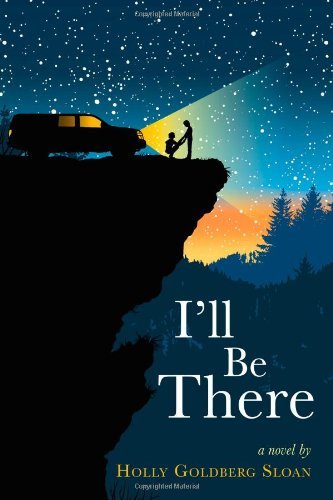
Holly Goldberg Sloan’s I’ll Be There (and it’s forthcoming sequel Just Call My Name) features just such a family. The story begins with Emily Bell singing a solo in church and catching sight of a young man in crisis. As Emily’s family comes to the aid of Sam and his little brother, Riddle, Sloan weaves themes of social justice into prose that crackles with humor, warmth, romance, and heart-pounding action.
3. Not every book that includes a religious character has to be a book about religion.
Not all people of faith go to church each time the doors are open.
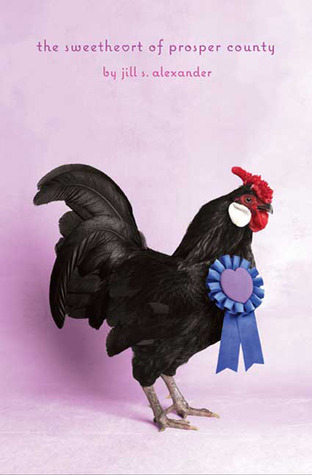
Jill Alexander’s The Sweetheart of Prosper County features a girl named Austin from a tiny Texas town struggling with the loss of her Dad, and her own desire to be popular. There’s no big come-to-Jesus moment, but Austin often remembers to follow her Mom’s advice in tough situations and “pray the problem.” With this simple, pitch-perfect detail Alexander opens our hearts and minds to the experience of a teen girl who believes there could be value in asking for help from a higher power.
4. Not every book about religion has to be a book religious people would like.
We need books that dare to ask the questions about faith with which teens often struggle.
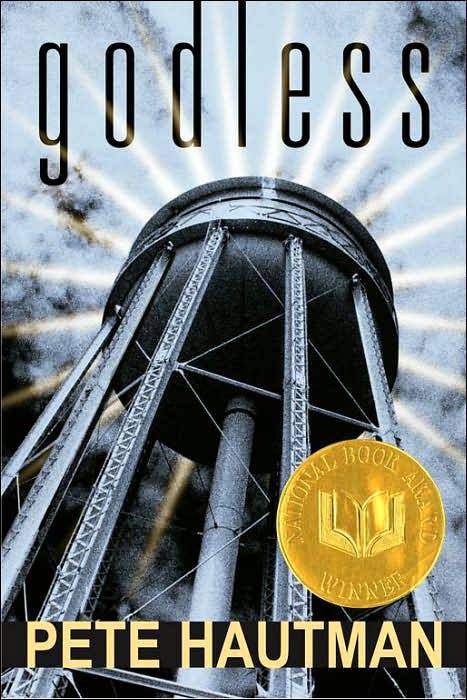
In Pete Hautman’s Godless (National Book Award, 2005) Jason Bock quits his parents’ Catholic church and founds his own religion, enlisting friends to come and worship the water tower in the center of town. When Jason loses his grasp on the religious ceremony he’s instituted, things take a dangerous turn. Hautman seamlessly layers in questions about the control of religion in our lives without preaching a gospel of his own. There’s a healthy dose of skepticism in this book, but it’s rooted in character—not shouted from the author’s soapbox—and the result is a riveting loss of faith story.
5. Not all religion is a relic of the past.
If you’re writing fantasy or science fiction set in a distant future, don’t be afraid to address issues of faith. If the human species is present, chances are religion will be, too. Don’t automatically leave it out of your world building.
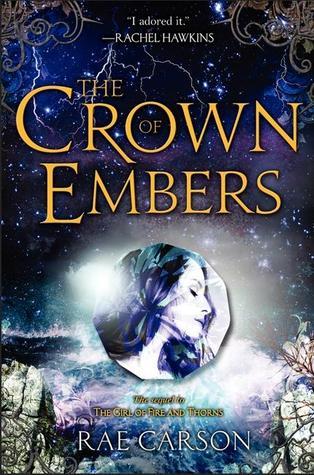
Rae Carson’s The Crown of Embers is part of her Girl of Fire and Thorn series, and features Elisa, a princess turned war queen, several thousand years in the future. The plot of the book involves a lost colony of religious refugees, and the Scripture Sancta which the author based on the Bible. An atheist and humanist herself, Carson says that “so long as religion exists in the world, it will exist in my books…I think it’s tragic when teenagers can’t find themselves in fiction.” (You can read a great interview with her about this subject here.)
If you have questions for Aaron, post them in the comments section below! He’ll choose a selection and answer them through video later in 2014.
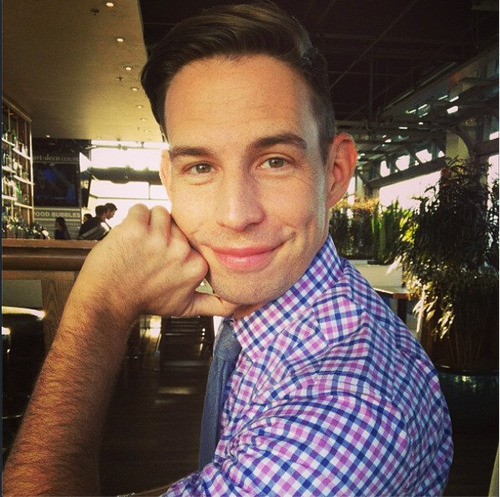
Aaron Hartzler is the author of over 5,000 tweets, and Rapture Practice, a memoir for young adults about growing up gay in a fundamentalist evangelical home. He lives in Southern California with his fiancé Nate and their two dogs, Charlie and Brahms. You can find him online at http://www.aaronhartzler.com.
-

Neil Gaiman and Adam Rex to Publish the Second ‘Chu’ Picture Book
The author noted on his blog that the UK version is entitled Chu’s First Day at School. At the moment, the title for book three has not been revealed and Rex …
-

Video: The Call of a Lifetime
“After I hung up the phone I cried some more. And then I wondered if I had dreamed the whole thing. Did I say ‘thank you’ to you guys? …
-

‘Rose Under Fire’ Wins the Schneider Family Book Award
“Beyond this emotional impact, Rose Under Fire also looks unflinchingly at the permanent physical disabilities and disfigurement that some of the prisoners suffered at the hands of their captors, which was undoubtedly …
-

HarperCollins to Publish Middle Grade Trilogy By Lauren Myracle
The story in the first book, The Wishing Day, follows “three sisters who live in a town where on the third day of the third month of her 13th year, …
-

Sophie Nelisse to Star in ‘The Great Gilly Hopkins’ Film Adaptation
Paterson, who served as the second National Ambassador for Young People’s Literature, won a Newbery Honor for this book in 1979. Her son, David Paterson, will serve as a producer …
-

New Lemony Snicket Audiobook to Feature 13 Celebrity Narrators
The group includes former National Ambassador for Young People’s Literature Jon Scieszka, The Diviners author Libba Bray, TV personality Rachel Maddow, and others. Little Brown Books for Young Readers will …
-

CCBC Releases Stats on the Number of Diverse Children’s Books Published in 2013
“In 1985 the Cooperative Children’s Book Center began to document the numbers of books published in the United States for children each year which were written and/or illustrated by African …
-
Of Scrabble and Stories: An Interview with Kate DiCamillo
Q: Scenario time. The phone rings at 8 a.m., it’s NPR, and they want a quote about the latest threat to reading; will you be ready?A: “[laughs] No! But I’ll …
-

2014 WNBA Pannell Award Nominees Announced
General BookstoreAaron’s Books – Lititz, PA Avid Bookshop – Athens, GA Book Passage – Corte Madera, CA Byrd’s Books – Bethel, CT Bookshop Santa Cruz – Santa Cruz, CA Changing …
-

Neil Gaiman Reads ‘Green Eggs & Ham’ Out Loud
The Fortunately The Milk Writer promised to record this performance if the charity organization Worldbuilders raised half a million dollars during its annual fundraiser. So far, they have managed to …
-

Interview with ‘Reality Boy’ Author A.S. King
“My characters always come first. When I start a book, I have no idea where it will go or end or what will happen to these people I invent in my head. …
-

Brian Floca & Lynne Cox to Collaborate on Picture Book
The protagonist is based on a real life elephant seal who is also named Elizabeth. The book will also include more information about elephant seals. Schwartz & Wade, an imprint at …
-

Lemony Snicket Interviews Kate DiCamillo
“Lemony Snicket: Sometimes we think, Only do things to make our previous selves feel better. I was at a table once with a bunch of writers and we all went around saying …
-

2014 Rainbow Project Book List Announced
This year, members of the 2014 Rainbow Project Committee included: Christie Gibrich, chair; Naomi Gonzales; Ingrid Abrams; Erin Iannacchione; Christine Jenkins; Melanie Koss; Jesse Nachem; Victor Schill; Anna White; and Jane …
-

Lemony Snicket Award For “Noble Librarians Faced With Adversity” Announced
The award, which ALA intends to present at its Annual Conference in Las Vegas, recognizes a librarian who “has faced adversity with integrity and dignity intact.” It will be given …
-

250 Million Primary School Age Kids Cannot Read, Write, or Perform Basic Mathematics
“The report found that 130 million are in primary school but have not achieved the minimum benchmarks for learning, and almost 120 million have spent little or no time in …
-

Former Gamers Debut Epic!, First All-You-Can-Read eBook Service for School-Aged Kids
The company also announced today that it has closed $1.4M in seed funding from Menlo Ventures, Webb Investment Network, Innovation Endeavors, Maven Ventures, Morado Ventures and others. “We’re a team …
-

Rainbow Rowell Lands Two-Book Deal with First Second
These two books will mark Rowell’s entry into the graphic novel genre. Faith Erin Hicks, a graphic novel writer and artist, has agreed to create the artwork for the first …
-

CBC Diversity: A panelist’s take on the Diversity 101 ALA Midwinter Discussion
Contributed by Connie Hsu
This year, I had the honor of joining some very insightful, experienced, and passionate people on a panel sponsored by the CBC Diversity. The session touched on what CBC Diversity has been up to, with a focus on the Diversity 101 series we feature on our blog, as well as ALSC’s Día initiative, dedicated to helping librarians work with their community to build interest and excitement for literacy dedicated to all children from all backgrounds. You can find out more about Día (short for “Diversity in Action) here. (Shameless plug—their book list includes Ask My Mood Ring How I Feel by Diana Lopéz!)
Last year’s panel, which you can listen to here, introduced librarians to the CBC Diversity committee and our mission to increase diversity on all levels of publishing, from our authors and the stories they create to the professionals working in every level from this field. And we in turn learned from a few participating librarians just how brightly passions burned for more attention to this mission.
This year, we brought a little more diversity to the panel. By diverse I mean that we included a terrific librarian representative (Ana-Elba Pavon from the Oakland Public Library) as well as a larger group of editors from a range of publishers (Dan Ehrenhaft of Soho Teen, Wendy Lamb of Penguin Random House, Cheryl Klein of Scholastic, who was our moderator, and me, representing Little, Brown Books for Young Readers).
I won’t go into the ditzy details of the conversation, since an audio version will be available in the next couple of weeks. But I can share some helpful takeaways from our overall conversation, prompted by organic discussion among the panelists and the audience members who came up during the Q&A session.
Generally, a panel consists of experts who share insight and experience with an audience there to learn. In our case, I felt the tone was much different. Under the excellent guidance of Cheryl, our conversations were more centered on what we learned from the resources provided by the Diversity committee and blog and how that has shaped how we approach the books we edit and acquire. We were there to demonstrate how there’s always something more to be learned and how nobody is a true expert. We discussed how some of the Diversity 101 posts have opened our eyes to how marginalized characters are treated in books, in a micro-aggressive (or sometimes flat out aggressive) way, like The Disabled Saint, where Kayla Whaley discusses how disabled characters are often fodder for “inspiration porn” and Alma Flor Ada’s deeply thoughtful and insightful post about the nuances and complexities of Spanish and how to use and respect the language.
While these posts are eye-opening and educational, we editors often find them intimidating as well. There is so much to think about, and when we push ourselves to work on books featuring diversity, often editing from “outside” our experience, we feel like we’re putting ourselves out there and risking criticism. One request is for all of us, both in the publishing and library world, to try to be open-minded in terms of how successful we personally deem these books. Fear of criticism should not be one of the challenges in bringing good, diverse books to the world, and while we are always aiming for authenticity and top-notch literary value, sometimes we have to step back and relax a little. Dan and Wendy spoke about a future post, where they will touch on this topic in more detail.
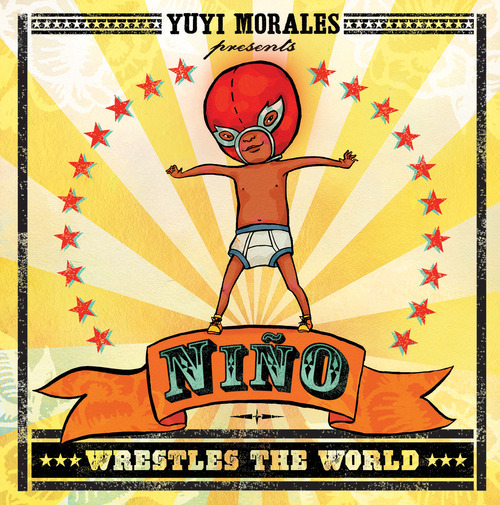
Ana-Elba shared details about Día and the programming that can be developed around this initiative, directing folks to the Día website, which is packed with information. While Día began with a Latino focus, it now encompasses all kinds of diversity. Ana-Elba shared an example of a good book for Día for this year’s celebration, one that will pull in all readers while expertly incorporating a multicultural theme—Yuyi Morales’s Nino Wrestles the World, which we learned on Monday was this year’s Pura Belpré Illustrator winner. The 17th annual Día de los libros/Día de los Ninos will be held on April 30th this year.
We had some great suggestions from the audience, such as including more diverse books in book fairs, encouraging book clubs and stores to take these titles, as well as using resources like the Luminarias, a group of Texas librarians who actively reach out to non-Spanish speaking educators. Shelley Diaz of School Library Journal also shared that the magazine will be dedicating an issue this spring to diversity.
The biggest eye-opener was during the Q&A, where Reforma member Oralia Garza de Cortés asked publishers to be more transparent about our numbers, which meant our stats in terms of the diverse books and authors we publish. She said she felt there were walls between the librarians and publishers, and that they often feel that they aren’t able to reach us. As we sat there, on a panel behind a table a few yards away from the audience, we all realized that perhaps the forum could change for future events like these. Rather than a panel, we can consider an open discussion, where ideas can be shared and cultivated, and to assure that the only walls are the ones that librarians and publishers can break down together, side-by-side.
