
Blog
-

A Letter From the CBC and ECAR About the Children’s Choice Book Awards Finalists
Dear children’s literature community — We at the Children’s Book Council and Every Child a Reader sincerely appreciate your concerns about this year’s Children’s Choice Book Awards, and wanted to …
-

Diversity 101: The Multiracial Experience
Contributed to CBC Diversity by Monica Brown
In the 2013 Census, nine million people selected more than one race. In states like California, where I grew up, as well as Texas, and New York, half a million or more people, in each of these states, marked multiple-races. Yet when I became a mother of two beautiful daughters, Isabella and Juliana, I looked around and couldn’t find books that represented the multiplicity of our experiences as a family of two continents, many races, and diverse cultural traditions. We are a nation of boxes, and until the 2000 census, we could mark only one. It is unfortunate that many of our children’s books mirror only part of our culture and that many voices still go unheard.
My Personal Connection
My daughter, Isabella (named in honor of my mother Isabel Maria) was born in 1997 in Tennessee. We were living in a region of Tennessee where there were very few Latinos and race was defined in terms of black and white. In the hospital, the nurses informed me that they adored my daughter, with her shock of black spiky hair, and that they called her “our little Eskimo.” My own family said, “She sure looks like a Valdivieso!” and yes, with in her dark eyes, light olive skin and beautiful black hair, I saw the face of my mestiza Peruvian Grandmother. But she also shared roots in Jewish Romania and Hungary, Scotland, and Italy. From my husband Jeff, came Sweden, Norway, Ireland, and Germany. Surely a citizen of the world was born on that day in 1997.
“The little Eskimo” was the first box my Isabella was put in. Because if you look “ambiguously ethnic”(and here I borrow Sherman Alexie’s phrase), people want to place you.
Recently, my daughter’s teacher used her as an example during a class discussion of Nazi Germany, stating “Because of her global ethnic origins, Isabella is an example of what the Nazis would have classified as Negroid.” He then pointed out blond students as examples of what the Nazis would have called “Aryan superiority.” I am sure the teacher intended the exercise to illustrate the absurdity of white supremacy, but I am still struck by the ways my multiracial teen, and other ethnically diverse students, are still put in boxes and on display.
Terminology
There are many words associated with multiracial people, some negative and some positive. I prefer mestiza, because it encompasses both my European and Peruvian indigenous origins. But that’s technically (or at least historically) incorrect because while I have Spanish and Indigenous Peruvian origins on my mother’s side, I also have Eastern European Jewish, Western European and African origins. Some people prefer the terms “mixed,” others “biracial.” Of the choices available, I choose “multiracial.” President Obama has jokingly called himself a mutt, and there are other terms meant to be humorous that I feel uncomfortable with. Though I’ve described myself as “half Peruvian” or “half Jewish” as a shortcut in the past, I fully reject those terms now. I am not half of anything. I am whole in myself, as are my daughters. I am the Latina daughter of a Latina woman. I am bilingual. I am the face of a complex, multiracial, multilingual, and multicultural past, present and future. As with any other groups, we must respect and listen to how people choose to self-identify.
Great Examples to Follow
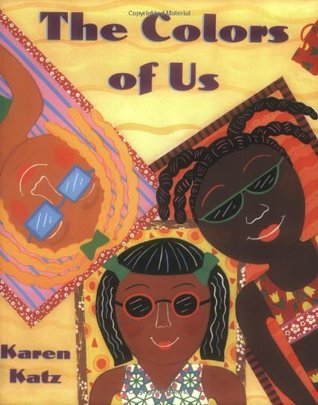
There are very few picture books representing the multiracial experience, and of those, most focus only on color itself, not culture, and stay at very surface levels. Books such as Black Is Brown Is Tan (HarperCollins 1973/ 2002), by Arnold Adoff, Black, White, Just Right (Albert Whitman & Co. 1993) by Marguerite W. Davol, and The Colors of Us (Macmillan 2002), by Karen Katz, and are lovely, representing joyful multiracial families. Black Is Brown Is Tan was the first picture book, to my knowledge, to depict a multiracial family. In the book, Adoff writes poetically:
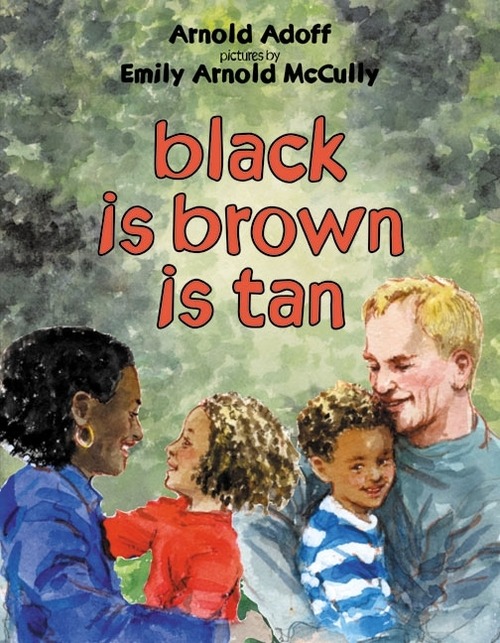
black is brown is tan
is girl is boy
is nose is
face
is all
the
colors
of the race
Adoff also mentions the individual characters in terms of color:
granny white and grandma black
kissing both your cheeks
and hugging back
Similarly, Karen Katz’s young protagonist gets ready to paint her friends, and focuses on color: “I think about all the wonderful colors I will make and I say their names out loud. Cinnamon, chocolate, and honey. Coffee, toffee, and butterscotch. They sound so delicious.” The clear message is all colors are beautiful. In Black and White, Just Right, Marguerite Davol writes, “Mama’s face is chestnut brown. Her Dark brown eyes are bright as bees. Papa’s face turns pink in the sun; his blue eyes squinch up when he smiles. My face? I look like both of them—a little dark, a little light. Mama and Papa say, ‘just right!” The illustrations include smiling images and text to match.
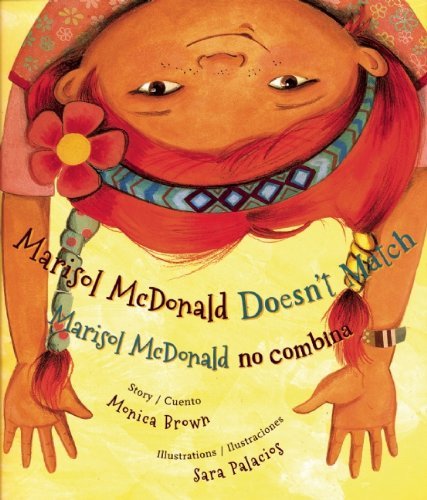
I respect these authors and publishers for putting positive images of multiracial families out there, because I know from personal experience just how difficult it can be to place these stories. Of my many published children’s books, my semi-autobiographical story Marisol McDonald Doesn’t Match/Marisol McDonald no combina (Lee and Low, 2011), illustrated by Sara Palacios, received the most rejections from publishers, which is ironic as it has resonated both critically and with children across the nation, winning multiple awards and starred reviews. It is now in its fifth printing!
Marisol McDonald is the daughter of two cultures and two languages who sometimes gets teased for being different. Her story affirms the power of being oneself. Marisol claims and redefines the idea of being “mismatched” and makes that label something marvelously her own. In the sequel Marisol McDonald and the Clash Bash/Marisol McDonald y la fiesta sin igual (Lee and Low, 2013), Marisol turns eight and continues to celebrate her individuality, while grappling with missing her Abuelita, who can’t get papers to visit from Peru.
What I’d Like to See
I participate in book festivals and visit schools all over the country, and everywhere I go, I meet children who tell me, “I am Marisol McDonald!” and “She is me!” This doesn’t mean that they have olive skin and red hair, or that they are Peruvian and Scottish. Rather these exclamations of joy mean that young readers see themselves in this girl whose ethnic diversity and unique choices do not divide her, but makes her beautifully whole.
Children don’t see themselves in boxes. I think we are ready for more diverse and realistic renditions of the joy (and challenges) of the multiracial experience in our children’s picture books. Our children are beautiful blends of many cultural traditions, with roots and history here in the United States, as well as Africa, Asia, Native America, Latin America, Europe, and the Middle East. We are bilingual, multilingual, and our families’ religious traditions may also be diverse. It’s time that our children’s literature holds up a mirror that has room for all our reflections.

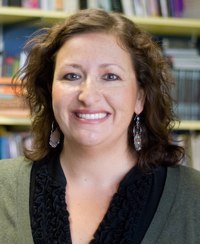
Monica Brown, Ph.D. is the author of more than a dozen picture books, including, Tito Puente: Mambo King/Rey del mambo, which won a Pura Belpré Honor for Illustration, the Christopher Award-winning Waiting for the Biblioburro, and the NCTE Orbis Pictus Honor book Pablo Neruda: Poet of the People. Finally, she is the author of the Marsiol McDonald series. Monica Brown will be speaking and signing her books at the Texas Library Association Conference in April 2014. Find out more about Monica at www.monicabrown.net or like her author page on Facebook.
-

#1 New York Times Bestselling Author Scott Westerfeld to Publish a New YA Novel with Pulse
NEW YORK – Pulse, an imprint of Simon & Schuster Children’s Publishing, has announced today that Afterworlds, a young adult novel written by Scott Westerfeld, will be published on September 23, 2014. Scott …
-
Voting for the 7th Annual Children’s Choice Book Awards Opens March 25, 2014!
The only national book awards program where the winners are selected by children and teens. Last year, over 1,000,000 votes were cast by young readers! This year’s finalists …
-

The Eric Carle Museum of Picture Book Art Seeks Public Submissions for its ‘What’s Your Favorite Animal?’ Exhibition
Amherst, MA — The Eric Carle Museum of Picture Book Art is creating a special exhibition to celebrate the new book What’s Your Favorite Animal? by Eric Carle and Friends. The Museum will showcase …
-

Laney Nielson Wins Cynthia Leitich Smith Mentor Award
“Laney’s manuscript, ‘Shattered,’ was chosen as the winner due to its charm, humor, and kid appeal,” said Cynthia. “The quality of finalists’ writing, obvious potential, and wide variety of their …
-

Children’s Authors Participate in the Twitter Fiction Festival
The organizers also plan to host the #TwitterFiction Festival Live! event in New York City. R.L. Stine, a prolific children’s horror author, will join in for a night of storytelling. …
-

Harriet and Scout: “How To Be a Good Bad American Girl”
“The story of a six-year-old girl observing the oppressive racial politics of the fictional Maycomb, Alabama, in the nineteen-thirties may not seem to much resemble that of a sophisticated, eleven-year-old …
-

Simon & Schuster Books For Young Readers to Publish Dual Transgender Teen Memoirs
New York, New York, March 11th — Simon & Schuster Books for Young Readers is thrilled to publish SOME ASSEMBLY REQUIRED: THE NOT SO SECRET LIFE OF A TRANSGENDER TEEN by eighteen-year-old Arin …
-

Emerging Children’s Authors: Apply for the BPL’s Writer-In-Residence Program!
The Associates of the Boston Public Library is currently accepting applications for its eleventh Children’s Writer-in-Residence. The program was created to provide an emerging children’s author with the financial support …
-

‘Let Books Be Books’ — Fighting Gender Stereotypes in Children’s Book Publishing
“By the end of launch day on March 6, an online petition encouraging publishers to ‘stop labeling books [in a gendered] way and let children decide for themselves what kinds of stories …
-

More Than 50 Authors Sign Up for Indies First Storytime Day
Indies First Storytime Day is set to take place on May 17, 2014. “In a twist on the inaugural celebration of Indies First started by author Sherman Alexie, rather than …
-

Phyllis Krasilovsky Has Passed On
“One of her most popular titles, The Cow Who Fell into the Canal (Doubleday, 1957) almost wasn’t published, according to Peter Spier, who illustrated the book. Spier described meeting with …
-

Shadra Strickland On Her Illustration Career: “I Worked Harder”
“It’s strange being black and a woman in a field that has historically celebrated white male contributions. Before I was published, I wondered if the only way in was to …
-

Jon Scieszka & Brian Biggs Collaborate On a New Middle Grade Series
Brian Biggs, a seasoned children’s books illustrator, created the artwork. Amulet Books, an imprint of ABRAMS, will release the first book on August 26, 2014. Future installments will focus on …
-

Reading Out Loud is One Way to Battle Illiteracy
Illiteracy continues to affect both children and adults. 793 million people around the world have been found to be illiterate. Within the United States, 32 million adults cannot read. “Dominique …
-

Simon & Schuster Re-Designs Five Judy Blume Book Covers
In addition to the design renovation, each cover also includes a new tagline. For Are You There, God? It’s Me, Margaret, arguably Blume’s most popular title, the following tagline is …
-

E-Book Rising: The Changing Market in Children’s and YA Books
2013’s numbers reflect a predictable sales dip on the heels of the success of The Hunger Games in 2012. The popularity of the series on e-books is also indicative of …
-
We’re all in this together
Over the month of February, the CCBC Listserv has had a very involved conversation around diverse children’s and young adult literature and, among other things, how to support what’s out there, how to understand the nuances involved in artistic creation, and how to encourage more authors and illustrators to create/publishers to produce.
The lovely Sarah Hamburg—we don’t know her personally but can only assume the loveliness because of her thoughtful and truly lovely suggestion—put to the group to think about ways in which we can not only continue to keep this conversation going, but moving forward through action and activism. She asked the listserv contributors to put on their thinking caps and come up with ways in which to 1) put their words into actionable goals as well as to 2) think of other organizations and people involved with increasing the representation in kid lit that are already moving the needle with their presence and behavior. Well, that’s at least what the responses were about to her question:
What does/would activism on these issues look like to you?
Below is the living/breathing document that Sarah put together on the CCBC Listserv for all to comment on and add their thoughts to. It has truly already started much conversation as this document lives on many blogs with thoughts being contributed across the web. Below are just a sampling of the ones we’ve seen so far:
Elizabeth Bluemle’s PW Shelftalker Column—"Money, Meet Mouth"
Edi Campbell’s Sunday Morning Reads Post
Uma Krishnaswami’s Blog Post—"From a Joint Discussion, Belonging to Everyone: Diversity in Children’s and YA Literature"
Lyn Miller-Lachmann’s Blog Post—"It’s All Good! How You Can Create Diversity in Publishing"
American Indians in Children’s Literature—"CCBC-Net Action Items"
Thaddeus Andracki’s Blog—"Taking Action to Make Children’s Literature Better for People of Color"
Be sure to check out the comments under each listing and feel free to place comments here as well as we all work towards a more inclusive children’s book industry.

I don’t know if I’m at all the right person to do this (in fact I’m sure I’m not), but as the conversation winds down I hope it’s okay to draw together the responses to the question about activism, and add some other possible thoughts/questions as well. Please step in if I’ve left anything out/ not hit the mark, or to take over!
Many of the ideas focused on personal activism:
- Actively buying books representing a diverse range of voices
- Committing to ongoing challenges (Crystal Brunelle mentioned The Birthday Book Challenge, Diversity on the Shelf Challenge, and Latino/as in Kids’ Lit. Challenge)
- Recommending and promoting diverse books to others when and wherever possible
- Asking for them at bookstores, schools and libraries; using social media in those efforts and to draw attention to issues of representation
- Writing reviews on Amazon, B&N and Goodreads
- Stepping out of personal comfort zones to make connections and advocate on these issues
For writers and illustrators, people also suggested personal activism would include:
- Stepping out of artistic comfort zones
- Consciously considering questions of representation, audience and perspective in one’s work (including whether the perspectives and voices of people of color tend to be explored/presented in a heavy context)
- Soliciting and listening to feedback from members of the communities one is writing about when going outside one’s own culture
- Considering questions of cultural bias and representation while conducting research and evaluating sources
The same considerations hold true for those publishing, buying and using books with children, promoting books to parents and teachers, creating library and bookstore displays… etc. including whether those books receive the same quality and quantity of promotion, and whether they are somehow held apart from other books.
Many came back to the importance of smaller presses in making space for new voices.
- Cinco Puntos Press
- RoadRunner Press
- Lee & Low Books
- **Post others you know of in the comments!**
Lyn Miller-Lachmann talked about visiting smaller presses at conventions to order books and create buzz. Jason Low talked about “liking” Lee & Low on Facebook and using social media to promote them and their titles, and purchasing their books through independent bookstores. Are there other ways people can actively support small presses, or that smaller children’s publishers can perhaps share resources to further cross-promote with one another? (Some consortium, such as an umbrella website?)
People also mentioned the importance of writers’ events and conferences:
- Native American Literary Symposium
- VONA Voices
- Lambda Literary Foundation
- Asian American Writers’ Workshop
- Muslim Voices Conference
- Comadres y Compadres Latino Writers Conference
- Carl Brandon Society
- National Black Writers Conference
- **Post others you know of in the comments!**
Is there a way to facilitate more outreach to events such as these, and also encourage more inclusion/ promotion of writing for children at those events?
Along with such conferences, people talked about the possibility for individual outreach to writers/ artists who are working in other areas, but who seem like they might be suited to the children’s book field (like Debbie Reese introducing Eric Gansworth to Cheryl Klein.)
It’s exciting to see new businesses forming, like:
- Cake Literary, a packager focusing on “bringing diversity to high concept content”
- Quill Shift Literary Agency, a literary agency actively seeking diverse content and providing readers with the opportunity to show that there is a market for diverse books before they are sent to the publishing house
- **Post others you know of in the comments!**
Are there other ways people could help promote them?
People have also started an amazing array of blogs, websites and tumblrs that focus on aspects of diversity in children’s books. These include:
- Diversity in YA
- Rich in Color
- American Indians in Children’s Literature
- The Dark Fantastic
- CBC Diversity
- Lee & Low’s blog
- Cynsations
- CrazyQuiltEdi
- BookDragon
- Latinas for Latino Literature
- Latin@s in Kitlit
- All Brown All Around, Into the Wardrobe
- Shannar Reed Miles-A Blerd Girl Writes
- Bad NDNs
- Miss Domino
- Mitali’s Fire Escape
- Disability in Kidlit
- Visibility Fiction
- I’m Here I’m Queer What the Hell Do I Read?
- The Naughty Book Kitties
- Kristi’s Book Blog
- Guys Read
- Zetta Elliot’s Blog
- Mamiverse
- I’m Your Neighbor
- World Full of Color
- The Brown Bookshelf
- **Post others you know of in the comments!**
In addition, people asked that “diversity” be an inclusive idea, and not limited to one group or set of groups.
Along with these existing or already mentioned avenues for activism, I had a few other possible ideas based on issues people have raised. Some may well already exist in some form, and if so please excuse my ignorance! I also don’t know if some may feel segregating rather than inclusive, or otherwise problematic— but here they are:
(All initiatives mentioned below would include leadership in design and implementation by people from the communities in question. Elsa and others, I didn’t feel like the right person to know where/ how to include Muslim/ Arab Americans in different contexts— so if you would like to adjust categories please do.)
- School Library Journal/ Horn Book…etc. might create a regular column, written by a Native, PoC, and/or LGBT, and/or Muslim, and/or disabled contributor, which might discuss issues regarding children and books in different communities, or highlight reviews of recent books by people from those communities, or discuss collection development/ classroom use issues related to problematic books, or be published in a bilingual format, or simply be a space always kept open for additional voices from less-represented communities.
- Development of a course within the Massachusetts 5-college area, in conjunction with the Carle Museum, for Native college students/ students of color to study illustration and writing for children.
- Outreach to a group like 826, with centrally-organized workshops about writing/illustrating led by people in the children’s book community.
- A group within SCBWI for Native artists/ people of color to meet and speak about issues in the field specific to their communities, and provide resources and networking opportunities.
- A subsidized (with some form of community grant?) internship at one of the children’s publishing divisions or literary agencies for a person of color or Native person.
- Some form of organized mentorship program for aspiring authors/ illustrators.
- A bilingual division of something like Net Galley, featuring bilingual books, and other books by Latino/a writers and illustrators.
- A group made up of members of publishers’ marketing departments, convened to study marketing strategies and approaches, with leadership that includes, outreach to, and input from members of different communities.
- Some e-publishing/ print-on-demand initiative or business, focused on bringing back out-of-print titles by people of color.
- Also, something like the New York Review of Books Classics, which would bring back into print/ reissue/ highlight classic children’s books by people of color— including international titles. (Or, actively petitioning the NYRoB children’s collection to include more such titles— do they currently have *any* books by people of color on their list? I couldn’t find them.)
- Concerted outreach at events like Bologna to find and acquire titles by international authors of color/ indigenous authors for publication in the US.
- Something like the PEN New England Discovery Award (which recognizes the work of unpublished children’s writers, and provides an opportunity to have that work read by an editor at a publishing house) that would be national, and would recognize work by unpublished Native/PoC writers. It could include a specific category for nonfiction.
- Inclusion of Toni Morrison’s book Playing in the Dark (and Zeta Elliott’s article “Decolonizing the Imagination”) on the reading list at MFA Programs focused on writing for children, with a curriculum that includes more lectures/ discussions about race, writing and the imagination— not just in the context of discussion about writing outside one’s own culture.
- Focused outreach as part of recruitment initiatives for MFA in writing for children programs (perhaps writers’ conferences like those listed above would be one good place?) and promotion of existing opportunities like the Angela Johnson Scholarship.
- A centralized resource for parents/ teachers that would look at still-read classics and more contemporary books, and examine different responses/ perspectives on those books related to representation. This might include strategies and perspectives on classroom use. (A sort of “critical engagement” resource, with different perspectives- like that of Debbie Reese’s American Indians in Children’s Literature.)
- More inclusion of issues related to representation/ cultural bias in reviews of current nonfiction and fiction titles.
- Some central website to publish/ promote lists of recommended titles (such as the Top 100 Books by Indigenous Writers, Recommended Books regarding the Middle East, Lee & Low’s Pinterest pages, and the many other lists of recommended books shared here…) There might also be the possibility of compiling and promoting new lists, based on the needs and interests of those who work with children. Maybe individual titles from the lists could be highlighted on a rotating basis as well.
- Lobbying and activism on related issues, such as funding for public schools and libraries, and support of those institutions (as well as businesses like independent bookstores) on the local level.
- As Malinda Lo asked for, greater inclusion of PoC/ Native/ LGBT/ Muslim/ disability community voices at the head of these discussions.
-

20,000 Teachers Provide Powerful Insights on Teaching in an Era of Change in New Primary Sources Survey
NEW YORK, NY – Scholastic (NASDAQ: SCHL) and the Bill & Melinda Gates Foundation today released results from the comprehensive survey Primary Sources: America’s Teachers on Teaching in an Era of …
