
Blog
-

Diversity in the News: December 2015
The newsletter is a valuable resource for librarians, teachers, booksellers, parents and caregivers, publishing professionals, and children’s literature lovers. Find thought-provoking articles, diverse new releases, and more in this month’s issue and sign …
-

Bringing Diverse Books into the Classroom
Teachers are catching onto the value of a diverse and representative curriculum that reflects students’ backgrounds. I also found ways to relate each text to [students’] personal experiences. A mini literary …
-

Holiday Sales for Children’s Books
Big trends of 2015 include adult coloring books, book 10 of Jeff Kinney’s Diary of a Wimpy Kid series, and both Crayons titles by Drew Daywalt and Oliver Jeffers. Also of …
-

Little, Brown Books for Young Readers to Publish Astronaut Chris Hadfield’s Debut Picture Book, The Darkest Dark, in Fall 2016
New York, NY — World-renowned astronaut and New York Times bestselling author Chris Hadfield makes his children’s book debut in Fall 2016 with The Darkest Dark, a picture book illustrated by Eric …
-
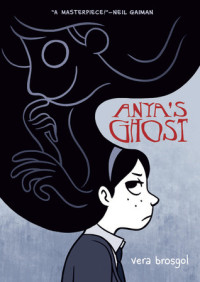
#DrawingDiversity: ‘Anya’s Ghost’ by Vera Brosgol
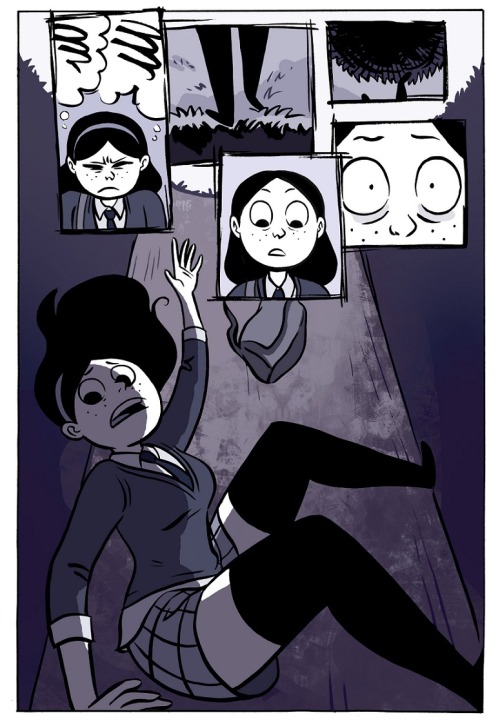
Anya’s Ghost by Vera Brosgol (Square Fish/@macmillankids , March 2014). All rights reserved.
-

New Podcast Series, “Scholastic Reads,” Launches Today With Behind-The-Scenes Stories About The Harry Potter Series
NEW YORK – “Scholastic Reads,” a new podcast about children’s books and the joy and power of reading launches today with a behind-the-scenes look at the Harry Potter series as …
-

The Every Student Succeeds Act
The law, which passed with flying colors in both the House and Senate, represents a key moment of bipartisanship. The act is also the first piece of federal education legislation in …
-

Encouraging Kids to Write
For kids who dread picking up the pencil, here are a few tips to get their creative juices flowing: Write letters to family or favorite authors Write and illustrate a …
-

Lionsgate Executives Hope to Create Hunger Games Prequel Movies
The executives at Lionsgate, the movie studio behind the popular film franchise, hope to create prequel movies. Book fans know that while Collins does reference past Hunger Games events in …
-

Kid Lit Authors on the Books that Shaped Them
From Kwame Alexander to Kevin Henkes, our favorite children’s book authors and illustrators all started out as young readers, enthralled by great stories. ‘For a young reader that’s an important …
-

Nominations Open for the NYC Neighborhood Library Awards
Five branch libraries will be awarded a grand prize of $20,000 each, and five runners-up will receive $10,000. Click here to submit your nomination!
-

Reflecting on CBC Diversity
Contributed by Mark von Bargen, Senior Director of Trade Sales of Children’s Books at Macmillan
With the year coming to a close, I am finishing up a two-year term on the CBC Diversity Committee. It has been a great honor to work with the committee. They are doing amazing work, putting together terrific programs that are bringing about real change in our industry. As a final blog post, I wanted to share some thoughts.
When first starting on the committee, it seemed like a swirl of ideas, opportunities, and issues, all combating preconceived notions. It was hard to get a sense of where to go. One issue that kept coming up was the ability to find diverse books — the problem of “discoverability.” With somewhere between six hundred thousand and one million books being published each year, accurate categorization is vital to ensuring that books can be found. Our industry subject codes, the Book Industry Standards and Communications (BISACs) are outdated, with some categories not represented. Some books that address diverse social issues do not have an aligned category code. As a result, they are given overly generic codes. When this happens, especially with novels, they are often lost in the tidal wave of “fiction.” Thanks to the work of the committee, there are new codes being added to help the categorization problem. There is more to be done. Categorization is not static. It evolves, like language. As a group we need to keep current.
What keeps coming back to me is that diversity is about sharing stories and ensuring that voices are heard. Of course, the issue goes beyond children’s books. But every change starts with a moment; a moment that is a conversation, a thought, or a story. The stories we publish create those moments. There are enough logistical challenges in publishing books. The whole publishing process, from author to reader, can feel like a “pass the egg” game at a kids’ party.
It’s pretty safe to say that we all share the goal of understanding our world and making it better. Thanks to technology, the ability to speak up and be heard is more powerful than we could have imagined a generation ago. I recently saw a map that shows how much of the world is connected to the internet.
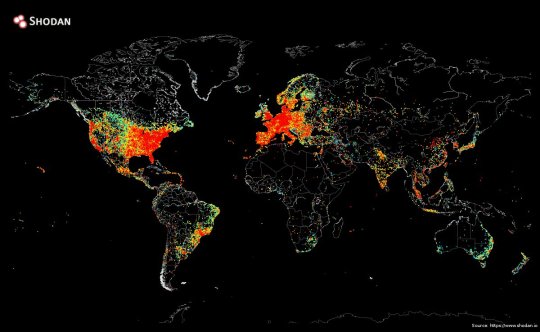
It’s startling to see how concentrated the coverage is, where it is, and where it isn’t. Looking at this map shows how lucky we are. To understand our world, we need to be the light for those who are not. We have the tools to do that. We have the passion to do that. In some ways, we are being the light for those in the darkness.
We all have our comfort zones. When I look at what is now in mine, much of it was at one time outside of it. As we accumulate experience, our comfort zone grows —consciously and subconsciously. Great stories come from many sources. Getting out of one’s comfort zone is essential to finding those stories. My resolution for 2016 is to venture more out of my comfort zone and make it bigger.
None of what I’m saying is new. But putting it down in writing is new for me. Thanks for listening.


Mark von Bargen is the Senior Director of Trade Sales of Children’s Books at Macmillan. He started in the book business in 1988 as a book store manager and has held buying, marketing and sales positions at Baker & Taylor, Simon & Schuster and Macmillan. He currently specializes in children’s book sales through independent bookstores and educational wholesalers and is an out-going member of the CBC Diversity Committee.
-

NYPL Librarians Share Book Recommendations
Librarians Lynn Lobash and Gwen Glazer will share recommendations in person at the landmark 42nd Street building, as well as on Twitter @NYPLRecommends (hashtag #TheLibrarianIsIn), and via web form. Below are …
-

2016 Teen Tech Week™ focuses on STEAM and underserved teens
CHICAGO – The Young Adult Library Services Association (YALSA), a division of the American Library Association (ALA) invites library staff to encourage teens to “Create it at your library” for …
-

Dey Street Books And HarperCollins Children’s Books Acquire Memoir by Abby Wambach
New York, NY – Dey Street Books, an imprint of William Morrow Publishers, and HarperCollins Children’s Books have acquired world rights to a memoir and young reader’s edition by Abby …
-

2016 Teen Choice Book of the Year: Nominate Your Favorites Now!
The 5 titles that get the most votes will become the finalists for the Teen Choice Book of the Year. Just fill out the form on the Teenreads website by …
-

Scholastic News Names The ‘8 Coolest Kids We Met in 2015’
New York, NY – The editors of Scholastic News® today announced their list of the 8 Coolest Kids We Met in 2015, a reflection on the most inspiring, creative, and …
-

#DrawingDiversity: ‘Words Set Me Free’ illustrated by James E. Ransome
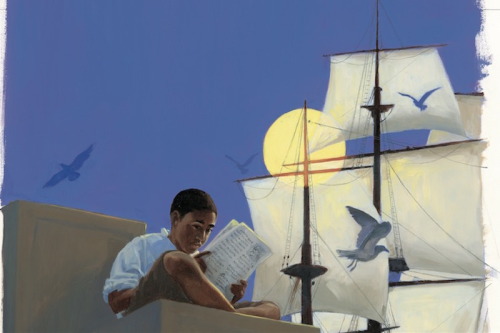
Words Set Me Free: The Story of Young Frederick Douglass by Lesa Cline-Ransome, illustrated by James E. Ransome (Paula Wiseman Books/Simon & Schuster, January 2012). All rights reserved. @simonkidsuk
-

The Value of Rereading
New readers improve their literacy skills with each rereading, specifically in the following areas: Vocabulary Pattern and rhythm recognition Fluency Reading comprehension Confidence So the next time an eager young reader asks …
-

2015 I Love My Librarian Awards Announced
The awards were granted along with a $5,000 prize at a ceremony held on December 3 in New York City. The I Love My Librarian Award winners are living examples of …
